Water Heater Repair vs. Replacement
Deciding between water heater repair or replacement in Fresno? Learn key signs, costs, local water factors, and when to call Plumber in Fresno.

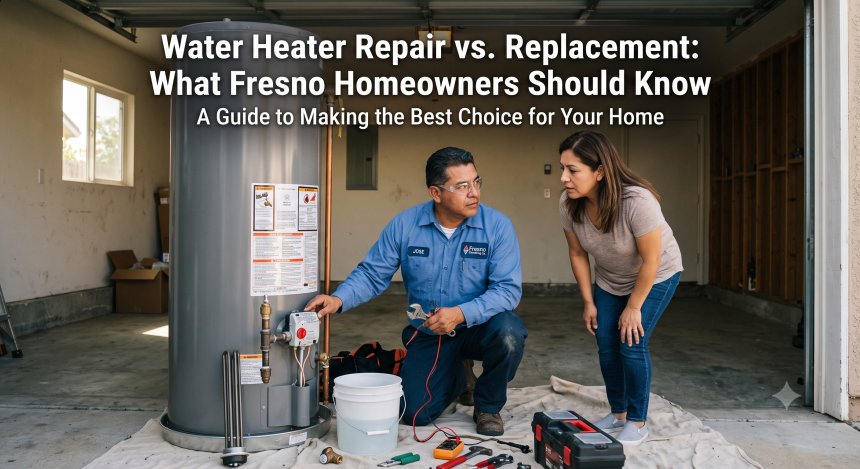
Water Heater Repair vs. Replacement: What Fresno Homeowners Should Know
Every Fresno homeowner relies on a steady stream of hot water for morning showers, washing dishes, and daily laundry. When your unit starts rumbling, producing lukewarm water, or leaking onto the garage slab, you face an immediate decision: should you patch it up with a service call, or invest in a brand-new system?
Evaluating Water Heater Repair vs. Replacement: What Fresno Homeowners Should Know requires balancing the age of your equipment, the severity of the failure, and the unique water quality challenges of the Central Valley. Central California tap water contains elevated mineral levels that take a heavy toll on plumbing infrastructure. Addressing water heater malfunctions early protects your home from sudden structural damage, toxic mold growth, and high utility bills.
What Is the Water Heater Repair vs. Replacement Dilemma?
The debate between repairing or replacing a water heater centers on calculating whether the cost of restoring an existing appliance is justified by its remaining operational lifespan.
-
Water Heater Repair: Involves pinpointing and swapping out individual failing parts—such as a faulty thermocouple, a burnt-out heating element, a broken dip tube, or a malfunctioning thermostat—while preserving the main tank and piping infrastructure.
-
Water Heater Replacement: Entails removing the entire tank or tankless unit, bringing the gas lines, venting, expansion tanks, and drain pans up to current Fresno municipal building codes, and installing a new, energy-efficient system.
Common Scenarios
-
The Sudden Cold Shower: You step into the shower in your Woodward Park home, and the water turns ice-cold within two minutes.
-
The Garage Flood: You walk into your garage in Clovis or Tower District and notice standing water pooling around the base of the tank.
-
The Rusty Stream: You turn on the bathroom faucet and notice a distinct metallic odor accompanied by brownish-red water.
Why Do Water Heater Problems Happen in Fresno?
Water heaters operate continuously under intense internal pressure and thermal stress. In Fresno County, specific regional and mechanical factors accelerate wear and tear:
-
Hard Water Mineral Build-Up: Fresno groundwater contains substantial amounts of dissolved calcium and magnesium. When heated, these minerals precipitate out of the water and settle as a dense layer of sediment at the bottom of the tank. This sediment insulates the water from the burner, overheating the bottom metal plate and drastically reducing efficiency.
-
Internal Tank Corrosion: Traditional tanks are made of steel with a thin porcelain enamel lining. Once the protective sacrificial anode rod completely dissolves, corrosive minerals attack the bare steel, leading to irreversible pinhole leaks.
-
Thermal Expansion & High Pressure: Municipal water delivered at pressures above 80 PSI strains internal valves, tanks, and copper connections. Without a functional expansion tank, heated water expands and stresses the tank's welded seams.
-
Aging Components: Electrical heating elements, pilot assemblies, gas control valves, and temperature and pressure (T&P) relief valves undergo hundreds of heating cycles each month, causing natural mechanical fatigue.
-
Poor Installation & Neglected Maintenance: Skipping annual tank flushes allows sediment to calcify into solid scale, choking heat transfer and burning out components prematurely.
Signs You Should Never Ignore
Catching subtle system warnings prevents catastrophic tank ruptures and interior water damage.
-
Rusty or Discolored Hot Water: If rust only appears when running hot water, your tank's internal walls are actively corroding.
-
Popping, Rumbling, or Banging Sounds: Trapped water boiling beneath a heavy layer of calcified sediment creates steam bubbles that burst violently against the tank walls.
-
Water Pooling Around the Base: Any standing water near the base fittings or drain valve signals an active leak that can flood a home in minutes.
-
Lukewarm or Inconsistent Water Temperatures: Failing upper/lower heating elements or broken dip tubes allow cold incoming water to dilute hot supply water before reaching fixtures.
-
Spike in Monthly Utility Bills: A tank coated with an inch of sediment requires substantially more gas or electricity to achieve target temperatures.
-
Moisture or Rust Around Fittings: Corrosion at the cold water inlet or hot water outlet nipples indicates galvanic corrosion or failing dielectric unions.
Common Plumbing Problems Related to Water Heater Failures
A failing water heater rarely acts in isolation. It often triggers downstream plumbing issues across your property:
-
Main Line & Fixture Leaks: Deteriorating water heaters shedding sediment flakes can push mineral chunks into aerators, shower cartridges, and supply valves, causing widespread clogs and dripping faucets.
-
Drain and Sewer Backups: If a water heater drain pan line is plumbed improperly into auxiliary drain lines, a tank blowout can overwhelm local branch drains.
-
Gas Line & Ventilation Faults: Aging gas water heaters with degraded draft hoods or venting pipes can spill carbon monoxide back into living spaces.
-
Slab Leaks: High system pressure that stresses water heaters can simultaneously rupture underlying copper lines routed through concrete foundations.
Step-by-Step Professional Repair and Replacement Process
When you call a licensed professional from plumber in fresno, every service call follows a rigorous, code-compliant workflow:
[1. Safety Shutdown] ➔ [2. Diagnostic Inspection] ➔ [3. System Evaluation & Quote]
         │
         ▼
[4. Repair or Replacement Execution] ➔ [5. Pressure & Safety Testing] ➔ [6. Site Cleanup & Education]
-
Safety Shutdown & Isolation: The technician shuts off the electrical breaker or gas supply valve and closes the main cold water inlet to prevent accidents.
-
Diagnostic Inspection: The technician checks the T&P relief valve, inspects burner assemblies, tests electrical continuity across elements, and checks for tank integrity.
-
Transparent Upfront Estimate: You receive a clear, itemized quote detailing the necessary parts, labor, and viable repair vs. replacement options.
-
Targeted Repair or Code-Compliant Replacement:
-
For Repairs: Defective components (thermostats, elements, anode rods) are removed and replaced with OEM-grade parts.
-
For Replacements: The old tank is completely drained and removed. The new unit is installed with updated gas flex lines, sediment traps, shutoff valves, expansion tanks, and earthquake strapping to satisfy Fresno seismic codes.
-
-
System Commissioning & Pressure Testing: The unit is filled, purged of air pockets, pressurized, and monitored for leaks, draft integrity, and proper combustion temperature calibration.
-
Cleanup and Preventive Guidance: The work area is sanitized, the old unit is hauled away for recycling, and the technician walks you through maintenance intervals.
Can You Fix It Yourself? (Safe DIY vs. Professional Danger)
Understanding what you can handle versus what requires a licensed professional protects your home warranty and family safety.
What Homeowners Can Safely Do
-
Adjust the Temperature: Set your water heater thermostat to a safe 120°F (49°C) to prevent scalding and lower utility costs.
-
Inspect the Area: Keep the perimeter around the unit clear of clutter, paints, combustible items, and chemical cleaners.
-
Visual Checks: Regularly inspect the drain pan, supply hoses, and shutoff valves for visual evidence of dripping.
When DIY Becomes Dangerous
-
Working on Gas Control Valves: Gas leaks carry explosive risks and carbon monoxide poisoning hazards.
-
Rewiring 240V Electric Elements: High-voltage systems present severe electrocution risks if not verified dead with calibrated multi-meters.
-
Replacing a Leaking Tank: Attempting to patch a ruptured, corroded tank shell with epoxy or sealant is impossible and leads directly to catastrophic structural flooding.
Tools Professionals Use for Water Heater Diagnostics
Licensed technicians rely on commercial diagnostic tools to diagnose issues accurately without guesswork:
| Diagnostic Tool | Purpose | Practical Benefit |
| Digital Manometers | Measures gas line manifold pressure | Ensures burner operates with safe, efficient combustion. |
| Fluke Multimeters | Tests voltage, resistance, and element continuity | Instantly isolates dead heating elements from bad thermostats. |
| Thermal Imaging Cameras | Detects hot-water bypasses and tank heat loss | Pinpoints internal scale levels and concealed pipe leaks behind drywall. |
| Water Pressure Gauges | Checks incoming municipal water pressure | Verifies if incoming pressure exceeds the safe 80 PSI threshold. |
| High-Flow Submersible Pumps | Drains tanks loaded with thick sediment sludge | Clears heavily scaled tanks that gravity draining cannot empty. |
Repair vs. Replacement: Making the Decision
Use the industry-standard "50% Rule" alongside your system's age to choose the best path forward:
                ┌───────────────────────────────┐
                │  Is the Tank Actively Leaking │
                │     From the Steel Shell?     │
                └──────────────┬────────────────┘
                               │
               ┌───────────────┴───────────────┐
             YES                               NO
               │                               │
               ▼                               ▼
       [REPLACE IMMEDIATELY]         ┌───────────────────┐
                                     │  System Age Check │
                                     └─────────┬─────────┘
                                               │
                       ┌───────────────────────┴───────────────────────┐
                 Under 8 Years                                   Over 10 Years
                       │                                               │
                       ▼                                               ▼
         ┌───────────────────────────┐                   ┌───────────────────────────┐
         │  Repair Cost < 50% Value? │                   │ Repair Cost > $300-$400?  │
         └─────────────┬─────────────┘                   └─────────────┬─────────────┘
                       │                                               │
                 ┌─────┴─────┐                                   ┌─────┴─────┐
                YES          NO                                 YES          NO
                 │           │                                   │           │
                 ▼           ▼                                   ▼           ▼
             [REPAIR]    [REPLACE]                           [REPLACE]   [REPAIR]
When to Repair
-
The water heater is under 8 years old.
-
The problem is an external, modular part (e.g., thermostat, heating element, pilot assembly, drain valve).
-
The repair estimate is less than 50% of the total cost of a new installation.
When to Replace
-
The water heater is 10–15+ years old (or past its warranty period).
-
The steel tank is rusted through or leaking at the base.
-
The system requires frequent repairs, driving cumulative costs higher than a new unit.
-
You want to upgrade to a high-efficiency Tankless Water Heater to save space and lower energy bills.
How Long Does Service Usually Take?
-
Simple Diagnostic & Minor Repairs (1–2 Hours): Replacing a burnt element, thermocouple, gas valve component, or leaking supply line.
-
Complex Repairs & Descaling (2–3 Hours): Deep flushing a heavily calcified tank, rebuilding manifold connections, or replacing an expansion tank.
-
Standard Tank Replacement (3–5 Hours): Draining, removing, hauling away the old tank, setting the new unit, running new water/gas flex lines, installing earthquake straps, and testing.
-
Conversion to Tankless (6–8+ Hours): Running upgraded gas supply lines, installing dedicated exterior direct-venting PVC/concentric pipe, mounting the unit, and installing fresh electrical connections.
Cost Factors Explained
Plumbing repair and installation costs vary depending on the severity of the problem, accessibility, materials required, emergency service, property type, and local labor rates.
-
Diagnostic & Evaluation Fees: Covers the technician’s travel, physical testing, and troubleshooting time.
-
Parts & Component Selection: OEM factory replacement parts vs. aftermarket generic hardware.
-
Labor Complexity & Accessibility: Units installed in tight attics, crawlspaces, or elevated platforms take more time and labor to service than garage setups.
-
Permit & Local Municipal Code Fees: Fresno and California codes require safety compliance, thermal expansion tanks, earthquake straps, and city permits on full replacements.
-
Energy Source Infrastructure: Converting between electric, natural gas, or propane requires line modifications that influence overall job scope.
Hidden Truths Homeowners Should Know
-
Small Leaks Turn into Expensive Emergencies: A minor drip at the temperature relief valve can turn into an unrestricted water line blowout when you are away at work.
-
Cheap Quick Fixes Often Fail: Using thread tape on cracked fittings or patching corroded tanks with epoxy guarantees a more expensive secondary failure.
-
Home Insurance May Deny Claims for Neglected Units: If an adjuster determines your 14-year-old water heater flooded your home due to lack of basic maintenance, they may deny water damage claims.
-
Fresno Hard Water Destroys Unmaintained Units Fast: Without routine flushing, hard water can cut a 10-year manufacturer lifespan down to 5 or 6 years.
-
DIY Electrical or Gas Mistakes Void Warranties: Manufacturers require installation by a licensed professional to honor parts and tank warranties.
-
Hidden Water Leaks Quietly Raise Monthly Utility Bills: A continuous leak from a hot water relief line forces your heater to constantly warm incoming cold water 24/7.
-
Toxic Mold Develops Within 24 to 48 Hours: Slow leaks dripping behind garage baseboards or utility drywall create ideal conditions for mold spores.
-
Anode Rod Replacements Double Tank Life: Spending a small amount to replace a sacrificial anode rod every 3–4 years prevents your main steel tank from rusting out.
15 Common Mistakes Homeowners Make
-
Ignoring Minor Rumbling or Popping Sounds: Assuming unusual tank noises are normal rather than addressing severe sediment buildup.
-
Never Flushing the Tank: Allowing mineral scale to calcify at the base until the bottom elements burn out.
-
Setting Thermostat Temperatures Above 125°F: Increasing scalding risks and accelerating internal tank corrosion.
-
Using Harsh Chemical Drain Cleaners Near Water Systems: Chemical fumes and caustic liquids damage adjacent brass valves and PEX lines.
-
Hiring Unlicensed Handymen for Gas Connections: Risking improper ventilation, dangerous carbon monoxide backdrafts, and gas leaks.
-
Skipping Earthquake Strapping: Leaving tall, heavy water heaters vulnerable to tipping during seismic tremors, risking broken gas lines.
-
Forgetting to Test the T&P Relief Valve: Allowing safety relief valves to seize shut, eliminating a critical defense against dangerous pressure build-ups.
-
Storing Flammable Chemicals Near the Pilot Light: Placing gas cans, paint thinners, or rags near open burner chambers.
-
Neglecting the Sacrificial Anode Rod: Letting the rod dissolve completely, leaving the interior steel tank exposed to corrosive water.
-
Over-Tightening Brass and Copper Fittings: Stripping threads and cracking fittings during amateur repair attempts.
-
Connecting Dissimilar Metals Directly: Joining copper directly to galvanized steel without a dielectric union, causing galvanic corrosion.
-
Ignoring Water Pressure Spikes: Allowing incoming pressure over 80 PSI to stress valves without installing a Pressure Reducing Valve (PRV).
-
Placing Heavy Items on Top of the Heater: Damaging venting draft hoods and electrical junction boxes.
-
Waiting Until Total Flooding to Replace an Old Unit: Choosing a replacement in a panic rather than planning an orderly upgrade.
-
Failing to Insulate Hot Water Pipes: Losing thermal energy between the heater and distant bathroom faucets.
Practical Maintenance Tips for Fresno Homes
-
Flush Your Tank Annually: Drain 5–10 gallons from the bottom drain valve every autumn to clear loose mineral sediment.
-
Inspect the Anode Rod Every 3 Years: Pull the rod out to verify if substantial core wire is exposed; replace it before it disappears.
-
Test the Temperature & Pressure (T&P) Valve: Lift the test lever briefly once a year to ensure water flows freely and shuts off completely.
-
Maintain 12-Inch Clearance: Keep boxes, laundry baskets, and cleaning chemicals away from the unit's base and combustion air intake.
-
Install a Water Softener or Whole-House Filter: Mitigate Fresno’s hard water before it enters the water heater to prolong element life.
-
Check the Pilot Light Flame Color: A clean gas burner burns crisp blue. A lazy yellow or orange flame indicates improper combustion and needs service.
-
Inspect Venting Pipes for Rust or Disconnection: Check overhead metal flues for gaps, corrosion, or blockages.
-
Install an Automatic Water Shutoff Sensor: Place an inexpensive flood sensor in the drain pan to cut water supply if a leak occurs.
-
Insulate Exposed Hot Water Lines: Wrap foam insulation over hot water copper pipes in unconditioned garages to reduce heat loss.
-
Lower Thermostat to "Vacation Mode" When Away: Avoid paying to keep water hot while your home is unoccupied for extended periods.
When Should You Call an Emergency Plumber?
Shut off your water heater's dedicated cold water valve and call for emergency service immediately if you notice:
-
Active, Unstoppable Leaking: Water is gushing from the top fittings, side valves, or tank base.
-
The Smell of Natural Gas (Rotten Eggs): Evacuate the home immediately, avoid using light switches, and call your gas utility and emergency plumber from a safe distance.
-
Scorching Water from Cold Faucets: Indicates a failed thermostat or broken dip tube creating dangerous thermal expansion.
-
Smoke, Soot, or Burning Odors Near the Heater: Indicates improper combustion, electrical short-circuits, or blocked exhaust flues.
-
Complete Loss of Hot Water During Freezing Winter Nights: In chilly winter periods, a fast repair restores essential household sanitation.
Frequently Asked Questions
How long do residential water heaters usually last?
Standard tank-style water heaters last an average of 8 to 12 years. Tankless water heaters can operate reliably for 20 years or more with routine descaling maintenance.
Why is my hot water running out faster than before?
In electric water heaters, this typically indicates that the lower heating element has failed. In gas or electric units, a broken plastic dip tube can dump incoming cold water at the top of the tank instead of the bottom.
Is hydro jetting or chemical flushing safe for an old water heater?
Chemical flushes should only be performed by a professional using manufacturer-approved descaling solutions. Hydro jetting is reserved for sewer lines and should never be used on a water heater tank.
Why does my water heater make knocking and popping noises?
Calcified mineral scale forms a hard crust at the bottom of the tank. Water trapped beneath this layer turns to steam and pops as it forces its way through the sediment bed.
Can high municipal water pressure damage my water heater?
Yes. Water pressure exceeding 80 PSI strains the internal tank welds, bursts flexible supply lines, and causes the temperature-pressure relief valve to constantly leak.
How do I know if my water heater tank is leaking or just experiencing condensation?
Condensation is common when a cold tank fills up, leaving light moisture on exterior pipes. Active leaks create continuous puddles in the drain pan even when the burner is off.
What is a sacrificial anode rod and why does it matter?
It is a magnesium or aluminum rod inside the tank that attracts corrosive elements, corroding itself so the steel tank walls stay protected.
Should I replace my traditional tank with a tankless water heater?
If you have high hot water demands, limited garage space, and plan to stay in your home long-term, a tankless unit provides continuous hot water and higher energy efficiency.
What happens if I ignore a leaking T&P relief valve?
A leaking T&P valve means the unit is experiencing excessive pressure or heat. Ignoring it can cause the valve to seize, creating a dangerous pressure build-up.
Will replacing an old water heater reduce my energy bills?
Yes. Modern water heaters feature thicker insulation and higher Energy Factor (EF) ratings, often reducing water heating costs by 15% to 30%.