Professional Hydro Jetting Service in Fresno, CA: The Ultimate Guide to Clearing Severe Drain & Sewer Line Clogs
Recurring drain clogs, gurgling toilets, and stubborn sewer backups are among the most frustrating plumbing issues a property owner can face. In the Central Valley, older residential sewer laterals and busy commercial kitchen lines take a severe beating year after year. When standard plungers and hardware store drain snakes fail to clear the line, property owners often search for an effective, long-term solution.
If you are dealing with chronic blockages, invasive tree roots, or thick grease accumulation, scheduling a professional Hydro Jetting Service in Fresno, CA is the gold standard for restoring full pipe diameter and preventing recurring plumbing disasters.

What Is Hydro Jetting?
Hydro jetting is an advanced, non-invasive drain cleaning method that utilizes ultra-high-pressure water streams—typically ranging between 1,500 and 4,000 PSI (pounds per square inch)—to scour the internal walls of plumbing and sewer lines.
Unlike traditional mechanical drain snakes (cables or augers) that simply punch a small hole through a blockage to restore minimal flow, high-pressure sewer jetting completely emulsifies grease, pulverizes invasive tree root webs, shreds heavy mineral scale, and flushes all debris out into the municipal sewer main.
+-----------------------------------------------------------------------------------+
|                            HOW HYDRO JETTING WORKS                                |
+-----------------------------------------------------------------------------------+
|                                                                                   |
|   1. High-Pressure Pump ---> 2. Flexible Hose ---> 3. Specialized Jetter Nozzle   |
|                                                                                   |
|   [ Forward Jet ]  --> Pierces & breaks down hard blockages/roots                 |
|   [ Reverse Jets ] --> Propels hose forward & scrubs 360-degree pipe interior     |
|   [ Flushes Debris]--> Leaves pipe walls clean down to the original inner surface |
+-----------------------------------------------------------------------------------+
Symptoms You Need Hydro Jetting
-
Multiple plumbing fixtures backing up simultaneously (e.g., shower fills when toilet flushes).
-
Foul sewer odors emanating from floor drains, sink traps, or the yard.
-
Frequent clogs returning every few weeks or months after being snaked.
-
Slow draining throughout the entire building rather than a single isolated sink.
-
Gurgling sounds coming from toilet bowls or laundry utility lines.
Why Do Severe Sewer Line and Drain Clogs Happen in Fresno?
Understanding the root cause of your drainage issue helps determine whether basic snaking or professional hydro jetting is the appropriate fix.
                                  COMMON CAUSES OF SEWER BLOCKAGES
                                                  │
         ┌────────────────────────┬───────────────┴───────────────┬────────────────────────┐
         ▼                        ▼                               ▼                        ▼
  Tree Root Intrusion     FOGs (Fats, Oils, Grease)       Mineral Scale & Hard Water       Aging / Settling Pipes
  (Seeking moisture in   (Solidifies into rock-hard      (Calcium/magnesium coats         (Orangeburg, clay, or
   dry Valley soils)      masses along pipe walls)        pipe interior over years)        corroded cast iron)
-
Aggressive Tree Root Intrusion: In arid regions across Fresno County, mature trees (such as eucalyptus, mulberry, and ash) seek out moisture during hot summer months. Fine root hair penetrates microscopic hairline cracks or loose joints in clay and cast iron sewer pipes, expanding into dense, pipe-choking root balls.
-
Fats, Oils, and Grease (FOG Accumulation): Commercial kitchens and residential sinks frequently dispose of cooking fats down the drain. While warm liquid grease moves initially, it quickly cools, coats the pipe circumference, and hardens into thick, sticky deposits.
-
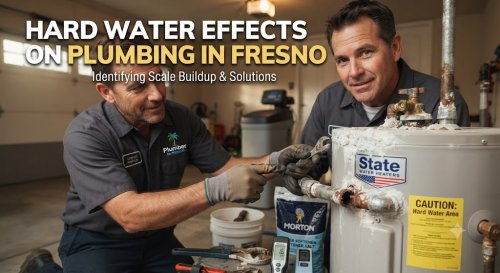
Hard Water Scale Buildup: Central California water contains elevated levels of calcium and magnesium. Over decades, this mineral scale adheres to the inside of metal piping, narrowing the internal pipe diameter and catching passing solid waste.
-
Foreign Objects and Wipes: So-called "flushable" wipes do not break down like standard toilet paper. They bind to grease and rough pipe surfaces, creating massive obstructions (often referred to as fatbergs).
-
Aging & Sagging Pipes: Older neighborhoods throughout Central Fresno, Tower District, and Sunnyside feature aging clay, cast iron, or historical Orangeburg pipes. Ground settling creates low spots ("bellies") where standing water and solids continuously collect.
Warning Signs You Should Never Ignore
Plumbing systems rarely fail without warning. Catching these early indicators prevents expensive raw sewage spills and property damage:
-
Simultaneous Slow Drains: When every drain on the ground floor empties sluggishly, the obstruction sits deep inside the main sewer lateral, not in a fixture trap.
-
Sewer Gas Odors: A healthy drain system vents sewer gases through the roof. Strong sulfur or rotten egg smells inside or around your foundation indicate venting issues or a backed-up waste line.
-
Gurgling Fixtures: Trapped air escaping past a main line obstruction bubbles up through toilet traps, creating distinct gurgling or bubbling sounds when water is run elsewhere.
-
Sewage Backing Up into Low Tubs or Showers: Because bathtub and shower drains sit closest to the floor level, backing sewage emerges there first when downstream main lines are clogged.
-
Lush, Unusually Green Patches in the Lawn: If a specific patch of grass above your sewer line is thriving during hot, dry weather, sewage may be leaking through a root-fractured pipe underground.
-
Pest Infestations: Persistent drain flies or roach activity near floor drains frequently indicates standing, organic sludge inside the sewer lateral.
Comparing Drain Cleaning Methods
| Feature / Metric | Standard Cable Snaking | Chemical Cleaners | Professional Hydro Jetting |
| Primary Mechanism | Mechanical steel blade punches holes | Corrosive acid/caustic reaction | Ultra-high-pressure water (up to 4,000 PSI) |
| Clears Tree Roots? | Only cuts a small path | No (Cannot dissolve roots) | Yes (Shears roots flush with pipe walls) |
| Cleans Pipe Walls? | No (Leaves grease and scale behind) | No (Bores narrow chemical channel) | Yes (360-degree complete interior scouring) |
| Pipe Safety | Safe if operated correctly | Can corrode metal and soften PVC | Completely safe when preceded by camera inspection |
| Long-Term Longevity | Temporary (weeks to months) | Very brief / ineffective | Long-lasting (years of clear flow) |
| Environmental Impact | Eco-friendly | Toxic to local waterways | 100% Eco-friendly (uses pure clean water) |
Step-by-Step Professional Hydro Jetting Process
When you book a certified Hydro Jetting Service in Fresno, CA, technicians follow an established, systematic procedure to protect your property's plumbing infrastructure:
[ Step 1: Access & Setup ] ──────> [ Step 2: HD Camera Inspection ] ──────> [ Step 3: Mechanical Prep (If Needed) ]
                                                                                         │
[ Step 6: Post-Jetting Camera Run ] <─── [ Step 5: High-Pressure Jetting Run ] <─────────┘
            │
            ▼
[ Step 7: Flow Verification & Maintenance Plan ]
-
Access Point Location: Plumbers locate the outdoor sewer cleanout to perform the work outside your living areas, preventing indoor messes.
-
HD Video Camera Inspection: A self-leveling, high-definition sewer camera is inserted to inspect the pipe material (PVC, ABS, cast iron, clay), identify the exact location of the obstruction, and verify the structural integrity of the line.
-
Pre-Clearing / Descaling (if needed): If severe root balls or hard scale exist, mechanical cutters or descaling chains may be run briefly to break up initial hard obstructions.
-
Calibrating Water Pressure: The technician selects the appropriate nozzle (penetrating, rotating, or degreasing) and adjusts water pressure to match the pipe's age and condition.
-
Executing the Hydro Jetting: The self-propelling hose travels upstream through the sewer lateral, blasting away roots, grease, sludge, and mineral deposits while flushing the waste downstream.
-
Post-Cleaning Video Verification: The camera is run a second time to provide clear visual proof that the line is fully cleared down to the original pipe walls and free of hidden structural fractures.
-
Flow Testing & Documentation: Fixtures are run under high volume to confirm unrestricted flow, followed by long-term preventative care recommendations.
Can You Perform Hydro Jetting Yourself?
Hydro jetting is strictly a licensed professional procedure. While commercial rental outfits occasionally rent low-grade pressure washer attachments, DIY hydro jetting carries significant risks:
-
Pipe Rupture and Joint Blowouts: Directing 3,000+ PSI water at an unchecked, cracked, or fragile clay pipe can shatter the line underground, turning a simple cleanout into a five-figure excavation project.
-
Personal Injury Hazards: High-pressure water jets can slice through skin, leather boots, and protective gear instantly.
-
Severe Interior Flooding: Running an uncalibrated hydro jetter without understanding sewer venting or cleanout orientation can blow high-pressure sewage back up through household toilets and shower drains, contaminating your home with hazardous Category 3 blackwater.
What Homeowners Can Safely Do DIY
-
Use a manual sink or toilet plunger for minor, single-fixture clogs.
-
Clear hair and soap residue from surface pop-up stoppers and P-traps using simple hand tools.
-
Pour hot water mixed with mild dish soap down kitchen drains to loosen minor grease build-up.
-
Schedule professional maintenance at the first sign of chronic drainage problems.
Tools and Equipment Professionals Rely On
High-standard drain and sewer cleaning requires commercial-grade diagnostic and cleaning gear:
-
Truck-Mounted and Trailer Jetters: Large-scale commercial water jetting units with massive water tanks, capable of producing sustained pressure and high flow rates (up to 15–18 GPM) for stubborn municipal and commercial lines.
-
Cart-Mounted Electric & Gas Jetters: Compact, maneuverable units designed for residential sewer cleanouts, commercial kitchens, and tighter access areas.
-
Specialized Nozzles:
-
Penetrating Nozzles: Forward-pointing high-velocity jets designed to cut through solid blockages and root masses.
-
Rotating Descaling Nozzles: Spinning chains or high-speed spinning water orifices that scrub 360-degree circumference pipe walls clean of hard scale.
-
Flushing/Degreasing Nozzles: Wide-angle rear-facing spray patterns designed to push heavy mud, silt, and grease slurry out of the line.
-
-
Fiber-Optic Sewer Inspection Cameras: High-resolution digital reel systems equipped with built-in 512Hz sondes (locating beacons) to pinpoint exact pipe depth and obstruction location underground.
How Long Does the Service Usually Take?
| Scope of Service | Typical Duration | Details & Workflow |
| Standard Residential Jetting | 1.5 – 3 Hours | Includes cleanout access setup, pre-cleaning camera run, full hydro jetting cycle, and final verification inspection. |
| Heavy Root Intrusion Removal | 2.5 – 4.5 Hours | Requires multiple slow passes with specialized root-cutting nozzles, alternating with camera passes. |
| Commercial Kitchen / Grease Line | 2 – 5 Hours | Often requires hot-water jetting passes to thoroughly melt and clear heavy grease layers along extended commercial laterals. |
| Emergency Off-Hours Service | 2 – 4 Hours | Rapid response to clear active backups, eliminate immediate standing hazards, and verify baseline flow. |
Note: Total time varies based on cleanout accessibility, distance to the street main, severity of buildup, and whether root intrusion has compromised pipe joints.
Factors That Influence Hydro Jetting Costs
Plumbing repair costs vary depending on the severity of the problem, accessibility, materials required, emergency service, property type, and local labor rates.
Key considerations that determine the final investment for sewer jetting include:
-
Condition and Material of Pipe: Old cast iron lines requiring heavy descaling require more labor and specialized tooling than smooth modern ABS/PVC pipes.
-
Cleanout Accessibility: Having an easily accessible outdoor ground-level cleanout keeps labor costs lower than needing rooftop access or having to pull a toilet to reach the main line.
-
Extent of Root or Scale Buildup: Mild grease takes fewer passes to flush than decade-old tree roots that require penetrating nozzles and mechanical descaling.
-
Camera Inspection Requirements: Quality service includes comprehensive before-and-after video diagnostics to ensure pipe safety and verify clear results.
-
Residential vs. Commercial Properties: Commercial restaurants with grease traps and long structural runs require higher-capacity trailer jetting equipment and extended labor.
-
Emergency vs. Standard Scheduling: Emergency dispatches during holidays, weekends, or late nights carry standard after-hours emergency rates.
Hidden Truths Property Owners Should Know
-
Chemical Drain Cleaners Are Corrosive and Ineffective on Main Lines: Liquid drain openers generate intense heat through chemical reactions. This heat can soften PVC, warp plastic fittings, crack porcelain, and corrode cast iron—all without touching main sewer line clogs.
-
A Snaked Drain Often Clogs Again Quickly: Traditional mechanical snakes simply punch a 1-to-2-inch hole through a 4-inch pipe obstruction. Grease and roots quickly grow back over that gap within weeks.
-
Neglected Plumbing Can Void Insurance Claims: Many homeowner policies exclude coverage for gradual, long-term water damage or recurring sewer backups resulting from deferred pipe maintenance.
-
Hard Water Deposits Gradually Shrink Pipe Capacity: Years of untreated Central Valley hard water can reduce a 4-inch pipe's effective capacity down to 2.5 inches, creating frequent friction catches for solid waste.
-
Small Drainage Delays Lead to Structural Foundation Damage: Sewer line leaks beneath concrete slab foundations can wash away supporting soil, causing slab cracks, foundational settling, and expensive structural repairs.
-
Annual Maintenance Is Far Cheaper Than Emergency Remediation: Scheduled preventative hydro jetting costs a fraction of the tens of thousands needed for biohazard blackwater restoration, new drywall, and emergency flooring replacement.
15 Common Mistakes Homeowners Make
-
Flushing "Flushable" Wipes: Wipes do not break down in water. Dispose of all wet wipes and personal hygiene products strictly in the trash can.
-
Pouring Warm Cooking Grease Down the Sink: Even when chased with hot water, grease solidifies further down the cold pipe system. Always pour grease into an empty can to cool, then discard it in the trash.
-
Using Chemical Drain Cleaners Repeatedly: Caustic chemicals sit in stagnant standing water when pipes are blocked, rapidly corroding your plumbing and presenting burn hazards to attending plumbers.
-
Ignoring Early Warning Signs: Treating slow drains or gurgling sounds as minor inconveniences allows simple clogs to evolve into full, damaging sewage backups.
-
Planting Water-Loving Trees Over Sewer Lines: Planting willow, birch, ficus, or eucalyptus trees near your front yard sewer lateral invites destructive root intrusion.
-
Operating Heavy Water Appliances During Backups: Running your washing machine or dishwasher while the main sewer line is slow forces gallons of gray water directly into your ground-floor showers and bathtubs.
-
Hiring Unlicensed Handymen for Main Line Work: Operating high-powered augers or pressure equipment without insurance or plumbing licensure can result in broken sewer pipes with zero liability coverage.
-
Failing to Know the Main Water Shut-Off Location: Every occupant should know where the whole-house water shut-off valve is located to stop water flow instantly during an emergency.
-
Treating Toilets Like Trash Cans: Disposing of dental floss, paper towels, cotton swabs, and feminine hygiene products down toilets causes instant snag points in the main line.
-
Skipping Camera Inspections Before Clearing Old Lines: Jetting or snaking fragile, collapsed pipes without a prior camera run can cause full underground pipe collapses.
-
Over-tightening DIY Pipe Connections: Cranking down excessively on PVC fittings or slip nuts strips threads and cracks plastic fittings under regular water pressure.
-
Forgetting to Clean Fixture P-Traps: Over time, bathroom sink P-traps fill with hair, toothpaste, and soap scum that can be easily cleaned manually before calling for service.
-
Ignoring High Municipal Water Pressure: Unregulated municipal water pressure over 80 PSI strains internal valves, fixture supply lines, and water heaters.
-
Failing to Install a Backwater Valve: Properties with fixtures located below street sewer level benefit from a backwater check valve to stop municipal main surcharges from backing into the home.
-
Neglecting Commercial Grease Trap Maintenance: Commercial kitchens must maintain strict, scheduled grease trap pumping logs to avoid municipal code violations and total drain failure.
Practical Maintenance Tips for Clear Drains
-
Use Sink Strainers Everywhere: Install fine-mesh stainless steel drain strainers in all kitchen sinks, utility basins, and shower drains to catch food scraps and hair before they enter the drainage system.
-
Run Cold Water with the Garbage Disposal: Always run cold water while running the disposal to keep any residual fats solid so the impellers can chop them up, rather than melting them into the drain pipe.
-
Perform Monthly Hot-Water Flushes: Flush high-volume hot water through kitchen drains once a month to wash away minor accumulated soap residue and oils.
-
Use Enzyme Cleaners: Apply natural, non-caustic bacterial enzyme drain cleaners monthly. These biological enzymes slowly digest organic sludge, hair, and grease without harming your pipes.
-
Maintain Outdoor Cleanout Caps: Ensure your outdoor sewer cleanout cap is tightly secured, unbroken, and unobstructed by landscape mulch or soil to keep dirt and rocks out of the line.
-
Schedule Biennial Video Inspections: If your property is over 30 years old or surrounded by mature landscaping, an inspection every two years catches root intrusion early.
-
Inspect Washing Machine Hoses: Replace standard rubber laundry supply hoses with braided stainless steel lines every 5 years to prevent catastrophic supply line bursts.
-
Monitor Water Softener Efficiency: Keep your water softener salt tank properly filled and maintained to minimize calcium scale accumulation throughout your drain and supply lines.
When Should You Call an Emergency Plumber?
                     EMERGENCY VS. NON-EMERGENCY DECISION TREE
                                         │
                 Is raw sewage backing up into tubs, sinks, or floors?
                                  ├───► YES: [ SHUT OFF MAIN WATER & CALL EMERGENCY PLUMBER ]
                                  └───► NO
                                         │
                 Is there an active pipe burst or uncontrollable leak?
                                  ├───► YES: [ SHUT OFF MAIN WATER & CALL EMERGENCY PLUMBER ]
                                  └───► NO
                                         │
                 Is it a single slow-draining fixture with no overflow?
                                  └───► YES: [ SCHEDULE STANDARD APPOINTMENT ]
Emergency Situations Requiring Immediate Action:
-
Raw Sewage Overflowing Indoors: Raw sewage carries hazardous bio-contaminants, bacteria, and viruses that require immediate professional extraction and containment.
-
Multiple Fixtures Backing Up Rapidly: Indicates a 100% total main line blockage that will overflow the lowest fixture if any water is used in the building.
-
Burst Water Pipes or Slab Leaks: Sudden loss of water pressure accompanied by the sound of rushing water beneath floors or inside walls requires rapid isolation.
-
Strong Gas Smells Near Water Heaters: If you smell gas, evacuate the property immediately, contact the local gas utility from a safe distance, and call a certified technician.
Frequently Asked Questions
Is hydro jetting safe for older cast iron or clay pipes?
Yes, provided a licensed plumber performs a video camera inspection first. A camera diagnostic confirms that the pipe wall structure is intact. If the pipe is merely scaled or root-filled, jetter pressure is calibrated to clear the obstruction safely without damaging the material. If the camera reveals collapsed or cracked pipe walls, repair or relining is recommended instead.
How often should a commercial property or restaurant schedule hydro jetting?
Most commercial food establishments require preventative hydro jetting every 3 to 6 months to maintain health code compliance and prevent grease-related closures. Standard residential properties typically only need hydro jetting once every 2 to 5 years, depending on tree proximity and household size.
Will hydro jetting permanently remove tree roots from my sewer line?
Hydro jetting cuts roots cleanly flush against the inner pipe walls, restoring 100% flow capacity. However, because roots enter through existing pipe joints or hairline fractures, they will eventually return unless the pipe is structurally repaired or sealed using trenchless cured-in-place pipe (CIPP) lining.
What is the difference between a drain snake and hydro jetting?
A snake uses a flexible metal cable with a cutting head to punch a small pathway through a clog to get water draining again. Hydro jetting uses multi-directional, ultra-high-pressure water streams to thoroughly scour the entire inner wall of the pipe, removing all sludge, mineral scale, and grease for a much longer-lasting result.
Can hydro jetting clear hard water scale buildup?
Yes. Using specialized rotary descaling nozzles, hydro jetters efficiently blast away hard calcium, magnesium, and rust scale that has accumulated on pipe interiors, returning the pipe close to its original internal diameter.
What should I do if raw sewage begins backing up into my bathtub?
Immediately turn off the main water supply to your home to prevent anyone from running faucets, running laundry, or flushing toilets. Keep pets and family members away from the contaminated area, and contact a licensed plumber immediately for an emergency sewer clearance.
How long does a sewer line camera inspection take?
A standard camera inspection generally takes 30 to 45 minutes. The technician inserts the push-camera through an outdoor cleanout, tracks the line out to the city connection, and records the internal condition of the line to identify any problems accurately.