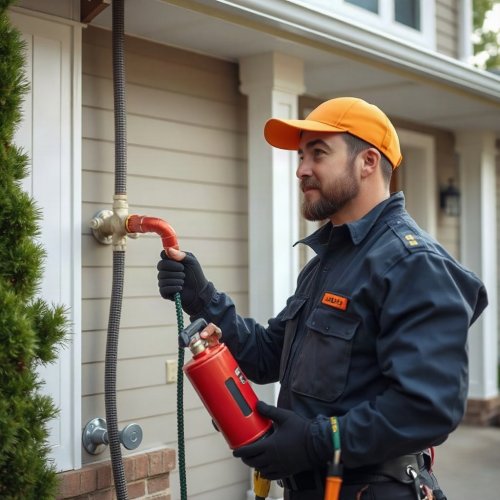
Trenchless Sewer Repair in Fresno, CA: The Homeowner's Guide to No-Dig Pipe Restoration
A broken, collapsed, or root-invaded sewer line is one of the most stressful plumbing emergencies a property owner can face. For decades, fixing an underground sewer line meant bringing heavy excavators into your front yard, tearing up mature landscaping, destroying concrete driveways, ripping through paved walkways, and leaving homeowners with thousands of dollars in property restoration bills on top of the plumbing repair costs.
Fortunately, modern plumbing technology offers a far better alternative. Trenchless Sewer Repair in Fresno, CA allows licensed sewer specialists to rehabilitate, repair, or completely replace underground sewer lines without digging destructive trenches across your property.
Whether you own a historic craftsman in the Tower District, a mid-century home in Central Fresno, or a newer build in Woodward Park, understanding how trenchless sewer repair works, what causes sewer failures in the Central Valley, and when to call a professional will save you time, stress, and substantial amounts of money.

What Is Trenchless Sewer Repair?
Trenchless sewer repair is an advanced, minimally invasive method used by licensed plumbing professionals to fix damaged, cracked, leaking, or root-choked underground sewer pipes without excavating the entire length of the line.
Instead of digging a trench from your home’s foundation all the way out to the city sewer main in the street, trenchless technology requires only one or two small access points (often utilizing an existing cleanout). Through these access points, specialized equipment restores or replaces the damaged pipe from the inside out.
The Two Primary Trenchless Methods
-
Cured-in-Place Pipe (CIPP) Lining (Pipe Relining):
A flexible, epoxy-saturated felt tube (often called a liner or sleeve) is inserted and inflated inside the existing damaged pipe. Once the epoxy cures and hardens (often accelerated using hot water, steam, or UV light), it creates a seamless, jointless, corrosion-resistant "pipe within a pipe." This new structural liner seals all cracks, covers holes, bridges missing pipe sections, and prevents root intrusion for decades.
-
Pipe Bursting:
When an old sewer pipe has completely collapsed, severely ovalized, or needs to be upsized for increased capacity, pipe bursting is used. A heavy-duty conical bursting head is pulled through the old, failing pipe using a hydraulic pulling machine. The head breaks the old pipe apart and pushes the fragments outward into the surrounding soil while simultaneously pulling a brand-new, seamless High-Density Polyethylene (HDPE) pipe into place behind it.
Why Do Sewer Line Failures Happen in Fresno, CA?
Sewer pipes do not fail without reason. In Fresno and the surrounding Central Valley communities (such as Clovis, Sanger, Madera, and Selma), specific environmental, geological, and structural factors contribute to underground pipe breakdown:
-
Aggressive Tree Root Intrusion: Fresno’s hot, dry summers drive the roots of large shade trees (such as Chinese Elms, Modesto Ashes, and Eucalyptus) deep into the ground searching for moisture and nutrients. Underground sewer lines naturally emit water vapor and warmth. Roots enter through microscopic hairline cracks, joint separations, or loose clay fittings. Once inside, they expand rapidly, creating dense root balls that cause persistent clogs and crack open the pipe walls.
-
Aging Pipe Materials: Thousands of homes in Fresno’s older neighborhoods—like the Tower District, Fig Garden, Huntington Boulevard, and Downtown Fresno—were built with clay tile, cast iron, or Orangeburg (bituminized fiber) sewer pipes.
-
Clay pipes become brittle, shift, and crack at the joints.
-
Cast iron pipes suffer from bottom channeling, rust scaling, and calcification after 40 to 60 years.
-
Orangeburg pipes (commonly installed between the 1940s and 1970s) are essentially compressed tar paper that deforms, flattens, and collapses over time.
-
-
Central Valley Soil Shifting (Expansive Clay): Fresno soil contains significant pockets of expansive clay and hardpan layers. During rainy winter months, the ground swells; during long, scorching summer heatwaves, the soil dries out and shrinks. This cyclic ground movement exerts immense shear stress on rigid sewer pipes, causing joint displacement, offset connections, and pipe fractures.
-
Hard Water Mineral Buildup & Scale: Central Valley municipal water and private well systems carry elevated levels of dissolved minerals (calcium and magnesium). Over decades, mineral scale accumulates along the inner walls of cast iron sewer pipes, creating rough snags where grease, hair, and toilet tissue catch and cause chronic blockages.
-
Improper Slope or "Belly" in the Line: If a sewer line was improperly bedded during original construction, or if ground settling has occurred, low spots (known as "bellies") develop. Standing wastewater collects in these dips, causing solids to settle, decompose, and create continuous blockages.
Signs of Sewer Line Damage You Should Never Ignore
Underground sewer failures rarely happen overnight; they give warning signs long before a catastrophic backup occurs. If you notice any of the following symptoms, schedule a professional sewer inspection immediately:
-
Multiple Slow Drains Across the House: If one sink drains slowly, it is likely a localized trap clog. However, if your toilets, showers, tubs, and kitchen sink are all draining sluggishly at the same time, the restriction is in your main sewer lateral.
-
Gurgling Sounds from Fixtures: When water cannot flow freely down the main line, trapped air is forced back up through the plumbing vents and water traps. If your toilet bubbles or gurgles when the washing machine drains or when someone takes a shower, your main line is struggling.
-
Persistent Sewer Gas Odors: A properly sealed sewer system keeps sewer gases underground. If you smell rotten eggs, sulfur, or foul sewage in your yard, near your cleanout, or inside bathrooms and basements, you likely have a cracked or broken sewer line venting gas into the air.
-
Unusually Lush, Green Patches in the Lawn: If a specific patch of your lawn is suddenly greener, taller, and growing faster than the rest of the yard during a dry Fresno summer, nutrient-rich wastewater may be leaking from an underground sewer line and fertilizing the soil above it.
-
Indentations, Sinkholes, or Potholes: As sewage leaks out of a broken pipe, it washes away surrounding soil and sand bedding. Over time, the ground above loses support, leading to sunken spots in the grass, cracked pavers, or sinking concrete driveways.
-
Sewage Backups in Low-Lying Fixtures: When you run water upstairs or flush a toilet, does dirty water or waste back up into the ground-floor bathtub, shower basin, or floor drain? This indicates wastewater has nowhere to go but backward into the lowest openings in the home.
Common Plumbing Problems Related to Sewer Line Failures
When main sewer lines fail, the resulting pressure and contamination trigger secondary plumbing failures throughout your home or commercial building:
-
Main Drain Line Blockages: Total blockage of the 3-inch or 4-inch building lateral, rendering all home fixtures unusable.
-
Structural Slab Leaks & Foundation Damage: In homes built on concrete slab foundations, a leaking sewer line running underneath can saturate the sub-slab soil, cause foundation heaving or cracking, and damage flooring inside the home.
-
Secondary Fixture Damage & Overflow: Backing-up sewer lines can cause toilets to overflow, soaking subfloors, carpets, and drywall with hazardous Category 3 "blackwater."
-
Bacterial and Mold Contamination: Sewage leaks release harmful pathogens, bacteria (E. coli, Salmonella), and excessive moisture into crawlspaces and basements, creating ideal conditions for toxic mold growth.
Step-by-Step Professional Trenchless Sewer Repair Process
When you hire a licensed, reputable plumbing contractor specializing in Trenchless Sewer Repair in Fresno, CA, the job follows a strict, systematic process:
[Step 1: High-Definition Video Camera Inspection]
                       ↓
[Step 2: Hydro Jetting & Mechanical Pipe Descaling]
                       ↓
[Step 3: Precise Dimensional Measurements & Evaluation]
                       ↓
[Step 4: Trenchless Installation (CIPP Lining or Pipe Bursting)]
                       ↓
[Step 5: Curing / Fusion & Connection Reinstatement]
                       ↓
[Step 6: Post-Repair Video Inspection & Quality Verification]
                       ↓
[Step 7: Site Cleanup & Homeowner Maintenance Consultation]
1. High-Definition Video Camera Inspection
A specialized waterproof HD camera mounted on a flexible fiber-optic push rod (or motorized crawler) is inserted through the sewer cleanout. The technician watches the real-time monitor to pinpoint the exact location, depth, and cause of the problem—whether it is root invasion, pipe cracks, corrosion, or full collapse.
2. Hydro Jetting and Mechanical Pipe Descaling
Before any lining material can bond to an old pipe, the host pipe must be thoroughly cleaned. High-pressure hydro jetters (blasting water at 3,500 to 4,000 PSI) scour away grease, flush out roots, and strip scale. For cast iron pipes, mechanical descaling machines with carbide-tipped chains remove rust deposits and restore the pipe to its original circular diameter.
3. Precise Dimensional Measurements & Evaluation
The technician measures the exact length and internal diameter of the line to fabricate the liner or prepare the replacement HDPE pipe. The plumber confirms that the pipe has adequate structural integrity for CIPP lining or determines if pipe bursting is necessary due to total collapse.
4. Trenchless Installation
-
For CIPP Lining: The epoxy resin and hardener are mixed, poured into the felt tube, and evenly distributed through an electric mechanical roller. The liner is loaded into an inversion drum and inverted into the host pipe using compressed air or water pressure.
-
For Pipe Bursting: Two small access pits are excavated (one at the house connection, one near the property line or city connection). A high-tensile steel cable is threaded through the old pipe, attached to the expanding bursting head and new HDPE pipe, and pulled through using a hydraulic power unit.
5. Curing / Fusion and Connection Reinstatement
For CIPP lining, the resin cures into a rock-solid, smooth pipe within a few hours. If any branch lines (such as secondary bathroom drains) enter the main pipe along the lined section, a robotic cutting tool is sent down the line to precisely mill out and reopen ("reinstate") those branch connections.
6. Post-Repair Video Inspection & Quality Verification
A second sewer camera inspection is conducted while recording the footage. This verifies that the new liner or HDPE pipe is perfectly smooth, 100% watertight, free of wrinkles, and correctly connected to the city sewer main. A copy of this video is provided to the property owner.
7. Site Cleanup & Maintenance Consultation
Because no extensive trenches were dug, cleanup is quick. Access pits (if any) are backfilled and compacted. The plumbing team tests all household plumbing fixtures under full load and provides long-term preventive maintenance guidance.
Can You Fix a Broken Sewer Line Yourself?
The short answer: No.
While minor drain clogs inside a bathroom sink P-trap or toilet bowl can often be resolved with a plunger or a simple hand snake, underground sewer line repair is not a do-it-yourself project.
Safe DIY Steps You Can Take:
-
Turn off the main water shut-off valve to prevent more water from running down drains during an active backup.
-
Avoid running washing machines, dishwashers, and showers if a main sewer clog is suspected.
-
Clear accessible cleanout caps outside carefully to relieve hydrostatic pressure (wear heavy rubber gloves, face protection, and eye protection).
Why Professional Equipment Is Non-Negotiable:
-
Specialized Heavy Machinery: Trenchless epoxy inversion machines, industrial UV curing systems, 4,000 PSI hydro jetters, and hydraulic pipe-bursting equipment cost tens of thousands of dollars and require certified training to operate safely.
-
Risk of Catastrophic Blockage: If an untrained individual attempts to pour epoxy down a pipe or miscalculates curing times, the resin can harden prematurely, completely blocking the sewer pipe and requiring total emergency excavation.
-
Biohazard Exposure: Raw sewage contains dangerous biohazards, airborne bacteria, parasites, and hazardous gases (such as methane and hydrogen sulfide) that pose severe health risks without proper containment and PPE.
-
Permits and Local Municipal Codes: The City of Fresno and Fresno County require formal plumbing permits, specific backwater prevention valves, and code-compliant inspections for any structural work on sewer lateral lines.
Advanced Tools Professionals Use for Trenchless Repairs
Modern trenchless sewer rehabilitation relies on high-precision diagnostic and installation equipment:
| Tool / Technology | Primary Function | How It Improves Accuracy & Quality |
| HD Self-Leveling Sewer Cameras | Real-time internal video diagnostics | Shows the exact depth, distance, and nature of pipe damage without digging |
| Electromagnetic Pipe Locators | Above-ground surface mapping | Tracks the camera sonde underground to mark the precise pipe path on lawns and driveways |
| High-Pressure Hydro Jetters | Hydro-mechanical pipe scouring (3,500+ PSI) | Clears roots, heavy grease, and scale to ensure the epoxy liner bonds to the host pipe |
| Robotic Branch Cutters | Internal robotic reinstatement | Navigates inside the newly lined pipe to cut open intersecting drain connections cleanly |
| Hydraulic Pipe-Bursting Pullers | High-tonnage pulling units | Fractures old, broken cast iron or clay pipes while pulling seamless HDPE pipe in place |
| Epoxy Wet-Out & Vacuum Rollers | Liner resin saturation | Guarantees an even, bubble-free distribution of epoxy throughout the felt sleeve |
How Long Does Trenchless Sewer Repair Take?
Traditional open-trench sewer replacement typically takes 3 to 7 business days, during which your yard is excavated, your driveway may be broken, and your home’s water must remain shut off.
In contrast, Trenchless Sewer Repair in Fresno, CA is significantly faster:
-
Camera Inspection & Jetting Cleaning: 2 to 4 hours
-
CIPP Pipe Relining Installation & Curing: 4 to 8 hours (most lining jobs are completed in a single day)
-
Pipe Bursting Replacement: 1 to 2 days (including small pit digging and connection tie-ins)
-
Water Service Interruption: Usually limited to just a few hours during active installation, rather than several consecutive days.
Factors That Influence the Cost of Sewer Repair
Because every plumbing system and property layout is unique, legitimate plumbing contractors provide personalized onsite estimates following a camera inspection rather than quoting arbitrary fixed prices over the phone.
Key factors that determine the scope and cost of the repair include:
-
Length and Diameter of the Pipe: A 30-foot residential lateral costs less in materials and labor than an 80-foot lateral running from a home set far back from the street.
-
Chosen Trenchless Method (CIPP vs. Pipe Bursting): Relining requires a host pipe that has not fully collapsed; pipe bursting requires access pits and heavier pulling rigs.
-
Condition of the Existing Line: Heavy root masses, thick cast iron scale, or pipe offsets require additional mechanical descaling and hydro jetting prep work before repair can begin.
-
Access and Cleanout Availability: If your home already has an accessible ground-level two-way cleanout, labor time is reduced. If a new cleanout must be installed, that adds to initial prep.
-
Location of the Damage: If the break extends past your property line and into the municipal street connection (the city main), special city permits, traffic control plans, and street restoration standards apply.
-
Permit and Municipal Inspection Fees: Local building and safety departments require permits to ensure the repair complies with the California Plumbing Code (CPC).
Note: Plumbing repair costs vary depending on the severity of the problem, accessibility, materials required, emergency service, property type, and local labor rates.
Hidden Truths Homeowners Should Know About Sewer Systems
-
Small Leaks Rapidly Become Massive Foundation Disasters: A hairline crack in an underground sewer pipe slowly erodes the soil supporting your foundation, driveway, or sidewalk, turning a localized pipe repair into an expensive structural repair.
-
Chemical Drain Cleaners Cause Severe Pipe Corrosion: Over-the-counter caustic chemical drain cleaners generate high-temperature chemical reactions that eat through aging cast iron and warp PVC pipes. They rarely clear deep sewer blockages and make professional repairs more hazardous.
-
Homeowners Insurance Frequently Excludes Sewer Lateral Lines: Standard homeowner insurance policies typically do not cover wear-and-tear or root intrusion on exterior underground utility lines unless you have a specific "Water/Sewer Service Line Endorsement."
-
Tree Roots Will Return Unless the Pipe Is Sealed: Simply snaking or augering a line merely punches a temporary hole through tree roots. The roots will regrow thicker and faster within weeks unless the pipe is permanently sealed with a seamless trenchless CIPP liner or HDPE pipe.
-
Annual Video Inspections Save Thousands: Having your sewer line inspected with a video camera every 12 to 24 months allows you to identify minor joint separations or scale buildup years before they result in a catastrophic sewage backup.
15 Common Mistakes Homeowners Make (And How to Avoid Them)
-
Flushing "Flushable" Wipes: Despite marketing claims, wet wipes do not break down like toilet paper. They snag on pipe imperfections, bind with grease, and cause severe main line clogs. Only flush toilet paper and human waste.
-
Pouring Fats, Oils, and Grease (FOG) Down the Drain: Liquid cooking grease cools and solidifies inside underground sewer pipes, creating rock-hard blockages called "fatbergs." Dispose of grease in a sealed container in the trash.
-
Ignoring Early Warning Signs: Treating slow drains or toilet gurgles with casual indifference until raw sewage backs up into the shower. Call a plumber at the first sign of chronic slow drainage.
-
Hiring Unlicensed Handymen for Underground Work: Underground sewer lines require specialized licensing, bonding, insurance, and code compliance. Always hire a licensed C-36 plumbing contractor.
-
Relying Exclusively on Snaking for Root Intrusion: Snaking cuts a small hole through the center of roots but leaves the structural crack wide open for aggressive regrowth. Invest in permanent trenchless relining.
-
Planting Water-Hungry Trees Directly Over Sewer Lines: Planting weeping willows, elms, or ficus trees near your front yard sewer lateral guarantees root intrusion. Plant deep-rooting trees at least 20 feet away from utility lines.
-
Neglecting Sewer Cleanouts: Burying the outdoor cleanout cap under mulch, concrete, or dirt makes emergency access difficult and costly during a backup. Keep your cleanouts visible and accessible.
-
Using Caustic Chemicals to Clear Main Line Clogs: Chemicals sit in standing water, generating heat that damages pipes while failing to reach the main sewer obstruction. Use mechanical clearing methods like hydro jetting.
-
Waiting for a Complete Pipe Collapse: Delaying repair on a cracked pipe until it completely caves in eliminates CIPP lining as an option, forcing more expensive pipe bursting or excavation. Act while the host pipe is still intact.
-
Not Inquiring About Trenchless Alternatives: Allowing a contractor to dig up your entire yard and landscape without first getting an assessment for trenchless feasibility. Always ask if trenchless repair is an option.
-
Assuming All Plumbers Have Trenchless Equipment: Many general plumbers do not own specialized trenchless relining or pipe-bursting equipment and will default to destructive trenching. Choose a dedicated sewer specialist.
-
Skipping Post-Repair Video Verification: Failing to ask the plumber for a final camera inspection recording after the repair is finished. Always verify the completed repair on video.
-
Forgetting to Install a Backwater Prevention Valve: If your home sits lower than the upstream sewer manhole, a municipal sewer main backup can flood your house without a backwater valve. Have a licensed plumber inspect or install a backwater valve.
-
Over-Tightening Cleanout Caps: Cross-threading or overtightening plastic cleanout plugs can crack the cleanout neck or make it impossible to open during an emergency. Hand-tighten securely with a light wrench turn.
-
Not Checking for Underground Utility Lines Before Digging: Attempting DIY digging projects in the yard without calling 811 to mark gas, electric, and communication lines. Always call 811 before any digging project.
18 Practical Preventive Maintenance Tips
-
Perform Monthly Hot-Water Flushes: Fill all sinks and tubs with hot water, then release them simultaneously to flush sediment and soap residue through the main line.
-
Install High-Quality Sink Strainers: Use mesh strainers in all kitchen and bathroom drains to catch hair, food particles, and debris.
-
Keep Trash Cans in All Bathrooms: Prevent guests from flushing feminine hygiene products, dental floss, cotton swabs, and paper towels.
-
Run Cold Water with Garbage Disposals: Always run a steady stream of cold water before, during, and for 20 seconds after using the garbage disposal to ensure food particles travel completely through the lateral.
-
Limit Garbage Disposal Starchy Waste: Never put potato peels, pasta, rice, eggshells, or coffee grounds down the garbage disposal.
-
Schedule Annual Hydro Jetting for Commercial Lines: Restaurants and multi-family properties should have main lines professionally hydro jetted annually to prevent grease accumulation.
-
Schedule Biennial Video Camera Inspections: For residential homes over 30 years old, get a sewer camera inspection every two years.
-
Inspect the Yard After Heavy Rains: Check for sudden depressions, damp spots, or foul odors in the yard following winter Central Valley rainstorms.
-
Know the Location of Your Main Cleanout: Ensure every adult in the household knows where the primary sewer cleanout and main water shut-off valves are located.
-
Check Toilet Flappers and Fill Valves: A running toilet wastes thousands of gallons of water and puts unnecessary continuous flow into your sewer line.
-
Maintain Plumbing Air Vents: Ensure roof plumbing vent pipes remain free of bird nests, leaves, and debris so your drainage system maintains proper atmospheric pressure.
-
Install a Water Softener if Mineral Content Is High: Protect your interior plumbing and drain walls from heavy calcium carbonate scale accumulation.
-
Use Enzyme-Based Biological Drain Maintainers: Use non-toxic bacterial/enzyme drain treatments monthly to break down organic buildup naturally without harming pipes.
-
Educate Family Members and Guests: Establish clear household rules regarding what can and cannot be flushed down the toilets.
-
Insulate Exposed Pipes in Winter: While Fresno has mild winters, occasional sub-freezing overnight temperatures can freeze exposed cleanout pipes or exterior backflow devices.
-
Check Cleanout Cap Seals: Ensure exterior cleanout caps are tight so stormwater, leaves, and pests (like rodents and roaches) cannot enter your plumbing system.
-
Address Fixture Back-Pitched Drains Promptly: If a sink or tub holds water in the trap arm, have the slope corrected to prevent stagnant buildup.
-
Upgrade Old Cast Iron Stacks Before They Rot: If your indoor waste stacks show heavy rust blistering, consult a professional plumber before they fail completely.
When Should You Call an Emergency Plumber?
Certain sewer issues require immediate, 24/7 professional plumbing intervention to prevent catastrophic property damage and health hazards:
+-------------------------------------------------------------------------------+
|                        EMERGENCY SEWER SITUATION CHECKLIST                    |
+-------------------------------------------------------------------------------+
| [!] Raw sewage backing up into bathtubs, showers, or ground-level floor drains |
| [!] Wastewater overflowing onto living areas, carpets, or hardwood flooring   |
| [!] Strong, nauseating sewer gas odors spreading inside living spaces         |
| [!] Sudden sinkholes or ground collapse developing rapidly in your yard       |
| [!] Simultaneous failure of all household drainage fixtures                   |
| [!] Continuous sewage leakage threatening neighboring properties or waterways |
+-------------------------------------------------------------------------------+
If you experience any of these situations, immediately shut off your home's main water supply, keep children and pets away from contaminated areas, and contact an emergency plumbing service immediately.
Frequently Asked Questions
1. How do I know if my sewer line is broken or just clogged?
A simple clog usually affects a single fixture (e.g., one clogged toilet or sink) and can be cleared with a plunger or snake. A broken, collapsed, or root-invaded sewer line affects multiple fixtures throughout the house simultaneously, causes gurgling sounds, creates recurring backups, produces sewer odors, and often results in soggy patches in the yard. A sewer camera inspection is the only definitive way to confirm the condition of the pipe.
2. Is trenchless sewer repair as durable as traditional open-trench replacement?
Yes. CIPP pipe liners and seamless HDPE pipe used in trenchless installations are engineered to last 50 years or more. They are impervious to moisture, highly resistant to chemical corrosion, smooth enough to improve flow capacity, and completely seamless—which prevents tree roots from ever penetrating the line again.
3. Will trenchless sewer repair damage my lawn, patio, or driveway?
No. Minimizing property damage is the primary advantage of trenchless technology. Unlike traditional excavation, which requires digging a continuous ditch through grass, concrete walkways, driveways, and porches, trenchless methods work through existing cleanouts or one or two small access pits, keeping your landscaping and hardscaping intact.
4. Can every damaged sewer pipe be repaired with trenchless lining?
While most pipes can be relined, CIPP lining requires a "host pipe" that is structurally intact enough to guide and hold the liner. If an old pipe has completely collapsed, crushed flat, or developed an extreme belly (sag), pipe bursting or localized excavation may be required instead. A video camera inspection will determine which method is right for your line.
5. How long does the trenchless lining curing process take?
Depending on the ambient temperature, the diameter of the pipe, and the curing method used (ambient air, hot water, steam, or UV light), the epoxy resin typically cures in 2 to 5 hours. Most trenchless pipe relining projects are started and completed on the exact same day.
6. Can tree roots grow through a trenchless cured-in-place pipe?
No. Traditional pipes have joints and seams every 5 to 10 feet where tree roots naturally enter. Trenchless CIPP liners and HDPE pipes are 100% seamless and jointless from end to end, leaving zero gaps, cracks, or loose fittings for roots to penetrate.
7. Is hydro jetting safe for older cast iron or clay pipes?
When performed by a trained, licensed plumbing technician who adjusts the water pressure appropriately, hydro jetting is completely safe and highly effective for cast iron and clay pipes. Plumbers always run a video camera first to assess pipe integrity before starting the hydro jetting process.
8. Does the City of Fresno require permits for trenchless sewer repair?
Yes. The City of Fresno and Fresno County require plumbing permits and code-compliant inspections for main sewer lateral replacements and relining to verify that all work meets California Plumbing Code standards and connects properly to the city main.
9. Why is my water pressure suddenly low along with drainage problems?
Water pressure and sewer drainage are technically separate systems. However, if you have low water pressure alongside sewer backups, it could indicate ground shifting that has damaged both your incoming fresh water line and your outgoing sewer line, or severe corrosion in aging galvanized/cast iron plumbing systems.
10. When should I replace my sewer pipe instead of repairing it?
If your sewer line has a small, localized crack or moderate root intrusion in an otherwise solid pipe, localized spot repair or CIPP relining is ideal. However, if the pipe has multiple full collapses, severe backward slopes (bellies), or is made of disintegrating Orangeburg material, a full trenchless replacement via pipe bursting is the most cost-effective long-term solution.
Why Choose Our Plumbing Team in Fresno
When dealing with complex underground sewer lines, you need experienced, licensed professionals equipped with state-of-the-art diagnostic and trenchless technology:
-
Experienced, Licensed Plumbers: Highly trained C-36 plumbing specialists with extensive local experience addressing Central Valley soil conditions, historical home piping, and commercial drainage systems.
-
Modern Trenchless Equipment: Advanced high-definition camera systems, commercial hydro jetters, precision CIPP inversion equipment, and pipe-bursting rigs.
-
Transparent, Upfront Estimates: Honest assessments and clear, detailed quotes following an in-depth video camera evaluation—no hidden surprises or aggressive upselling.
-
Fast Response & Emergency Availability: Rapid response times across Fresno and surrounding communities when urgent sewer emergencies threaten your property.
-
Local Central Valley Expertise: Comprehensive familiarity with Fresno’s municipal plumbing codes, local utility layouts, and neighborhood-specific plumbing challenges.
Service Areas Across Fresno County
Professional trenchless sewer repair and drain restoration services are available throughout Fresno, CA, and neighboring Central Valley communities, including:
-
Fresno Neighborhoods: Tower District, Woodward Park, Fig Garden, Sunnyside, Hoover, Bullard, Roosevelt, West Fresno, and Downtown Fresno.
-
Surrounding Cities: Clovis, Sanger, Selma, Madera, Fowler, Kingsburg, Kerman, Reedley, and Coalinga.