No Water in Your Fresno Home
Turned on the faucet and got nothing? Learn why there is no water in your Fresno home, how to check common causes, and when to call a licensed plumber.
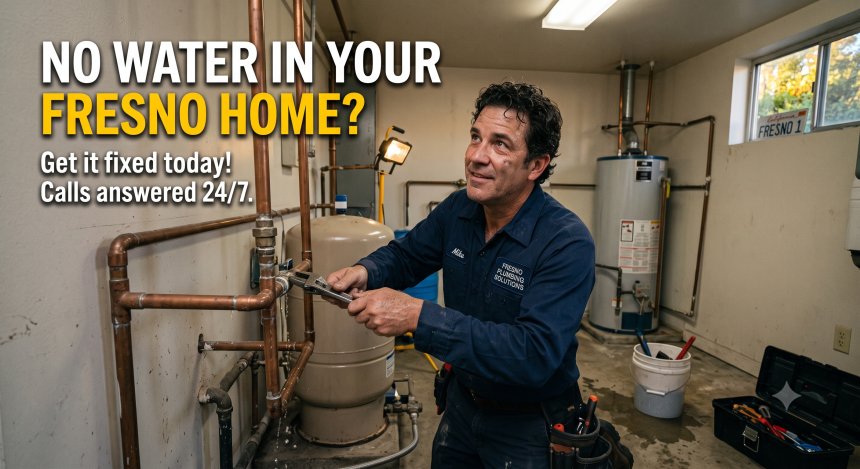
No Water in Your Fresno Home? Common Plumbing Causes
You turn the faucet handle to brush your teeth, wash dishes, or jump in the shower, and nothing comes out. Not a sputter, not a trickle—complete silence.
Experiencing no water in your Fresno home? Common plumbing causes range from simple shut-off valve accidents to municipal supply interruptions, severe main line breaks, or extreme hard water calcification.
Whether you live in an older mid-century home in the Tower District, a newer build in Woodward Park, or manage a property across Clovis and Fresno County, an unexpected loss of running water stops daily life in its tracks. Before panic sets in, understanding how your home's water distribution system operates will help you identify the source, take safe troubleshooting steps, and know when it is time to call a licensed professional.
What Does a Complete Loss of Water Mean?
A complete loss of water occurs when pressurized water supplied by the City of Fresno water system or a private groundwater well fails to reach your plumbing fixtures.
This issue generally presents in two distinct ways:
-
Whole-House Outage: Every single fixture across the property—kitchen sinks, bathroom faucets, toilets, outdoor hose bibs, and laundry lines—has zero running water.
-
Isolated Fixture Outage: Water flows normally in one part of the house (for example, the downstairs bathtub), but an upstairs bathroom faucet or the kitchen sink produces nothing.
Understanding this distinction is the first diagnostic step. An isolated outage points toward fixture-specific supply line issues, localized clogs, or faulty cartridge valves. A whole-house outage indicates a breakdown at or before the main water service entry.
Why Does This Plumbing Problem Happen?
Fresno's climate, local soil conditions, water chemistry, and architectural age all play direct roles in sudden plumbing outages.
1. Main Water Shut-Off Valve Was Closed Accidentally
The main shut-off valve controls the total volume of pressurized water entering your home. If landscapers, contractors, or curious children bump or partially turn an exterior gate valve or ball valve, water flow will cease instantly. In older properties, aging gate valves can suffer internal stem failure, causing the internal gate to drop shut even if the external wheel appears open.
2. Municipal Supply Interruption or Water Main Breaks
The City of Fresno Department of Public Utilities regularly conducts system maintenance, valve upgrades, and emergency main line repairs. When a city main ruptures under street level, municipal crews shut off localized feeder lines to prevent road erosion and structural flooding, cutting off service to adjacent neighborhoods.
3. Severe Underground Main Line Leaks or Ruptures
The underground pipe running from your city water meter at the sidewalk to your home’s foundation is your responsibility as a property owner. In the Central Valley, shifts in clay soils, seismic settling, and invasive tree roots (especially from mature landscape trees) can crack or completely shear this supply pipe, discharging thousands of gallons into the soil while starving your household fixtures of water pressure.
4. Fresno Hard Water & Heavy Mineral Calcification
Fresno relies heavily on regional groundwater wells, resulting in moderate-to-high water hardness rich in calcium and magnesium carbonate. Over years, mineral scale accumulates along the inner walls of galvanized iron or copper pipes. Eventually, this scale hardens into rock-like obstructions, choking off water flow entirely at pipe elbows and supply adapters.
5. Water Meter Shut-Off by the Utility Provider
Utility providers may shut off service at the street curb box if an active, massive leak is detected by automated meter infrastructure, or if maintenance accounts require verification.
6. Aging and Corroded Galvanized Piping
Homes built before the 1970s across Central Fresno often feature galvanized steel distribution networks. Over decades, these pipes corrode internally through oxidation. Rust flakes dislodge and accumulate at pipe junctions, creating impenetrable metal dams that halt water flow.
7. Water Pressure Regulator (PRV) Failure
A Pressure Reducing Valve (PRV) installed on your main water entry line ensures municipal street pressure (often 80–100+ PSI) is reduced to a safe residential range (45–65 PSI). When the internal mechanical diaphragm or spring fails, the valve can fail in a fully closed position, stopping incoming flow.
8. Frozen Pipes During Valley Cold Snaps
While Fresno is renowned for summer heat, winter nights often drop below freezing (32°F / 0°C), particularly during December and January Tule fog inversions. Uninsulated exposed pipes running through unheated crawl spaces, attics, or outdoor exterior walls can freeze, creating solid ice blockages that starve downstream faucets.
Warning Signs You Should Never Ignore
Plumbing systems rarely fail overnight without subtle warning indicators. Watch for these preliminary symptoms before a total outage occurs:
-
Progressive Pressure Drops: Faucets that gradually lose velocity over several weeks indicate worsening scale buildup, a failing pressure regulator, or a slow underground leak.
-
Sputtering Faucets (Air in the Lines): Faucets that spit and hiss when opened indicate air entering the pressurized system—often caused by a hairline crack in an exterior supply pipe.
-
Sudden Spikes in Water Bills: An unexplained surge in your municipal utility statement strongly suggests an underground supply line break leaking water into the soil before it enters the home.
-
Damp, Marshy Patches in the Yard: Lush green spots or soggy depressions in your front lawn along the line from the street meter indicate an active main line rupture.
-
Discolored or Rusty Water: Brown, yellow, or reddish water when you first open taps signals severe internal pipe corrosion that will eventually break free and clog lines.
-
Humming or Banging Pipe Noises: Water hammer and high-pitched whistling behind walls point to failing valves or severe internal diameter restrictions.
Common Plumbing Problems Related to Sudden Water Loss
A sudden loss of water is often accompanied by secondary failures across other household utilities:
-
Water Heater Burnout: If water supply stops while an electric or gas water heater is operating, the unit can overheat, trip thermal limit switches, or burn out internal heating elements.
-
Slab Leaks: Underground supply pipes running beneath concrete slab foundations can rupture silently, washing away soil foundation support.
-
Backsiphonage and Contamination: A sudden loss of pressure creates negative suction in supply pipes, risking the cross-connection of non-potable water into household lines if proper backflow preventers are absent.
-
Fixture Cartridge Clogs: Following any pressure drop or line disturbance, dislodged sediment floods bathroom and kitchen cartridges, clogging aerators and thermostatic valves.
Step-by-Step Professional Diagnostic and Repair Process
When you contact a licensed professional to diagnose why there is no water in your home, the repair follows a structured diagnostic protocol:
[Step 1: On-Site Inspection & Valve Assessment]
                      │
                      ▼
[Step 2: Municipal & Meter Chamber Verification]
                      │
                      ▼
[Step 3: Acoustic & Electronic Leak Detection]
                      │
                      ▼
[Step 4: Transparent Written Diagnostic Estimate]
                      │
                      ▼
[Step 5: Targeted Code-Compliant Mechanical Repair]
                      │
                      ▼
[Step 6: High-Pressure Flow & Quality Testing]
                      │
                      ▼
[Step 7: Workspace Cleanup & Preventive Advice]
Step 1: Physical Inspection & Valve Verification
The technician begins by verifying the exact position and mechanical condition of the main interior shut-off valve, customer-side meter valves, and the pressure reducing valve (PRV).
Step 2: Municipal Supply & Meter Verification
The plumber checks the utility meter chamber to verify that city water is flowing up to the property line and that the city curb stop is fully functional.
Step 3: Diagnostic Pressure & Acoustic Leak Testing
Using non-invasive electronic acoustic microphones, thermal imaging, and mechanical pressure gauges, the technician isolates the supply network to determine if the line has dropped pressure due to a rupture, freeze, or mechanical blockage.
Step 4: Upfront Written Estimate
Before touching any tool to a pipe, the technician explains the exact root cause, provides clear options (such as spot repair vs. full water service line replacement), and delivers upfront pricing.
Step 5: Mechanical Repair or Pipe Replacement
Using modern plumbing techniques—such as open-trench line replacement, directional boring, pipe relining, or valve rebuilds—the plumber restores structural integrity using durable, code-approved materials like Type L copper or PEX tubing.
Step 6: System Flushing and Hydrostatic Pressure Testing
Once the physical repair is complete, the plumber slowly repressurizes the system, bleeds air pockets from all branches, and flushes dislodged sediment through utility tubs to protect sensitive appliance valves.
Step 7: Final Cleanup & Preventive Maintenance Review
The work area is sanitized, all fixtures are verified for balanced water flow, and the homeowner receives specific guidance on maintaining main valves and filtration systems.
Safe Homeowner Troubleshooting vs. Dangerous DIY
While major pipe replacements require professional licensing, homeowners can perform several safe, initial diagnostic checks.
Safe Troubleshooting Steps
-
Check Other Fixtures: Turn on hot and cold taps in every bathroom, the kitchen, and outdoor hose bibs. Determine if the outage is universal or isolated.
-
Inspect the Main Shut-Off Valve: Locate your main shut-off valve (typically on an exterior front wall near the hose bib or in the garage). Ensure the ball valve handle is fully parallel to the pipe (OPEN) or the round gate valve wheel is turned completely counter-clockwise.
-
Ask the Neighbors: Step outside and ask immediate neighbors if their water is working. If their water is also off, the issue is an unannounced municipal repair or district-wide main break.
-
Check Aerators: If only one faucet fails, unscrew the small mesh aerator at the tip of the spout. Clean out mineral grit and replace it.
When DIY Becomes Dangerous
-
Never Force a Jammed Valve: Applying excessive leverage or pipe wrenches to an old, corroded brass gate valve can snap the stem, causing instant high-volume flooding.
-
Never Dig Blindly in the Yard: Attempting to dig up a suspected main line break without calling 811 for utility line marking risks striking buried electrical cables or gas mains.
-
Never Heat Frozen Pipes with Open Flames: Using propane torches to thaw frozen pipes inside walls or crawl spaces causes house fires and creates steam pockets that burst pipes violently.
Diagnostic Tools Professionals Rely On
Accurate plumbing diagnostics requires commercial-grade equipment designed to identify hidden problems non-destructively:
| Diagnostic Tool | Operational Function | Direct Homeowner Benefit |
| Acoustic Leak Detectors | Amplifies sound frequencies of underground water escaping pressurized lines | Pinpoints underground ruptures without digging up entire lawns |
| High-Resolution Inspection Cameras | Navigates through pipe interiors with real-time digital video feeds | Identifies internal scale dams, structural collapses, and blockages |
| Hydrostatic Test Gauges | Measures static and dynamic pressure levels across distinct zones | Determines if PRVs or municipal connections are failing |
| Electromagnetic Pipe Locators | Traces metallic and non-metallic utility paths under soil and concrete | Prevents accidental damage to adjacent utility infrastructure |
| Trenchless Pipe Pullers / Boring Rigs | Installs new water service lines underground without trenching | Preserves landscaping, driveways, and concrete hardscapes |
Repair Timelines: What to Expect
The duration of a plumbing repair depends directly on accessibility, root cause, and the scope of structural damage:
-
Simple Valve Restorations (1 to 2 Hours): Replacing a failed customer shut-off valve, servicing an accessible PRV, or clearing sediment from clogged fixture supply lines.
-
Moderate Diagnostic & Spot Repairs (2 to 4 Hours): Thawing frozen sections safely, rebuilding broken outdoor manifold lines, or repairing accessible pinhole leaks.
-
Major Main Line Replacements (1 to 2 Days): Trenchless or open-trench replacement of the underground water service line from the street meter to the home, including permitting and inspections.
-
Emergency Water Restorations (Immediate Response): Initial isolation and temporary bypass installation to restore baseline sanitation within hours while long-term repairs are scheduled.
Factors That Influence Plumbing Repair Costs
Because plumbing infrastructure varies significantly across residential and commercial properties, repair costs depend on several specific variables:
-
Diagnostic Complexity: Simple accessible valve tests require less time than deep electronic underground acoustic leak locating across expansive lots.
-
Location and Accessibility of Pipes: Pipes located in open basements or exterior manifolds require substantially less labor than lines buried 4 feet deep beneath concrete driveways, mature trees, or structural slab foundations.
-
Pipe Material Selection: Replacing damaged lines with high-grade Type L copper, commercial PEX-a, or CPVC entails different material costs, fittings, and tooling requirements.
-
Permitting & Municipal Code Requirements: Structural replacements of the main water service line require municipal permits and city inspections to verify compliance with California Plumbing Code standards.
-
Emergency Service Timing: Service calls during standard business hours differ from after-hours, holiday, or midnight emergency dispatches that require rapid technician deployment.
Plumbing repair costs vary depending on the severity of the problem, accessibility, materials required, emergency service, property type, and local labor rates.
Hidden Plumbing Truths Every Homeowner Should Know
-
Small Pressure Drops Precede Catastrophic Failures: A gradual drop in pressure is almost never temporary; it is your plumbing system warning you of severe scaling, valve corrosion, or an active underground leak.
-
Cheap Temporary Fixes Cause Costly Water Damage: Rubber clamps, epoxy putty, and DIY tape wraps on pressurized lines inevitably blow out under normal 50+ PSI residential pressure, risking thousands of dollars in water damage.
-
Insurance Policies Frequently Exclude Gradual Leaks: Most homeowner insurance policies cover sudden, accidental pipe bursts—but deny claims resulting from neglected, long-term corrosion or gradual main line wear.
-
Hard Water Dramatically Reduces Fixture Lifespan: Untreated mineral-heavy water cuts water heater efficiency by up to 30% and clogs internal valve mechanisms decades ahead of their rated lifespan.
-
DIY Over-Tightening Weakens Plumbing Assemblies: Applying excessive torque to brass or plastic fittings strips threads and creates hairline micro-fractures that burst under thermal expansion cycles.
-
Hidden Underground Leaks Double Utility Bills Silently: A main line leak leaking deep in sandy or loamy soil may never surface visibly, wasting tens of thousands of gallons while increasing your monthly bill.
-
Mold Colonies Establish Within 24 to 48 Hours: Water escaping behind drywall or beneath crawl spaces creates hazardous fungal growth within two days, necessitating costly environmental remediation alongside plumbing repairs.
-
Annual Plumbing Inspections Prevent Unplanned Outages: Routine valve cycling, pressure testing, and water heater flushes identify worn components before they leave your household without water.
15 Common Mistakes Homeowners Make
-
Ignoring Faucet Sputtering: Dismissing air in the lines allows minor suction leaks to deteriorate into major pipe ruptures.
-
Forcing a Corroded Main Valve: Turning a frozen gate valve with excessive force snaps the internal brass stem, leaving the home completely without water.
-
Pouring Caustic Chemical Cleaners Down Drains: Chemical drain openers generate intense heat through chemical reactions, warping PVC lines and accelerating the corrosion of aged metal pipes.
-
Neglecting the Pressure Reducing Valve (PRV): Allowing household pressure to run above 75 PSI stresses pipe joints, blows out washing machine hoses, and destroys water heater tanks.
-
Hiring Unlicensed Handymen for Main Line Work: Non-licensed contractors lack the specialized tooling, bonding, and code knowledge required to install compliant, pressure-rated water lines.
-
Failing to Insulate Exposed Pipes Before Winter: Leaving exterior backflow assemblies and hose bibs uninsulated during sub-freezing nights guarantees frozen pipe blockages.
-
Planting Deep-Rooted Trees Near Water Mains: Planting aggressive landscape trees near the front utility path allows roots to envelop, crush, and break underground supply pipes.
-
Forgetting the Location of the Main Shut-Off: Scrambling to locate your main shut-off valve during an active rupture wastes precious minutes while water floods your home.
-
Leaving Garden Hoses Connected in Winter: Trapped water inside connected hoses freezes backward into the exterior hose bib, cracking the internal valve body inside your wall.
-
Using Mismatched Metals Without Dielectric Unions: Connecting copper directly to galvanized steel causes rapid galvanic corrosion, welding fittings shut with rust.
-
Flushing Flushable Wipes and Hygiene Products: Non-dispersible wipes snag on rough pipe joints, creating severe sewer backups that force fixture shutdowns.
-
Skipping Routine Water Heater Maintenance: Failing to flush sediment out of tank-style heaters allows mineral layers to insulate the bottom, causing premature tank cracking.
-
Ignoring Small Damp Spots in the Yard: Assuming a soggy patch of grass is simply over-irrigation delays detection of a broken municipal supply line.
-
Over-Relying on Temporary Fixes: Treating a patch as a permanent repair leaves your home exposed to sudden pipe failure.
-
Delaying Repairs Until Total Failure Occurs: Waiting until every faucet runs dry turns a standard scheduled repair into a high-stress emergency call.
18 Practical Maintenance Tips to Protect Your Water Supply
-
Cycle Main Shut-Off Valves Annually: Turn your main ball or gate valve off and on once every year to prevent mechanical binding and scale buildup.
-
Test Household Water Pressure Semiannually: Thread an inexpensive mechanical pressure gauge onto an outside hose bib; ensure reading remains between 45 and 65 PSI.
-
Insulate All Exposed Exterior Pipe Runs: Wrap exterior copper manifolds, backflow assemblies, and crawlspace pipes in closed-cell foam insulation.
-
Install a Whole-Home Water Softener or Filtration System: Mitigate Central Valley hard water scale to preserve pipe diameter and protect internal fixture cartridges.
-
Label Your Main Water Shut-Off Clearly: Place a high-visibility tag on your main interior water valve so every family member can find it in an emergency.
-
Disconnect Garden Hoses Every Autumn: Remove hoses from outdoor spigots before winter freeze warnings to protect frost-free sillcocks.
-
Flush Tank Water Heaters Annually: Drain and flush built-up calcium and lime sediment from your water heater tank to maintain consistent hot water delivery.
-
Check Toilet Supply Tubes: Replace older rigid plastic or rubber toilet lines with braided stainless steel supply lines every 5 to 7 years.
-
Inspect Washing Machine Hoses Regularly: Replace rubber laundry hoses with reinforced stainless-steel braided lines to prevent sudden blowouts.
-
Keep Deep-Rooted Trees Clear of the Utility Line: Maintain at least a 10-foot buffer between large landscape trees and your underground water service route.
-
Clean Faucet Aerators Every Six Months: Unscrew aerators, soak them in white vinegar to dissolve mineral scale, and rinse thoroughly.
-
Inspect the Water Meter for Silent Leaks: Turn off all household fixtures, check the small leak indicator dial on your water meter, and verify that it remains completely stationary.
-
Maintain Clear Physical Access to Utility Boxes: Trim bushes and clear soil away from your street curb box and main house valves.
-
Know Your Pipe Materials: Identify whether your home uses copper, PEX, galvanized steel, or polybutylene so you can plan proactive repiping before catastrophic failures occur.
-
Install Automatic Water Shut-Off Sensors: Modern smart water monitoring systems detect unusual continuous flow and automatically close the main valve to prevent flooding.
-
Clear Crawl Space Vents in Sub-Freezing Weather: Close or insulate foundation crawl space vents during severe winter freezes to keep cold drafts away from subfloor piping.
-
Never Hang Items on Exposed Pipes: Avoid using exposed basement, garage, or utility room pipes as hanging racks for tools, clothes, or storage.
-
Schedule an Annual Professional Plumbing Inspection: Have a licensed professional perform comprehensive pressure testing, valve checks, and camera diagnostics to ensure your plumbing system is running reliably.
When Should You Call an Emergency Plumber?
Certain plumbing crises cannot wait for normal business hours. Contact an emergency plumber immediately if you encounter:
-
Complete Lack of Water Across the Entire Property: When sanitation, cooking, and basic hygiene are compromised and you cannot identify a closed valve.
-
Active, Uncontrollable Underground or In-Wall Flooding: When water is gushing through walls, under slabs, or out of lawns and the main shut-off valve fails to turn.
-
Sewage Backing Up into Showers and Sinks: A primary sewer main collapse combined with no fresh water creates an immediate biohazard.
-
Signs of a Burst Pipe Following a Severe Freeze: When frozen pipes begin to thaw and spray high-pressure water inside wall cavities or ceilings.
-
Sudden Structural Soil Sinking Near Your Foundation: When an underground line rupture washes away soil, risking structural foundation movement or driveway collapse.
Frequently Asked Questions
Why is my water pressure suddenly low across all faucets?
A sudden drop across all fixtures usually points to a partially closed main shut-off valve, a failed pressure reducing valve (PRV), a major municipal supply disruption, or a catastrophic underground supply leak.
How do I locate my home’s main water shut-off valve?
In most Central California homes, the main shut-off is located on an exterior wall near the front hose bib, inside the garage near the water heater, or in an underground ground box near the front property line.
Can hard water cause a complete loss of water?
Yes. Over decades, calcium and mineral deposits coat the interior of galvanized steel and copper pipes. This scaling can narrow the pipe's internal diameter until dislodged flakes create an impenetrable blockage at pipe bends and valves.
What should I do if my pipes freeze during a cold snap?
Keep affected faucets open to relieve pressure, locate the frozen section of pipe, and apply gentle heat using a hairdryer or warm towels. Never use an open flame or propane torch, and call a licensed plumber if you suspect the pipe has cracked.
How can I tell if the water outage is my problem or the city’s?
Check with your immediate neighbors and inspect your outside hose bib closest to the street meter. If no water flows anywhere on your street, the issue is likely a city main break or scheduled municipal repair.
How much does professional leak detection cost?
Diagnostic costs vary based on whether the leak is accessible or requires specialized electronic, acoustic, or thermal imaging equipment to locate beneath concrete slabs and deep soil. A reputable plumber will provide upfront diagnostic rates before beginning work.
Is hydro jetting safe for older water or sewer pipes?
Hydro jetting is highly effective for clearing heavy scale and root intrusions in sewer mains, but it should only be performed after a camera inspection confirms that older, corroded pipes can withstand the high-pressure water stream.
Why does air sputter out of my faucet when I turn it on?
Sputtering indicates air pockets inside your pressurized plumbing system. This happens after municipal maintenance, following a water shut-off, or when a broken supply line pulls air into the system through negative pressure.
How long do underground water service lines typically last?
Copper lines can last 40 to 60+ years depending on soil chemistry, while modern PEX lines offer exceptional longevity and resistance to mineral scaling. Older galvanized steel lines often fail or choke with rust after 30 to 50 years.