How to Unclog a Kitchen Sink Fast
Learn how to unclog a kitchen sink yourself with expert plumbing tips, safe DIY methods, and when to call a professional in Fresno.

Standing over a basin filled with greasy, gray dishwater when you have just finished cooking dinner is an instant mood killer. Dealing with a stubborn unclog a kitchen sink emergency disrupts your entire household routine and creates an unsanitary mess. Homeowners across the Central Valley frequently encounter slow drains due to the accumulation of cooking oils, starches, and food scraps, yet many resort to harsh chemical fixes that worsen pipe degradation. Ignoring a sluggish drain allows organic matter to decompose inside your waste lines, attracting pests and risking a complete sewage backup. Knowing how to safely tackle this challenge protects your cabinetry and restores smooth kitchen operations.
What Is a Kitchen Drainage Obstruction? Decoding the Mechanism
Your kitchen sink drainage system relies on gravity and a precise network of pipes, including the tailpiece, the P-trap, and the branch drain leading to the main stack. As water leaves your basin, it flows downward into the curved P-trap—a U-shaped section of pipe designed to hold a small pool of standing water that blocks sewer gases from entering your home.
This system functions smoothly when only liquids and finely macerated particles pass through. However, when fats, oils, and grease (FOG) enter the warm water flow and cool down inside the pipes, they solidify. This sticky lining catches coffee grounds, rice, and eggshells, forming a dense sludge plug that chokes off water velocity and leads to total blockages.
Root Causes: Why This Problem Occurs in Fresno Homes
Fresno’s unique regional environment and local residential infrastructure present specific challenges for kitchen plumbing systems. While Fresno doesn't experience midwestern freeze-thaw cycles, local soil shifting in neighborhoods with expansive clay sub-grades can subtly stress underground sewer lines, slowing down the discharge rate of household waste.
Furthermore, local architecture and water properties contribute to frequent blockages:
-
Hard water mineral binding: Fresno's mineral-rich groundwater combines with soap scum and grease particles inside older galvanized or cast-iron pipes, creating an exceptionally hard, cement-like buildup.
-
Aging residential infrastructure: Historic homes in older Fresno districts often feature narrow, out-of-code branch drain diameters that easily catch fibrous food waste.
-
Improper disposal habits: The frequent use of garbage disposals for heavy starches, potato peels, and coffee grounds overwhelms lateral waste lines that lack proper slope.
Critical Warning Signs: When Your Kitchen Drain is Sounding the Alarm
Recognizing early sensory indicators helps you resolve a minor flow restriction before it transforms into a midnight kitchen flood.
-
Auditory warnings: Distinct gurgling or bubbling sounds coming from the drain or a neighboring dishwasher air gap as water attempts to force past an air pocket.
-
Olfactory indicators: Foul, sulfurous, or rancid food odors rising up through the sink basket, signaling decomposing organic sludge trapped inside the P-trap or wall arms.
-
Tactile and performance clues: Water pooling around the drain flange and taking longer than usual to spiral down, or backup water suddenly purging into the secondary sink basin of a double-bowl setup.
DIY Reality Check: What You Can Safely Fix vs. When to Step Back
Clearing minor localized blockages is a manageable DIY project, but recognizing the boundary between safe maintenance and structural risk prevents costly property damage.
-
Safe homeowner actions: Pouring boiling water down metal pipes, using a traditional cup plunger with the secondary side tightly sealed, removing and cleaning out the P-trap manually, or using a short quarter-inch hand auger.
-
The danger zone: Pouring industrial caustic acid drain openers into clogged double-basin sinks, which can splash back violently and burn skin or ruin chrome fixtures.
-
When to call a pro: If plunging and P-trap cleaning fail completely, or if water begins backing up into your floor drains, laundry standpipes, or bathtubs every time you run the kitchen sink, indicating a main sewer line obstruction.
Professional Diagnostic & Repair Workflow
When a kitchen sink obstruction defies standard DIY efforts, a licensed, insured plumber utilizes a systematic, engineering-based approach to resolve the root cause permanently.
-
Step 1: Non-Invasive Triage & Safety Isolation. The technician evaluates the symptom pattern, shuts off local water supplies if necessary, and protects your kitchen flooring and cabinets with clean drop cloths.
-
Step 2: Precision Diagnostic & Digital Video Inspection. Using a miniature push-rod fiber-optic sewer camera, the plumber navigates directly through the branch lines to visually identify the exact nature, density, and location of the blockage.
-
Step 3: Transparent, Upfront Options & Written Estimating. Before touching a tool, the plumber presents clear, flat-rate repair options explaining whether mechanical snaking or hydro-jetting is required.
-
Step 4: Code-Compliant Remediation & Part Replacement. The technician clears the obstruction, replaces warped slip-joint washers, or corrects improper sanitary tee fittings that violated local plumbing codes.
-
Step 5: Flow Verification & Clean-Up. The system undergoes rigorous pressure and flow testing under maximum hot water capacity to guarantee total clearance before the workspace is sanitized.
Advanced Diagnostics: The Professional Tool Arsenal
Professional plumbing technicians rely on heavy-duty industrial equipment to eliminate guesswork and protect delicate home finishes.
-
High-definition push-rod cameras: Provide real-time interior views of pipe walls, showing root intrusions, grease layering, or structural bellies.
-
High-pressure hydro-jetting units: Deliver streams of water up to 4,000 PSI to scour grease, scale, and sludge completely off pipe interiors, leaving them operating like new.
-
Motorized sectional cable machines: Break through stubborn, hardened tree roots or compacted foreign objects buried deep within main kitchen lateral lines.
-
Electronic pipe locators: Pinpoint the exact depth and surface location of underground or behind-the-wall damage without tearing up drywall or concrete slabs unnecessarily.
Step-by-Step Guide: How to Clear a Kitchen Sink Trap and Drain
When grease and debris accumulate right under the basin, cleaning the P-trap is the most effective hands-on remedy.
-
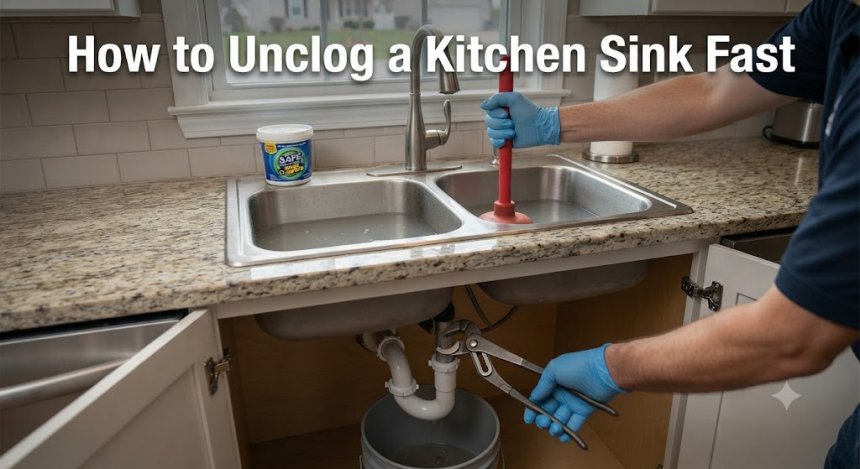
Step 1: Prep the workspace. Clear all cleaning supplies, dish soap, and storage bins out from underneath the kitchen sink cabinet. Place a wide, shallow bucket or plastic basin directly beneath the U-shaped P-trap to catch residual dirty water.
-
Step 2: Loosen the slip-joint nuts. Locate the plastic or brass slip-joint nuts securing the curved P-trap to the vertical tailpiece and the horizontal wall bend. Turn them counter-clockwise by hand. If they are tight, use a pair of tongue-and-groove pliers very gently, wrapping the jaws in tape to avoid cracking older plastic fittings.
-
Step 3: Empty and clean the trap. Carefully lower the P-trap, allowing the trapped water and sludge to empty into your bucket. Take the pipe outside or to a utility sink, flush it out thoroughly with a bottle brush, and inspect the rubber slip-joint washers for cracks or flattening.
-
Step 4: Check the wall arm. Insert a gloved finger or a small bottle brush into the horizontal pipe leading into the wall to check for any hardened grease blockages lodged further back.
-
Step 5: Reassemble the assembly. Slide the slip-joint nuts and rubber washers back onto the pipe ends (ensuring the tapered side of the washer faces the fitting connection). Hand-tighten all nuts firmly. Run hot water through the sink to test for leaks before reloading your cabinet storage.
Financial Breakdown: Cost Factors & Investment Realities
Understanding how professional pricing works helps homeowners budget effectively for unexpected plumbing repairs. Flat-rate pricing models depend heavily on the complexity, accessibility, and severity of the blockage.
-
Service dispatch and diagnostic fees: Cover the travel time and expert troubleshooting required to isolate the problem.
-
Equipment deployment: Heavy-duty hydro-jetting or camera inspections carry different resource costs than a standard hand-snaking procedure.
-
Material replacement: Upgrading corroded old tailpieces, tailpipe extensions, or faulty garbage disposal mounting assemblies.
-
Repair vs. replacement economics: Investing in minor branch line clearing prevents catastrophic main line structural failures that require trenching or wall demolition.
Unique Expert Insights: Hard Truths Homeowners Learn Too Late
-
Chemical drain cleaners are destructive: Liquid chemical openers rely on harsh exothermic reactions that overheat PVC joints and corrode metal pipe walls from the inside out, often cementing grease clogs permanently solid.
-
Garbage disposals are not trash cans: Tossing fibrous vegetable peels, coffee grounds, and grease down a disposal guarantees a clogged sink line over time.
-
Improper venting causes slow drains: If your sink gurgles constantly even when clean, the issue is often a blocked roof plumbing vent, not a clogged drain pipe.
-
Handyman shortcuts fail inspections: Unlicensed repairs often violate local building codes regarding pipe slope and trap arms, failing during real estate home sales.
Comprehensive Home Plumbing Maintenance Framework
-
Spring Checks: Test all under-sink connections for slow drips, inspect garbage disposal housing seals, and check outdoor drainage clearways.
-
Fall Preparation: Flush your kitchen lines with boiling water and baking soda monthly to dissolve organic residue before holiday cooking seasons peak.
-
Year-Round Habits: Never pour cooking grease down the drain; always wipe pans with paper towels first, and use mesh drain strainers to catch food particles.
Emergency Protocol: When Immediate Dispatch is Non-Negotiable
While a slow kitchen sink is usually a weekend maintenance project, certain situations demand immediate 24/7 professional intervention. Call an emergency plumber if sewage begins backing up into multiple household fixtures simultaneously, if wastewater floods your kitchen floor, or if a major supply line rupture threatens electrical outlets near your dishwasher or disposal.
Frequently Asked Questions (FAQs)
Can I use boiling water to clear a grease clog?
Yes, pouring a kettle of boiling water down a metal kitchen sink can melt and push minor grease blockages through. Avoid this method if you have older PVC pipes, as extreme heat can soften joint seals.
Is it safe to use a plunger on a double-bowl kitchen sink?
You can plunge a double-bowl sink, but you must seal the secondary drain completely with a wet rag or stopper to create the necessary air pressure to dislodge the clog.
Why does my kitchen sink smell like rotten eggs?
A foul sulfur smell usually indicates that organic sludge and food particles have accumulated inside the P-trap or along the interior walls of the overflow channel in your sink basin.
How do I stop my garbage disposal from clogging?
Run cold water before, during, and for 15 seconds after operating your garbage disposal. Never feed it potato peels, celery, grease, or large amounts of rice and pasta.
What is the best natural mixture to maintain kitchen drains?
Pour half a cup of baking soda down the drain followed by one cup of white vinegar. Let it fizz for 15 minutes, then flush it thoroughly with hot tap water.
Can a blocked roof vent cause a slow kitchen sink?
Yes, if your roof vent stack is blocked by leaves or debris, it creates a vacuum effect in the plumbing system, preventing waste water from draining smoothly.
How often should P-traps be cleaned?
P-traps do not require routine manual cleaning unless you notice a slow drain or foul odor, but inspecting them annually during spring cleaning prevents unexpected leaks.
When should I upgrade my old kitchen sink plumbing?
If your under-sink brass pipes are heavily corroded, thinning, or leaking at multiple threaded joints, replacing the entire tubular drainage assembly is more cost-effective than patching.