Sewer Camera Inspection Fresno: When Do You Need One
Wondering if your sewer line is cracked or clogged? Learn when you need a sewer camera inspection in Fresno to pinpoint pipe problems without digging.

Sewer Camera Inspection in Fresno: When Do You Need One?
Dealing with slow drains, recurring backups, or unpleasant sewer odors can leave any homeowner feeling frustrated and uncertain. Underground plumbing systems remain completely hidden from view beneath concrete slabs, driveways, and landscaped yards, making it difficult to understand the exact root cause of a plumbing breakdown without professional visual diagnostic tools.
Deciding on a Sewer Camera Inspection in Fresno: When Do You Need One? is essential when evaluating whether persistent clogs, foundation moisture, or sudden yard sinkholes indicate a minor grease buildup or an active structural pipe collapse. Fresno’s agricultural soils, aging utility infrastructure in historic neighborhoods, and rapid seasonal temperature swings place unique physical stress on residential and commercial sewer laterals.
Investing in a high-resolution video inspection eliminates costly guesswork, protects your yard from exploratory excavation, and provides actionable, real-time footage of your drainage system.
What Is a Sewer Camera Inspection?
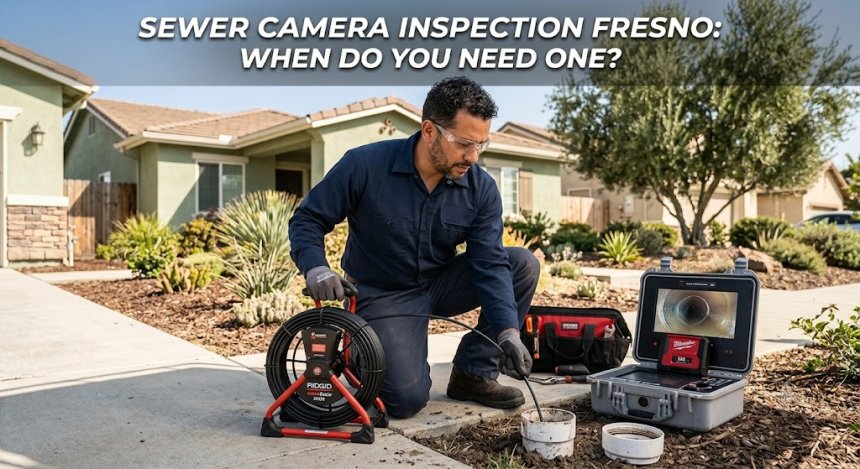
A sewer camera inspection is a non-invasive diagnostic procedure where a licensed plumber inserts a flexible, waterproof, fiber-optic video camera through a cleanout fitting to travel the full length of an underground sewer lateral out to the city main or septic tank.
-
High-Definition Video Head: Self-leveling color cameras equipped with ultra-bright LED arrays illuminate dark pipes, transmitting real-time footage to an external high-resolution monitor.
-
Integrated Sonde Transmitter: Built-in radio transmitters allow technicians to use an electromagnetic locator on the ground surface to pinpoint the exact depth and physical location of pipe damage within inches.
-
Digital Footage Capture: Homeowners receive a recorded video log of their entire line, showing the interior pipe conditions, joint integrity, and flow slope.
Common Situations Requiring an Inspection
-
The Pre-Purchase Real Estate Check: You are buying a home in the Tower District, Old Fig Garden, or Sunnyside and want to verify that the 60-year-old sewer line has not collapsed beneath the foundation.
-
The Chronic Multi-Drain Backup: You plunge the master toilet, only to see dark, gurgling wastewater bubble up inside the guest bathtub and shower stalls.
-
The Unexplained Lush Grass Stripe: You notice a soggy, bright green strip of lawn growing across your yard along the path of the underground sewer line during hot Fresno summers.
Why Do Sewer Pipe Failures Happen in Fresno?
Fresno's climate, soil composition, and architectural history create specific hazards for underground drainage lines:
-
Aggressive Tree Root Intrusion: Fast-growing trees (such as Modesto Ash, Chinese Elm, and Mulberry trees) actively search for moisture during hot, dry San Joaquin Valley summers. Root hairs penetrate hairline joint fractures or tiny gaps in clay, concrete, or cast-iron lines, quickly expanding into dense root balls that trap solids.
-
Aging and Deteriorating Pipe Materials: Homes built prior to the 1980s frequently rely on vitrified clay or cast-iron pipes. Over decades, cast iron undergoes channeling and tuberculation (internal rusting and jagged scaling), while clay pipes become brittle and crack under ground pressure.
-
Soil Shifting and Compaction: Central Valley expansive clay soils swell during winter rains and shrink during prolonged droughts. This cyclic ground movement causes sewer pipes to shift, creating pipe "bellies" (low spots where water pools), offset joints, and sheared sections.
-
Heavy Scale and Hard Water Buildup: Mineral-heavy water combined with mineralized scale collects grease, lint, and flushable hygiene products, calcifying into hard obstructions along the pipe walls.
-
Improper Slope or Shoddy Installation: Sewer lines without the required minimum downward pitch (typically 1/4 inch per foot) cause waste to stagnate and settle rather than flowing outward with gravity.
Warning Signs You Should Never Ignore
Plumbing systems provide visible and audible warnings before complete pipe collapse occurs. Catching these early saves thousands in emergency restoration costs:
-
Multiple Gurgling Fixtures: Hearing bubbling sounds from your sinks or showers when running a washing machine indicates that trapped sewer air has nowhere to escape due to a downstream mainline blockage.
-
Persistent Foul Odors: Sewer gas (hydrogen sulfide) smelling like rotten eggs near floor drains or in your yard indicates a broken vent stack or cracked subterranean line.
-
Slow Drains Across the Whole House: If only one sink drains slowly, the issue is local; if all household drains run sluggishly, the restriction sits deep in the main sewer lateral.
-
Soggy Patches or Yard Sinkholes: Wastewater leaking from cracked lines softens the surrounding earth, creating damp depressions, wet grass patches, and ground settlement.
-
Pest and Rodent Infiltration: Small cracks in buried sewer pipes allow drain flies, roaches, and rodents to enter plumbing systems and emerge from residential drains.
-
Damp Slab Foundations: Moisture seeping upward through concrete flooring, tile grout lines, or wood laminate indicates a slab leak or sewer lateral break beneath your foundation.
Common Plumbing Problems Related to Sewer Lateral Damage
A compromised sewer line creates an interconnected cascade of plumbing failures:
[Underground Sewer Line Fracture]
               │
   ┌───────────┴───────────┐
   ▼                       ▼
[Mainline Sewer Backups] [Slab Moisture & Foundation Cracks]
   │                       │
   ▼                       ▼
[Interior Water Contamination] [Lawn Sinkholes & Pavement Ruptures]
-
Repetitive Drain and Sewer Backups: Mechanical snaking may open a temporary channel, but a broken pipe or offset joint continues to catch toilet paper and solids.
-
Structural Foundation and Slab Damage: Leaking wastewater washes away supportive base soil beneath your home's foundation slab, leading to foundation shifts, cracked floor tiles, and drywall stress cracks.
-
Secondary Fixture Leaks: Backed-up sewage can blow out wax ring seals beneath toilets, causing wastewater to rot subfloors and leak through ceiling drywall on two-story homes.
Step-by-Step Professional Camera Inspection and Repair Process
When you schedule an inspection with plumber in fresno, certified technicians follow a standardized diagnostic methodology:
-
Access Point Preparation: The technician locates and opens the exterior main sewer cleanout, wiping down access threads and evaluating current static water levels.
-
High-Definition Camera Insertion: The fiber-optic camera is slowly guided down the lateral line while the technician monitors live, real-time video on a field screen.
-
Comprehensive Flaw Diagnosis: The plumber scans every linear foot, recording and classifying defects such as:
-
Root penetrations
-
Pipe fractures and punctures
-
Low spots (bellies)
-
Collapsed Orangeburg or rusted cast iron
-
Foreign object clogs
-
-
Precision Sonde Surface Locating: When an issue is detected, the technician activates the camera's internal sonde transmitter, using a handheld digital receiver above ground to mark the exact surface spot and depth on your lawn or driveway.
-
Client Review & Transparent Quote: You review the video footage side-by-side with the technician, receiving an itemized quote for targeted repair, trenchless pipe lining (CIPP), hydro jetting, or line replacement.
-
Execution & Final Camera Verification: After completing the necessary cleaning or pipe rehabilitation, a secondary camera run is performed to verify that the line is fully restored and free-flowing.
Can You Perform a Sewer Inspection Yourself? (DIY Limitations vs. Professional Reality)
While hardware stores sell inexpensive handheld borescope cameras, they are incapable of diagnosing primary underground sewer mains.
+------------------------------------+--------------------------------------+
| Feature                            | DIY Handheld Borescope               | Professional Sewer Camera System     |
+------------------------------------+--------------------------------------+
| Push Cable Reach                   | 3 to 10 Feet                         | 150 to 200+ Feet                     |
| Camera Resolution & Lighting       | Standard Definition / Dim LEDs       | High-Definition 1080p / High-Lumen   |
| Self-Leveling Orientation          | No (Image spins upside down)         | Yes (Horizon remains locked upright) |
| Sonde Depth & Location Transmitter | No (Blind insertion)                 | Yes (Locates depth to within inches) |
| Pipe Size Compatibility            | 1 to 2 Inch P-Traps                  | 3 to 8 Inch Sewer Mains              |
+------------------------------------+--------------------------------------+
What Homeowners Can Safely Do
-
Clear local P-traps under bathroom and kitchen sinks using basic hand tools.
-
Plunge single toilets or tubs using a dedicated flange plunger.
-
Keep cleanout caps accessible and free from soil or mulch overgrowth.
Why DIY Sewer Main Diagnostics Fail
-
Short cables cannot navigate multiple 90-degree bends or reach past the house footprint.
-
Borescopes lack internal transmitters, meaning even if you spot an obstruction, you have no way to know where it is located underground.
-
Rigid snaking tools operated by untrained individuals can punch holes through brittle, aging cast-iron or clay pipe walls.
Advanced Tools Professionals Use
Modern non-destructive plumbing relies on specialized equipment to evaluate underground infrastructure:
-
Self-Leveling Sewer Inspection Cameras: Ensures the video image stays level on the screen regardless of pipe twists, accurately showing standing water levels and pipe slopes.
-
Electromagnetic Sonde Locators: Pinpoints radio frequencies emitted from the camera head through concrete, asphalt, and deep soil.
-
Commercial Hydro Jetters: High-pressure water equipment (operating at 3,000 to 4,000 PSI) that scours heavy grease, strips tree roots, and washes away scale without damaging pipe walls.
-
Trenchless Pipe Lining Equipment (CIPP): Installs epoxy-saturated felt liners inside existing damaged pipes, creating a new, jointless, root-proof pipe without trenching yards or tearing up driveways.
How Long Does the Service Usually Take?
| Service Type | Typical Timeline | What Is Involved |
| Standard Camera Diagnostic | 45 to 90 Minutes | Inserting the camera, locating problems, and reviewing the recorded footage with the homeowner. |
| Camera Run + Hydro Jetting | 2 to 3 Hours | Video inspection, high-pressure jetting to clear blockages, followed by a secondary verification camera run. |
| Trenchless CIPP Pipe Lining | 1 to 2 Days | Pipe descaling, insertion of the epoxy liner, UV/heat curing, and final flow testing. |
| Full Sewer Line Excavation | 2 to 4 Days | Permitting, heavy excavation, new ABS/PVC line installation, backfilling, and city inspection. |
Cost Factors Explained
Plumbing repair costs vary depending on the severity of the problem, accessibility, materials required, emergency service, property type, and local labor rates.
-
Diagnostic & Equipment Deployment Fees: Covers the transportation, operation, and wear on specialized optical inspection equipment.
-
Accessibility of Cleanouts: Lines with ground-level, unobstructed cleanouts cost less to service than properties requiring toilet removals or roof vent access to reach the sewer main.
-
Severity of the Line Failure: Simple root blockages cleared with hydro jetting differ significantly in scope from broken pipes buried beneath concrete patios.
-
Repair Method (Trenchless vs. Open-Trench): Trenchless lining saves hardscaping, driveways, and landscaping, which offsets the cost of surface restoration required by traditional excavation.
-
Permitting & City Fees: Fresno municipal code requirements and street cut permits apply if line replacements extend into public utility easements.
Hidden Truths Homeowners Should Know
-
Snaking a Drain Does Not Fix Root Invasions: A standard mechanical drain snake merely punches a narrow hole through a root ball to restore temporary drainage; roots will grow back thicker within months unless chemically treated, lined, or excavated.
-
"Flushable" Wipes Do Not Dissolve: Wipes contain synthetic fibers that do not break down like toilet paper. They snag on internal pipe ridges and tree roots, creating dense blockages.
-
Standard Homeowners Insurance Rarely Covers Broken Sewers: Most policies exclude subterranean wear, ground shifting, and root intrusion unless you have an explicit "Water and Sewer Line Service" endorsement.
-
Hydro Jetting Outperforms Snaking: Jetting clears the entire diameter of the pipe wall by removing fats, oils, grease, and hair, rather than merely pushing a hole through the center of the obstruction.
-
Small Pipe Fractures Erode Foundation Soils: Underground water leaks wash away surrounding sub-base soil over time, creating voids that cause cracked foundations and sunken driveways.
-
Fresno Soil Dynamics Accelerate Joint Shifts: Clay soils in the San Joaquin Valley swell during winter moisture and shrink during summer dry spells, pulling pipe joints apart.
-
Camera Inspections Pay for Themselves During Home Purchases: Spending a modest fee on a pre-closing sewer camera inspection can prevent thousands of dollars in unexpected sewer repairs immediately after move-in.
-
Chemical Cleaners Damage Cast-Iron Infrastructure: Caustic, acid-based drain openers generate heat and chemical reactions that accelerate the corrosion of aging cast-iron pipes.
15 Common Mistakes Homeowners Make
-
Ignoring Slow Drains Until a Full Sewage Backup Occurs: Delaying service turns a simple cleaning into an emergency water damage situation.
-
Pouring Caustic Chemical Drain Cleaners Down Drains: Eating away at aging metal and rubber pipe seals without removing the primary blockage.
-
Flushing Personal Hygiene Products and Paper Towels: Clogging main lines with non-biodegradable synthetic fibers.
-
Pouring Fats, Oils, and Grease (FOG) Down the Kitchen Sink: Liquefied fats solidify inside cool underground lines, coating pipe walls.
-
Planting Moisture-Loving Trees Near Sewer Lines: Planting willow, ash, or elm trees near underground laterals invites aggressive root intrusion.
-
Hiring Unlicensed Handymen for Deep Sewer Diagnostics: Risking misdiagnosed pipe issues and potential damage to buried utilities.
-
Assuming a Clear Drain Line Means a Healthy Pipe: Mistaking temporary water flow for a sound pipe structure without visual verification.
-
Allowing Landscape Contractors to Bury Cleanout Caps: Covering sewer access ports beneath sod, mulch, or concrete, making routine maintenance difficult.
-
Failing to Request a Camera Inspection Before Buying a Home: Inheriting the previous owner's collapsed sewer line without knowing it.
-
Using Excessive Force with Manual Hand Snakes: Punching holes through brittle, corroded cast-iron pipe bottoms.
-
Ignoring Sump Pump and Cleanout Overflows: Overlooking minor outdoor overflows until wastewater seeps back into the home.
-
Forgetting to Install a Backwater Valve: Leaving low-lying basement or ground-floor fixtures vulnerable to city main sewer surcharges.
-
Overlooking Gurgling Toilet Sounds: Dismissing air bubbling through toilet water as an annoyance rather than an early warning of a blocked main.
-
Skipping Post-Clearing Camera Verifications: Leaving a job without visually confirming whether root mass or broken joints remain in the pipe.
-
Delaying Repairs on Known Pipe Bellies: Allowing standing wastewater in low spots to collect solids until the entire pipe is choked.
Practical Maintenance Tips for Sewer Systems
-
Schedule a Video Inspection Every 2–3 Years: Keep a digital baseline of your underground lateral condition, especially for homes over 30 years old.
-
Keep Fats, Oils, and Grease Out of the Drain: Pour cooking grease into metal cans or glass jars and dispose of them in household trash.
-
Dispose of Wipes in the Trash: Never flush baby wipes, cleaning wipes, or feminine hygiene products, regardless of packaging claims.
-
Use Strainers in Sinks and Showers: Install mesh hair and debris catchers over all shower, tub, and utility sink drains.
-
Flush Drains with Hot Water Weekly: Run hot water down kitchen drains for 60 seconds after washing greasy dishes to help keep pipes clear.
-
Map Underground Utilities Before Landscaping: Locate your sewer line before planting deep-rooting trees or driving heavy fence posts.
-
Maintain Accessible Sewer Cleanouts: Ensure exterior ground caps are visible, undamaged, and sealed against rain runoff and debris.
-
Apply Professional-Grade Root Treatments: Use non-caustic, foaming root inhibitors annually if you have older clay pipes with nearby trees.
-
Educate Family Members and Guests: Ensure everyone in the house knows that only toilet paper and human waste should be flushed.
-
Address Fixture Backups Immediately: Stop running water and appliances the moment you notice water rising in lowest-level drains.
When Should You Call an Emergency Plumber?
Shut off your main water supply and call for emergency plumbing help immediately if you experience:
-
Raw Sewage Rising in Showers, Tubs, or Sinks: Creates immediate biohazard risks and structural water damage.
-
Uncontrolled Cleanout Overflow Flooding Your Property: Wastewater spilling onto lawns, sidewalks, or neighbor boundaries.
-
Sudden Yard Collapses or Large Sinkholes: Indicates an active, ruptured sewer lateral washing away foundational soil.
-
Multiple Fixtures Backing Up Simultaneously: Confirms a complete blockage of the main lateral pipe.
-
Foul Methane Gas Odors Inside Living Spaces: Poses health, respiratory, and explosion hazards if left unaddressed.
Frequently Asked Questions
Can a sewer camera see through standing water and heavy mud?
Professional high-output cameras can navigate light standing water, but if a line is completely choked with thick, black sewage sludge, technicians will hydro jet or cable the line first to clear the murky water for a clear visual inspection.
How do I know if my sewer line is broken or just clogged?
A clog causes localized backups that clear after snaking. A broken, cracked, or collapsed pipe causes persistent, recurring backups within days or weeks, often accompanied by yard wetness, foul odors, or strange gurgling sounds from nearby drains.
How much does a sewer camera inspection cost?
Sewer camera inspection costs vary depending on pipe accessibility, location of the cleanout, overall pipe length, and whether emergency diagnostic services are required.
Can tree roots grow back after being cut out of a sewer pipe?
Yes. Mechanical cutting blades temporarily shear the roots, but tree roots enter through open joints to feed on moisture. Unless the pipe is structurally sealed with a trenchless epoxy liner or excavated and replaced, roots will return.
Is hydro jetting safe for older cast-iron or clay pipes?
Yes, when performed by a licensed plumbing professional who has first inspected the line with a camera to adjust the water pressure correctly for the pipe's condition.
How long does an underground sewer line typically last?
Vitrified clay lines last 50 to 60 years, cast-iron pipes last 40 to 60 years, and modern schedule-40 PVC or ABS pipes can last 70 to 100 years.
What is a sewer pipe belly?
A pipe belly is a sagging section of underground pipe caused by soil compaction or poor installation. Standing water and solid waste collect in the sag, creating recurring clogs.
Can a camera inspection detect slab leaks under a home?
Yes. Technicians can route the camera into lines running beneath concrete foundation slabs to spot cracks, separated joints, and soil intrusion.
What is trenchless sewer repair?
Trenchless repair is a non-invasive method that rehabilitates damaged underground pipes by pulling an epoxy-saturated felt sleeve through the old line (cured-in-place pipe), creating a smooth new interior pipe without digging large trenches.
Why do my toilets bubble when the washing machine drains?
The high-volume discharge of your washing machine pushes air through a restricted main line. Unable to pass the obstruction, the air forces its way up through the water trap of your toilets.
Why Choose Plumber in Fresno
Evaluating underground sewer problems requires advanced diagnostic technology, experienced technicians, and transparent solutions. At plumber in fresno, we provide accurate sewer assessments without destructive guessing:
-
Licensed and Experienced Plumbing Specialists: Our technicians possess deep expertise in Central Valley plumbing codes, aging infrastructure, and local soil conditions.
-
High-Definition Video Technology: We utilize modern, self-leveling sewer cameras and radio-sonde locators to find pipe problems accurately.
-
Clear, Upfront Estimates: We show you the actual video footage and provide straightforward options before any work begins.
-
Comprehensive Service Capabilities: From precision camera inspections and hydro jetting to trenchless pipe relining and full replacements, we handle jobs of all sizes.
-
Serving the Entire Fresno Region: Delivering prompt service throughout Fresno, Clovis, Sanger, Selma, Madera, Fowler, and surrounding Fresno County communities.