Toilet Repair Plumber in Fresno, CA: The Homeowner & Property Guide
A malfunctioning toilet disrupts daily life immediately. Whether it is a bowl that chronically clogs, a tank that constantly hisses and drives up your water bill, a hairline porcelain fracture, or water seeping across your bathroom floor, toilet issues demand quick, professional resolution.
In Fresno County and the wider Central Valley, plumbing systems face unique environmental stresses. Hard water with elevated calcium and magnesium levels causes premature wear on rubber flappers and fill valves. Summer temperature extremes and shifting clay-heavy soils can cause subtle subfloor movement, cracking wax seals and compromising drain flanges.
When plunging no longer solves the problem, hiring a dedicated Toilet Repair Plumber in Fresno, CA ensures the root cause is resolved safely and permanently without water damage or sewer gas exposure.

Common Toilet Problems Homeowners Face
A residential toilet operates on a straightforward balance of gravity, water pressure, siphon dynamics, and mechanical seals. When any component fails, specific symptoms emerge:
-
The Constantly Running Toilet: Water trickles non-stop from the tank into the bowl, wasting up to 200 gallons of clean water per day.
-
Weak or Incomplete Flush: The flush lacks sufficient siphon velocity to clear the bowl, requiring multiple flushes.
-
Water Leaking Around the Base: Water pools on the tile or vinyl flooring around the bottom of the toilet fixture after each flush.
-
Phantom Flushing: The toilet randomly refills for a few seconds every 15–30 minutes without anyone touching the handle.
-
Gurgling or Bubbling Sounds: Bubbles rise through the standing bowl water when adjacent fixtures—such as showers or washing machines—drain.
-
Wobbly or Rocking Toilet: The porcelain fixture moves when seated, indicating loose closet bolts, a rotted subfloor, or a damaged toilet flange.
-
Sweating Toilet Tank: Excessive condensation forms on the exterior of the porcelain tank during humid weather, dripping onto baseboards.
-
Persistent Sewer Gas Odors: Foul smells linger in the bathroom even when the room is clean and ventilated.
Why Do Toilet Breakdowns Happen?
Toilet failures stem from wear and tear, mineral buildup, mechanical misalignment, and drainage issues:
-
Hard Water Mineral Build-up: Fresno municipal and private well water contains significant dissolved mineral content. Calcium deposits encrust siphon jets, fill valves, and flush valve seats, preventing watertight seals.
-
Deteriorated Rubber Flappers and Gaskets: Over time, chlorine and chloramines in treated municipal water degrade the chemical structure of rubber seals, causing them to warp, crack, or dissolve into black residue.
-
Compromised Wax Ring Seals: When a toilet rocks or shifts due to subfloor expansion, the pliable wax seal beneath the toilet breaks. Once detached, wax cannot reseal itself, allowing dirty water and sewer gases (methane, hydrogen sulfide) to escape.
-
Foreign Objects and Improper Disposal: Flushing "flushable" wipes, paper towels, hygiene products, or dental floss creates deep blockages in the toilet trapway or main lateral sewer pipes.
-
Clogged Plumbing Vent Stacks: Vent pipes on your roof allow air to enter the drainage system. When birds' nests, debris, or dry leaves block the vent, negative air pressure slows down the flush cycle.
-
Improper Component Adjustment: Fill valves set too high cause continuous overflow into the open overflow tube, while chains set too tight prevent flappers from resting flush against the valve opening.
Signs of Toilet Damage You Should Never Ignore
Ignoring minor toilet quirks often leads to catastrophic water damage, mold contamination, and structural wood rot. Watch for these critical warning signs:
-
Water Pooling at the Base: Even clear, odorless water at the base indicates a failed wax ring or a cracked porcelain base. Every flush pushes contaminated wastewater directly into your subfloor.
-
Spongy, Soft, or Discolored Bathroom Flooring: If the flooring around your toilet feels soft or dips when stepped on, hidden leaks have compromised the structural subfloor framing beneath the tile or vinyl.
-
Rust or Corrosion on Shut-Off Valves and Supply Lines: Corrosion on the chrome-plated brass angle stop or braided steel supply line indicates imminent burst risk under continuous 50–70 PSI household water pressure.
-
Hairline Cracks in the Porcelain Tank or Bowl: Porcelain cracks cannot be reliably patched. Under hydraulic pressure, a cracked tank can fracture completely, flooding the home with tens of gallons per minute.
-
Slow Drains Throughout the Entire Bathroom: When the toilet, tub, and sink all drain slowly at the same time, the issue is not an isolated toilet clog—it indicates a main sewer line obstruction.
Professional Toilet Repair vs. Replacement
| Issue / Condition | Recommended Action | Why It Matters |
| Worn flapper, fill valve, or flush lever | Component Repair | Fast, inexpensive internal rebuild restores full factory operation. |
| Leaking base seal (wax ring) | Reset & Re-seal | Pulling the toilet, replacing the wax ring, and securing new closet bolts stops subfloor damage. |
| Broken or corroded closet flange | Flange Repair / Replacement | Replacing or sleeving the subfloor mounting flange provides a level, immovable anchor for the toilet. |
| Cracked porcelain tank or bowl | Complete Toilet Replacement | Cracked vitreous china cannot withstand hydraulic pressure; replacement is necessary to prevent sudden flooding. |
| Pre-1994 high-consumption toilet (3.5–5.0 GPF) | Complete Toilet Replacement | Upgrading to a modern WaterSense-certified unit (1.28 GPF or dual-flush) drastically cuts utility bills and boosts flushing power. |
| Persistent deep trapway calcification | Complete Toilet Replacement | Mineralized internal passages cannot be cleared without damaging the porcelain finish. |
Safe DIY Steps vs. When to Call a Licensed Plumber
What Homeowners Can Safely Try (DIY):
-
Standard Plunging: Using a specialized flange plunger (not a flat-cup sink plunger) to clear soft, localized paper clogs.
-
Adjusting Tank Water Level: Turning the adjustment screw on the float arm so water stops roughly 1 inch below the top of the overflow tube.
-
Replacing a Drop-in Flapper: Unhooking an old, warped rubber flapper and clipping a matching replacement onto the overflow tube pegs.
-
Clearing Mineral Deposits from Rim Jets: Using a small mirror and a nylon brush dipped in white vinegar to scrub scale from the small water jets under the bowl rim.
When DIY Becomes Risky or Dangerous:
-
Over-tightening Porcelain Bolts: Applying even slightly too much torque with a wrench will instantly crack vitreous china, destroying the tank or bowl.
-
Pouring Harsh Chemical Cleaners: Sulfuric acid and caustic lye drain cleaners generate intense chemical heat that softens PVC drain pipes, corrodes brass bolts, and creates hazardous fumes if water splashes back.
-
Snaking Without Toilet Augers: Using standard metal plumbing snakes directly in the toilet bowl scratches the visible porcelain glaze, leaving permanent dark metal marks and jagged surfaces that catch future waste.
-
Lifting Heavy Fixtures Alone: Standard two-piece toilets weigh 70–100 lbs; one-piece toilets can weigh up to 120 lbs. Misaligning the unit during installation crushes the wax seal unevenly, causing immediate leaks.
Tools and Diagnostic Equipment Used by Licensed Plumbers
Professional plumbers arrive equipped with specialized tools to resolve toilet and drainage issues accurately:
-
Professional Closet Augers: Featuring a protective rubber sleeve, a heavy-duty drop-head coil snake clears obstructions past the integral porcelain trapway without scratching the bowl surface.
-
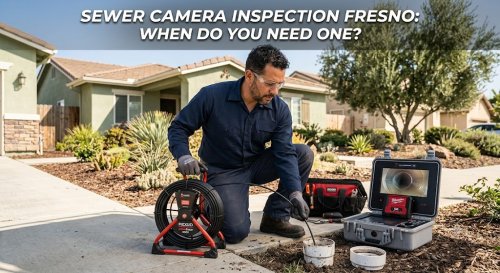
High-Resolution Sewer Inspection Cameras: Optical diagnostic cameras with locators trace main drain lines beneath the slab or crawlspace to identify tree roots, belly dips, or cracked pipes.
-
Precision Flange Leveling and Repair Kits: Specialized PVC/cast iron flange spacers, brass repair rings, and mechanical expanding plugs restore damaged subfloor connections.
-
Digital Water Pressure Gauges: Direct-connection test gauges verify whether high household water pressure is forcing fill valves to fail or leak.
-
Thermal Imaging and Moisture Meters: Non-invasive diagnostic meters detect hidden water saturation beneath bathroom tile and inside subfloor layers.
Step-by-Step Professional Repair & Reset Process
When a licensed Toilet Repair Plumber in Fresno, CA works on your home, they follow an established plumbing industry workflow:
-
Comprehensive Diagnostic Inspection: Technicians inspect the supply line, shut-off angle stop, tank components, porcelain integrity, and floor stability.
-
Isolation and Drainage: The water supply is shut off at the fixture stop, and the tank and bowl are fully drained and vacuumed out.
-
Disassembly & Removal: Closet bolt nuts are removed, and the fixture is safely lifted and set aside on protective drop cloths.
-
Flange and Subfloor Evaluation: The old wax ring is scraped clean, and the cast iron or PVC drain flange is inspected for cracks, corrosion, and proper elevation relative to the finished floor.
-
Component Overhaul / Flange Rebuilding: Worn internal mechanisms (fill valve, flush tower, tank-to-bowl bolts) are replaced with commercial-grade parts, and any broken flange anchors are reinforced.
-
New Wax Ring & Re-Mounting: A reinforced wax ring with an integrated urethane sleeve (or advanced synthetic seal) is placed, and the toilet is set into position with solid downward pressure.
-
Precision Bolt Tightening & Leveling: Solid brass closet bolts are tightened to torque specifications, and non-rot shims are installed if floor irregularities exist.
-
Pressure Testing & Operational Flushing: The water line is reconnected, the tank is filled, and the toilet is test-flushed multiple times to verify smooth siphon pull and dry floor seals.
-
Antimicrobial Caulking: The base perimeter is sealed with mold-resistant, 100% silicone/plumber's caulk, leaving a small open weep gap at the rear to ensure any future base leak remains instantly visible.
Understanding Toilet Repair and Replacement Cost Factors
Plumbing repair costs vary based on the specific mechanical failure, accessibility, materials required, emergency service needs, property type, and local labor rates. Key variables include:
-
Scope of Repair: Simple flapper and fill valve replacements require minimal labor compared to rebuilding a rotted subfloor, pulling a toilet, or resetting a corroded cast-iron flange.
-
Flange & Subfloor Condition: If a long-term leak has rotted the wooden subfloor beneath the bathroom tile, structural carpentry and subfloor reinforcement add to project scope.
-
Supply Line and Valve Upgrades: Replacing old, corroded gate-style supply valves with modern quarter-turn brass ball valves protects your home from future flooding.
-
Standard vs. High-Efficiency / Smart Fixtures: Installing commercial wall-hung units, pressure-assisted toilets, or luxury bidet systems involves different calibration and mounting hardware than standard gravity toilets.
-
Emergency Response Timing: Urgent, after-hours dispatch for an overflowing, only-toilet-in-the-house scenario carries different staffing rates than scheduled weekday maintenance.
Hidden Truths Homeowners Should Know
-
"Flushable" wipes are not truly flushable: Municipal sewage systems and private plumbing trapways cannot break down synthetic, non-woven wipe fibers. They remain intact, catching grease, toilet paper, and mineral scale to form dense clogs.
-
In-tank drop-in bleach tablets destroy rubber seals: Chemical pucks sit directly against the flapper and valve seals in stagnant water, rapidly dissolving rubber gaskets and voiding manufacturer warranties.
-
A rocking toilet will always fail eventually: Even tiny movements break the wax seal. Once broken, sewer gases enter your living space and water slowly damages the floor framing with every flush.
-
Toilet fill valves have an expiration date: Internal diaphragms degrade over 5 to 7 years. Proactively replacing older fill valves prevents sudden over-pressurization and flooding.
-
Standard homeowners insurance excludes gradual leaks: Policies typically cover sudden, accidental pipe bursts, but deny claims for long-term subfloor rot caused by an ignored toilet base leak.
15 Common Mistakes Homeowners Make
-
Using harsh chemical drain cleaners: Damaging pipes and creating caustic safety hazards for plumbers who must service the drain later.
-
Using the wrong type of plunger: Attempting to clear deep toilet clogs with a flat-bottomed sink plunger rather than a tapered flange plunger.
-
Leaving loose closet bolts untouched: Allowing the toilet to wobble and crush the wax seal out of position.
-
Over-tightening tank-to-bowl or floor bolts: Cracking the porcelain structure during DIY installation.
-
Ignoring a toilet that runs intermittently: Wasting thousands of gallons of water each month through a leaking flapper.
-
Flushing personal hygiene items, paper towels, and cotton swabs: Accumulating non-degradable blockages inside the fixture trapway.
-
Using cheap, thin replacement supply lines: Risking major indoor flooding from burst plastic-threaded supply lines instead of braided stainless steel.
-
Caulking 100% around the base without a weep gap: Trapping leaking water beneath the porcelain, hiding active rot until the floor collapses.
-
Neglecting the emergency shut-off valve: Allowing old angle stops to freeze in place so they cannot be turned off during an active overflow.
-
Using mismatched generic flappers: Buying the wrong size flapper (2-inch vs. 3-inch), causing constant phantom flushes.
-
Connecting high-pressure lines without checking house PSI: Allowing household water pressure above 80 PSI to stress toilet fill valves.
-
Setting the tank chain too tight or too loose: Causing either constant running (too tight) or weak flushes (too loose).
-
Placing heavy objects on top of the porcelain tank lid: Risking cracked lids or dropped items shattering the bowl.
-
Hiring unlicensed, uninsured handymen: Risking improper flange installations that cause concealed sewer gas leaks.
-
Delaying repairs on an overflowing toilet: Failing to immediately turn the wall shut-off valve clockwise during a backup.
Preventative Maintenance Checklist for Toilets
-
Test the emergency shut-off angle stop behind the toilet twice a year to ensure it turns smoothly.
-
Inspect the braided stainless-steel water supply line annually for any kinks, fraying, or weeping moisture.
-
Perform the "food coloring test" once a year: add 5–6 drops of food coloring into the tank. If color appears in the bowl within 15 minutes without flushing, replace the flapper.
-
Clean siphon jets under the rim with a nylon brush and mild detergent to keep water flow unrestricted.
-
Keep wastebaskets in all bathrooms to prevent guests and family from flushing wipes, dental floss, or facial tissues.
-
Check that the water level inside the tank sits roughly 1 inch below the top of the overflow pipe.
-
Inspect the floor around the base of the toilet monthly for any soft spots, discoloration, or dampness.
-
Keep the area around the shut-off valve clear of bathroom clutter for quick access during an emergency.
When Should You Call an Emergency Plumber?
Call for emergency plumbing dispatch immediately if you face:
-
An overflowing toilet bowl that does not stop when you release the handle. (First step: turn the shut-off valve on the wall clockwise immediately).
-
Severe wastewater backups bubbling out of the toilet base, shower pan, or floor drains.
-
Significant water leaking through the ceiling directly beneath an upstairs bathroom.
-
Raw sewage odors filling the home paired with gurgling drainage across multiple rooms.
-
The only working toilet in your home or commercial building is completely out of service.
Frequently Asked Questions
Why does my toilet keep running long after flushing?
A running toilet is typically caused by a deteriorated or warped rubber flapper, an incorrectly adjusted float raising water above the overflow tube, or a damaged fill valve that fails to shut off completely.
Can a toilet leak ruin my bathroom floor?
Yes. When a toilet wax ring fails, wastewater seeps directly into the subfloor framing with every flush. Over time, this rots wooden subfloors, creates hazardous black mold, and compromises floor stability.
What should I do if my toilet starts overflowing?
Immediately reach behind the lower-left side of the toilet and turn the metal oval handle (angle stop) clockwise until it stops. If the valve is stuck, open the tank lid and push the rubber flapper down manually to seal the drain opening, then lift the float arm.
Is it better to repair an old toilet or install a new one?
If your toilet is over 20 years old, clogs constantly, has cracked porcelain, or uses 3.5+ gallons per flush, replacing it with a modern high-efficiency 1.28 GPF model is more cost-effective than continuous spot repairs.
Why does my toilet make a loud foghorn or screeching noise when refilling?
Loud noises during refill are usually caused by a vibrating or failing diaphragm inside the fill valve assembly, or a loose internal washer within the wall shut-off valve.
Why does water bubble in my toilet bowl when I run the shower or sink?
Gurgling or bubbling indicates a restricted main drain pipe or a blocked roof plumbing vent stack. The draining water displaces trapped air, which forces its way backward through the toilet water trap.
How long does a toilet repair or replacement take?
Standard internal repairs (fill valves, flappers, seals) take 45 to 90 minutes. A complete toilet removal, flange rebuild, and new fixture installation usually takes 2 to 3 hours.
What causes a toilet to rock back and forth?
A rocking toilet occurs when closet bolts are loose, the wax ring is degraded, the mounting flange beneath the floor is broken, or the floor itself is uneven.
Are chemical drain cleaners safe to use in a toilet?
No. Chemical drain cleaners generate heat that can crack porcelain bowls and damage PVC pipes. They can also splash back during plunging or professional snaking, presenting serious chemical burn risks.
How often should a toilet wax ring be replaced?
A wax ring does not have an automatic expiration date and can last 20+ years if undisturbed. However, whenever the toilet is removed, repaired at the base, or begins to wobble, the wax ring must be replaced immediately.