Introduction
Nothing disrupts a morning routine quite like stepping into a shower that trickles rather than sprays, or waiting endlessly for a washing machine to fill up. If you are experiencing weak water flow throughout your property, you are far from alone. Many residents encounter this frustration due to municipal supply elevations, distance from city mains, or aging neighborhood infrastructure. Implementing a water pressure booster installation in Houston transforms erratic, frustrating trickles into a powerful, reliable stream across every fixture in your home. Ignoring this issue does more than compromise your daily comfort; chronically low pressure can interfere with appliances like tankless water heaters and dishwashers, making timely intervention essential for protecting your property investment in Texas’s dynamic climate.
What Is a Water Pressure Booster? Decoding the Mechanism
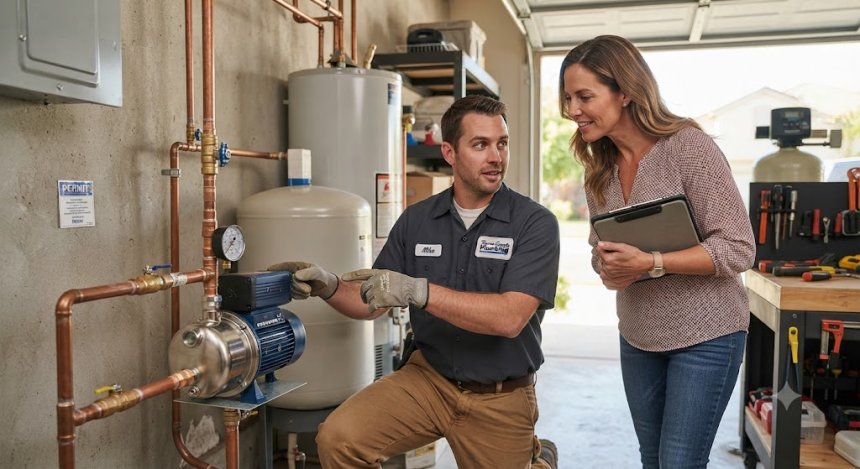
At its core, a water pressure booster system is an automated pump assembly integrated directly into your main water supply line to elevate and stabilize incoming psi (pounds per square inch).
-
How It Is Supposed to Work: Municipal water enters your property at a designated baseline pressure, pushing through your pipes to provide steady streams at sinks, showers, and appliances.
-
When It Fails: If the municipal supply drops, or if your home sits at a higher elevation than the main line, incoming pressure plunges. A booster system uses an internal impeller driven by an electric motor to actively pull water and discharge it at a safely regulated, boosted pressure level.
Real-World Scenario: Imagine a two-story suburban home where turning on the kitchen sink while someone is showering upstairs drops the shower to a miserable drip. A booster system maintains equilibrium, ensuring multiple fixtures run simultaneously without a drop in performance.
Comprehensive Home Plumbing Maintenance Framework
Keeping your plumbing system healthy requires proactive, year-round care. Implement these seasonal and ongoing habits to protect your pipes and pressure systems:
-
Spring/Summer Checks: Inspect outdoor spigots for leaks, test your sump pump before heavy seasonal rains, and check exterior yard grading to ensure water flows away from your foundation.
-
Fall/Winter Preparation: Insulate exposed exterior pipes against unexpected freezes, completely disconnect and drain outdoor garden hoses, and flush your water heater to clear accumulated sediment.
-
Year-Round Habits: Install mesh strainers in all bathroom and kitchen sinks to catch hair and debris, monitor your pressure-reducing valve (PRV) biannually, and strictly avoid harsh chemical drain openers.
Root Causes: Why Low Pressure Occurs in Properties
Low water pressure rarely happens by accident. It is usually the result of specific environmental and structural factors:
-
Aging Infrastructure & Galvanized Piping: Older homes often feature corroded galvanized steel pipes that narrow over time due to mineral buildup, severely choking water flow.
-
Hard Water Scaling: Mineral-rich water leaves stubborn calcium and magnesium deposits inside pipes, valves, and fixtures, acting like cholesterol inside your plumbing arteries.
-
Municipal Pressure Fluctuations: City supply adjustments, high neighborhood demand during peak morning and evening hours, and distance from regional water towers cause dramatic local pressure drops.
-
Malfunctioning Pressure Reducing Valves (PRVs): When a PRV fails, it often gets stuck in a restricted position, cutting off incoming water pressure entirely.
-
Partial Main Line Leaks: Underground leaks between the meter and your home divert water before it ever reaches your fixtures, lowering overall household pressure.
Unique Expert Insights: Hard Truths Homeowners Learn Too Late
Over decades in the field, licensed plumbers encounter recurring mistakes that cost property owners thousands. Keep these industry truths in mind:
-
Temporary patch kits and rubber tape on main lines mask deeper failures and can void your homeowners insurance clauses during a major flood.
-
Chemical liquid drain cleaners generate extreme heat that warps PVC pipes and corrodes metal lines from the inside out.
-
Unlicensed handymen often bypass local building codes, creating hidden cross-connection risks that fail instantly during real estate resale home inspections.
-
Routine professional maintenance plans cost a tiny fraction of a single emergency midnight water extraction and drywall repair.
-
Adjusting your water pressure valve without a digital pressure gauge can over-pressurize your system, causing sudden pipe joints ruptures.
Financial Breakdown: Cost Factors & Investment Realities
Investing in a water pressure booster system involves several variable cost inputs. Professional, flat-rate pricing depends heavily on specific site conditions:
-
Diagnostic & Dispatch Fees: Initial technician assessment to measure static and residual pressure.
-
System Capacity & Horsepower: Selecting the right pump size for single-story homes versus sprawling multi-story commercial or residential properties.
-
Access & Integration Complexity: Tying the pump into existing copper, PEX, or legacy piping configurations safely.
-
Electrical Requirements: Upgrading or running a dedicated electrical circuit to power the booster pump motor safely near your main water shut-off.
-
Permitting & Compliance: Local municipal permit requirements for modifying main water supply lines.
Critical Warning Signs: When Your Home is Sounding the Alarm
Your plumbing system constantly communicates its health through subtle sensory clues. Watch out for these immediate red flags:
-
Visual Indicators: Sudden, unexplained spikes on your monthly water meter reading, damp drywall patches, or pooling water near the main entry point.
-
Auditory Clues: Aggressive water hammering when turning off faucets, high-pitched whistling from restricted valves, or gurgling sounds from idle drain lines.
-
Olfactory Indicators: Lingering musty mildew smells, damp earth odors in crawlspaces, or subtle sewer gas hints pointing to stressed vent stacks.
-
Cascading Risks: Delaying intervention invites catastrophic structural mold acceleration, rotting subfloors, and costly framing damage.
Professional Diagnostic & Repair Workflow
Licensed, insured plumbing professionals follow a rigorous, systematic methodology to resolve pressure issues safely:
-
Non-Invasive Triage & Safety Isolation: Locating the main water shut-off and evaluating system vulnerability.
-
Precision Diagnostic & Digital Pressure Testing: Attaching calibrated digital manometers to measure static, dynamic, and residual pressure across multiple fixtures.
-
Transparent, Upfront Options: Presenting clear, written estimates with multiple repair or installation tiers before starting any work.
-
Code-Compliant Remediation: Installing the booster pump, thermal expansion tanks, and bypass valves according to local plumbing codes.
-
Flow Verification & Jobsite Cleanup: Conducting final pressure tests, adjusting pump cut-in/cut-off thresholds, and sanitizing the work area.
DIY Reality Check: What You Can Fix vs. The Danger Zone
-
Safe Homeowner Actions: Cleaning aerators on individual bathroom and kitchen faucets, replacing showerheads, and checking that the main water meter valve is fully open.
-
The Danger Zone: Tampering with main supply lines, installing electrical booster pumps without proper grounding, or messing with high-pressure gas and water lines.
-
When to Call a Pro: If cleaning aerators fails to solve low flow, or if you suspect main line restrictions, drop the wrench immediately and contact a licensed expert.
Advanced Diagnostics: The Professional Tool Arsenal
Modern plumbing relies on advanced technology to eliminate guesswork and protect your property:
-
Digital Manometers & Pressure Loggers: Precision tools that record pressure fluctuations over 24-hour cycles to pinpoint municipal drops versus internal restrictions.
-
Push-Rod High-Definition Video Cameras: Miniature waterproof cameras threaded directly into water and sewer lines to inspect internal pipe conditions visually.
-
Electronic Acoustic Leak Detectors: Sound-amplifying listening devices that pinpoint hidden pressurized leaks beneath concrete slabs or behind walls.
-
Hydro-Jetting Units: High-pressure water scouring systems that completely strip mineral scale, grease, and roots from pipe interiors.
Emergency Protocol: When Immediate Dispatch is Non-Negotiable
Some plumbing scenarios require immediate 24/7 professional intervention to prevent disaster:
-
Catastrophic main water line ruptures causing active structural flooding in living areas.
-
Complete main sewer line backups overflowing bathtubs and toilets throughout the home.
-
Total loss of potable water supply during extreme weather events.
-
Major leaks spraying near electrical breaker panels, water heater controls, or lighting fixtures.
Frequently Asked Questions (FAQs)
How do I know if I need a water pressure booster pump?
If your home pressure consistently tests below 40 psi, or if running two fixtures simultaneously causes a severe drop in flow, a booster pump is likely needed. A professional pressure test confirms this.
Can low water pressure damage my home appliances?
Yes. Appliances like dishwashers, washing machines, and tankless water heaters rely on adequate water flow and pressure to function correctly, and low pressure can cause premature component burnout.
How long does a water pressure booster installation take?
A standard residential booster pump installation typically takes between 3 to 5 hours, depending on whether electrical wiring upgrades or pipe modifications are required.
Does a booster pump make a lot of noise?
Modern variable-speed booster pumps are engineered to run exceptionally quietly, often featuring sound-dampening bases that minimize operational vibration.
Will a booster pump increase my electricity bill?
Booster pumps only consume electricity when water is actively running in the home. Their energy impact is minimal, similar to a standard household appliance.
Can I install a water pressure booster pump myself?
No. Booster installations require modifying main water supply lines, handling electrical connections near water, and complying with local plumbing codes, making licensed installation mandatory.
What is the ideal water pressure for a residential home?
Most plumbing experts recommend a home water pressure between 50 and 60 psi to ensure optimal fixture performance without stressing pipe joints.
Do booster pumps require regular maintenance?
Yes. Annual inspections check the pressure tank pre-charge, evaluate pump seals, and clear any intake sediment filters to ensure long-term reliability.
Why Property Owners Trust Plumber in Houston Texas
Choosing the right plumbing partner makes all the difference when dealing with complex water pressure challenges.
-
Fully licensed, insured, and background-checked master plumbing technicians.
-
Upfront, transparent flat-rate pricing with no hidden overtime surprises or gimmicks.
-
Cutting-edge diagnostic equipment that diagnoses root causes accurately the first time.
-
Deep regional expertise serving Houston and surrounding communities with prompt, reliable scheduling.
-
Unwavering commitment to customer satisfaction backed by robust craftsmanship warranties.