Reliable Water Line Repair in Fresno, CA: Complete Guide for Homeowners
A steady supply of clean, pressurized water is essential for daily living. When an underground main line fails, it disrupts your entire household, causing dropping pressure, rising utility bills, and structural damage.
For property owners dealing with an aging infrastructure, shifting Central Valley soil, or sudden pipe fractures, professional Water Line Repair in Fresno, CA restores dependable water flow and safeguards property integrity.

What Is Main Water Line Repair?
Your main water service line is the underground pipe connecting the municipal water meter at the street directly to your home's interior plumbing manifold.
[City Main / Meter at Curb] ===== (Underground Service Line) =====> [Home Shut-off Valve]
                                            |
                              (Subject to shifting soil,
                               corrosion, roots & pressure)
Unlike interior supply lines running through walls, the main service line is buried deep beneath your lawn, driveway, or concrete foundation slab. Water Line Repair in Fresno, CA encompasses:
-
Pinpoint electronic leak detection
-
Excavating targeted access points
-
Spot repairs on localized fractures
-
Full trenchless line replacements (pipe pulling or directional boring)
+-----------------------------------------------------------------------------------+
|                           WATER SERVICE LINE OVERVIEW                             |
+----------------------+------------------------------------------------------------+
| Component            | Buried underground supply pipe (Copper, PEX, PVC, Galvanized)|
| Operating Pressure   | 45 to 75 PSI (Normal household standard)                   |
| Typical Depth        | 18 to 36 inches below ground level in Central California   |
| Primary Failure Mode | Corrosion, shifting clay soil, tree root intrusion, age   |
+----------------------+------------------------------------------------------------+
Why Water Line Problems Happen in the Fresno Region
Central Valley plumbing systems face unique environmental stresses:
-
Expansive Clay Soils: Fresno's native soils expand dramatically when wet and contract during dry summer heat, placing mechanical stress on buried pipes.
-
Aggressive Mineral Content: High mineral levels in local municipal and well water accelerate corrosion in older metallic piping.
-
Aging Galvanized Infrastructure: Homes built before the 1970s often rely on galvanized steel lines reaching the end of their operational lifespan.
-
Invasive Root Systems: Mature trees seek moisture along pipe joints and microscopic hairline cracks.
-
Municipal Pressure Fluctuations: Pressure spikes over 80 PSI weaken aging joints and thin pipe walls.
Warning Signs You Should Never Ignore
+-----------------------------------------------------------------------------------------+
|                                SYMPTOM & IMPACT MATRIX                                  |
+-----------------------+----------------------------------+------------------------------+
| Warning Sign          | Underlying Cause                 | Risk of Delay                |
+-----------------------+----------------------------------+------------------------------+
| Sudden Pressure Drop  | Underground volume loss/rupture  | Cavity formation, blowouts   |
| Unexplained Wet Spots | Saturated subterranean soil      | Foundation settlement        |
| Spiking Water Bills   | Continuous hidden leakage        | Severe utility overpayment   |
| Discolored/Rusty Water| Internal pipe corrosion/dirt entry| Fixture/appliance fouling   |
| Hissing/Rushing Sounds| High-pressure water escaping pipe| Complete line rupture        |
+-----------------------+----------------------------------+------------------------------+
-
Low Water Pressure: When an underground pipe cracks, water escapes into surrounding soil rather than reaching indoor fixtures.
-
Spongy Patches on Lawns: Puddles appearing during dry summer conditions point directly to subsurface line leaks.
-
Escalating Utility Invoices: An unexplained jump in monthly water consumption confirms escaping volume.
-
Rust Particles or Silt: Internal wall flaking or soil infiltration causes sediment in tap water.
-
Audible Hissing: Pressurized water escaping through cracks creates distinct acoustic vibrations along pipes.
Common Plumbing Problems Related to Main Line Failure
A compromised supply line impacts the entire domestic plumbing ecosystem:
-
Water Heater Sediment Buildup: Silt entering through cracked lines settles inside tanks, burning out electric heating elements or eroding gas tank bottoms.
-
Slab Leaks: Lines passing beneath foundation footings can erode underlying sub-base soil, risking foundation settling.
-
Fixture Contamination: Silt and mineral fragments clog aerators, shower cartridge valves, and washing machine intake screens.
-
Premature Water Filter Exhaustion: Whole-house filtration units become overwhelmed by elevated turbidity.
Step-by-Step Professional Repair Process
Licensed technicians follow a methodical restoration process:
[1. Acoustic/Tracer Detection] -> [2. Isolation & Assessment] -> [3. Method Selection]
                                                                        |
[6. Site Restoration] <------- [5. Hydrostatic Testing] <------- [4. Trenchless/Spot Repair]
1. Non-Invasive Leak Detection
Technicians utilize ground microphones, electronic acoustic listening discs, and tracer gas systems to pinpoint subterranean leak locations without exploratory digging.
2. Isolation & Pressure Assessment
The team isolates the meter, installs calibrated test gauges, and records pressure drop rates to confirm structural integrity across the run.
3. Excavation & Method Selection
Depending on pipe condition, landscape factors, and utility layouts, crews select targeted spot excavation, open trenching, or trenchless pipe pulling.
4. Precision Pipe Repair or Replacement
Technicians cut away compromised sections, installing high-grade Type K copper or seamless cross-linked polyethylene (PEX-a) using compression fittings or silver-brazed joints.
5. Hydrostatic Verification
The repaired line is pressurized to 100+ PSI under sealed conditions to verify joint integrity before backfilling.
6. Sub-Base Compaction & Clean-Up
Excavated trenches are backfilled with sand bedding, mechanically compacted in lifts to prevent soil settling, and restored to grade.
Safe DIY vs. Required Professional Action
| Scenario | Homeowner Action | Professional Intervention |
| Active Main Line Rupture | Turn off master valve at meter box | Excavation, line cut, pipe replacement |
| Low Pressure Diagnostic | Clean fixture aerators, verify shutoff open | Electronic acoustic underground survey |
| Saturated Yard Surface | Flag area, keep vehicles away | Subsurface line location and repairs |
| Corroded Pipe Material | Visual check of exposed basement lines | Complete service line repiping/pulling |
Safety Warning: Never dig in your yard without clear utility markings. Call 811 before performing any excavation to identify buried electrical, gas, or telecommunications infrastructure.
Advanced Diagnostic & Repair Equipment
Professional plumbing teams deploy specialized gear for subterranean repairs:
-
Acoustic Ground Microphones: Amplifies the sound of escaping pressurized water beneath dirt, asphalt, and concrete.
-
Electromagnetic Pipe Locators: Tracks the exact path and depth of metallic and trace-wired supply lines.
-
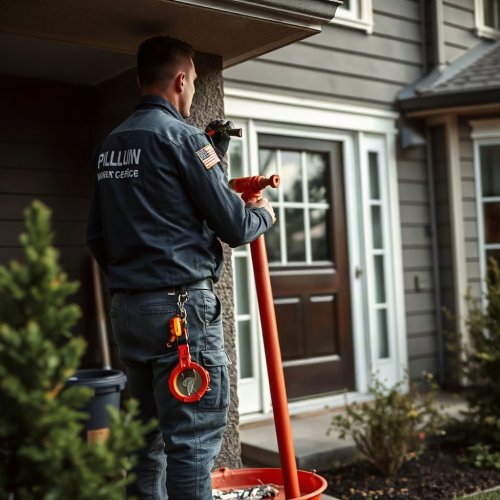
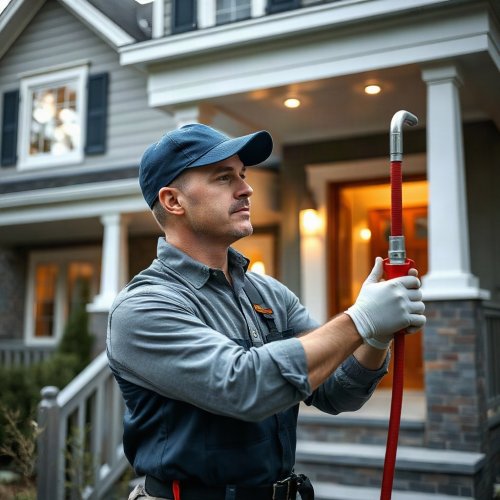
Trenchless Pipe Pullers: Uses hydraulic winches to pull seamless modern PEX-a piping directly through failing lines, eliminating full trench excavations.
-
Hydrostatic Test Manifolds: Measures minor pressure losses across closed systems down to 0.5 PSI.
Project Timeline Expectations
+-----------------------------------------------------------------------------------------+
|                               TYPICAL REPAIR TIMELINES                                  |
+---------------------------+-----------------------+-------------------------------------+
| Service Scope             | Average Time          | Key Operational Factors             |
+---------------------------+-----------------------+-------------------------------------+
| Spot Clamp/Section Fix    | 2 to 4 Hours          | Shallow line, easy dirt access      |
| Complete Trenchless Pull  | 4 to 8 Hours          | Preserves driveways and landscape   |
| Full Open Trench Repipe   | 1 to 2 Days           | Deep line, heavy concrete clearance |
| Emergency Freeze/Burst    | 3 to 6 Hours          | Immediate same-day response         |
+---------------------------+-----------------------+-------------------------------------+
What Factors Determine Water Line Repair Costs?
Plumbing repair costs vary depending on problem severity, accessibility, materials required, emergency service, property type, and local labor rates.
-
Line Depth & Obstructions: Lines running beneath mature trees, driveways, or patios require specialized equipment or extra labor.
-
Material Selection: Modern Type K copper and PEX-a offer varying price points and lifespans.
-
Repair vs. Complete Replacement: Spot repairs carry lower upfront labor costs, while full replacement provides long-term value for aging pipe systems.
-
Permitting & Municipal Inspections: Municipal code compliance in the Fresno area may require standard city permits and formal inspections.
Practical Realities Homeowners Should Know
-
Small Leaks Create Soil Cavities: A minor leak running at 2 gallons per minute displaces underlying soil, creating subterranean voids that can crack concrete foundations.
-
Homeowners Insurance Coverage Limits: Most standard policies cover water damage inside the home, but exclude gradual wear, root intrusion, or routine repairs to buried outdoor supply lines.
-
Temporary Clamps Are Not Long-Term Solutions: Bolted saddle clamps provide temporary relief, but surrounding corroded metal continues to thin and deteriorate.
-
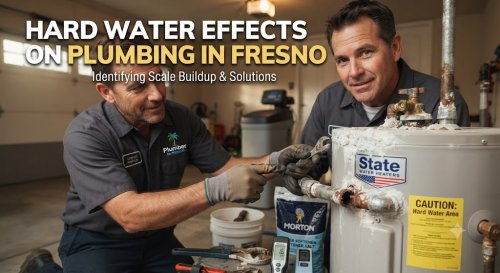
Hard Water Mineral Accumulation: Central Valley minerals build scale within pipe interiors over decades, reducing effective diameter and water flow.
-
Underground Roots Seek Moisture: Tree roots do not pierce solid metal, but enter micro-fissures, expanding until supply pipes rupture.
15 Critical Mistakes Homeowners Make
-
Ignoring Minor Drops in Pressure: Treating pressure drops as city supply issues rather than checking for underground leaks.
-
Postponing Emergency Shutoff Locating: Not knowing where the main water shut-off valve is located until an emergency occurs.
-
Digging Without Calling 811: Risking safety and severed utility lines by digging without marked underground paths.
-
Relying on Chemical Additives: Pouring sealants or chemicals into supply lines, contaminating drinking water.
-
Allowing Trees Near Service Runs: Planting fast-growing trees directly over underground water line paths.
-
Operating at Excessive Pressure: Leaving household pressure unmonitored above 80 PSI without a pressure-reducing valve (PRV).
-
Using Mismatched Pipe Metals: Joining galvanized steel directly to copper without dielectric unions, causing rapid galvanic corrosion.
-
Neglecting Seasonal Inspection: Failing to insulate above-ground backflow devices ahead of freezing winter nights.
-
Installing Substandard Fittings: Using low-grade plastic or non-rated fittings underground.
-
Over-Tightening Compression Joints: Stripping threading or crushing internal gaskets, creating weak failure points.
-
Covering Main Shut-Off Valves: Burying shutoff access boxes under mulch, soil, or concrete additions.
-
Assuming Insurance Covers All Lines: Failing to secure dedicated utility service line protection riders.
-
Hiring Unlicensed Labor: Risking non-code-compliant repairs that can fail municipal home sale inspections.
-
Backfilling with Rocks: Throwing heavy rocks directly onto newly repaired piping, causing stress fractures.
-
Overlooking Soil Moisture Signals: Dismissing lush green patches in lawns during dry summer months.
Maintenance & Prevention Tips
-
Monitor Static Pressure: Test exterior hose bibbs twice a year using a screw-on pressure gauge. Keep levels between 50 and 70 PSI.
-
Exercise Main Shut-Off Valves: Turn your main interior gate or ball valve off and on twice yearly to keep it from seizing.
-
Insulate Exposed Risers: Protect outdoor backflow assemblies and wall entry points from freezing temperatures.
-
Track Monthly Water Usage: Compare your water usage across seasonal baselines on city utility portals to catch hidden leaks early.
-
Maintain Tree Clearance: Keep deep-rooted trees at least 10 to 15 feet away from known water supply routes.
-
Upgrade Old Gate Valves to Ball Valves: Replace old multi-turn gate valves with full-port brass ball valves for reliable shut-off.
-
Schedule Annual Whole-House Inspections: Have a licensed professional test water flow, backflow prevention devices, and pressure regulators.
When to Call an Emergency Plumber
Contact an emergency plumber immediately if you notice:
-
Water bubbling up through lawns, driveways, or foundation walls
-
Sudden, complete loss of household water pressure
-
Audible rushing water sounds when all indoor fixtures are off
-
Wet spots or damp carpets appearing along ground-floor walls
-
Muddy, rust-tinted, or sediment-heavy water flowing from taps
Frequently Asked Questions
Why is my water pressure suddenly low across every fixture?
A universal drop across all indoor fixtures typically indicates a main service line rupture, a failing pressure regulator (PRV), or a municipal supply outage.
How do plumbers find leaks without tearing up my whole yard?
Technicians use acoustic listening devices, ground microphones, and line tracer equipment to pinpoint leak locations through sound frequency analysis.
What is the lifespan of an underground water service line?
Copper and modern PEX-a piping typically last 40 to 60+ years. Galvanized iron lines installed prior to 1970 often fail within 30 to 50 years due to internal corrosion.
Can tree roots actually break into pressurized water pipes?
Roots exploit microscopic joint leaks, hairline rust cracks, and loose connection points, expanding over time as they feed on moisture until the line bursts.
What is trenchless water line repair?
Trenchless repair uses methods like pipe pulling or directional boring to install new, seamless pipes along the existing run with minimal excavation at entry and exit points.
Will a cracked water line contaminate my drinking water?
Yes. When water pressure drops, contaminated groundwater, dirt, and bacteria can enter through pipe cracks via back-siphonage.
What should I do first when my main pipe bursts?
Locate your main shut-off valve near the water meter box or inside the garage, turn it fully clockwise (or perpendicular to the pipe for ball valves), and call a licensed plumber.
Does homeowners insurance pay for main line replacement?
Standard policies usually cover consequential interior water damage, but exclude natural wear and tear or exterior line repairs unless you have an optional service line endorsement.
How deep are water supply lines buried in Fresno?
Most residential water service lines throughout the Central Valley are buried between 18 and 36 inches deep, below standard frost penetration levels.
Is PEX or copper better for main line replacement?
Both are reliable choices. Type K copper provides rigid durability and long service life, while seamless PEX-a offers flexibility, corrosion resistance, and fewer underground joints.