Introduction
Dealing with a sudden burst of ice-cold shower water is an unwelcome wake-up call that no homeowner wants to experience. When your system starts failing to keep up with household demand, sediment and mineral scaling are usually the silent culprits behind the drop in performance. For property owners across Houston, managing hard water and high mineral content is a constant battle that directly impacts home infrastructure.
Executing a proper water heater flush Houston service is not just a routine chore; it is an absolute necessity to protect your plumbing ecosystem from premature failure. Neglecting this vital maintenance leads to rumbling tanks, skyrocketing energy bills, and costly emergency replacements right when you least expect it.
Critical Warning Signs: When Your Home is Sounding the Alarm
Catching plumbing distress early saves thousands of dollars in structural remediation. Homeowners should look out for distinct sensory indicators:
-
Auditory Clues: Popping, rumbling, or knocking noises from the tank indicate trapped water boiling beneath thick sediment layers.
-
Visual Indicators: Discolored, rusty, or murky hot water pouring from faucets points straight to internal tank corrosion.
-
Thermal Inconsistencies: Water that turns lukewarm too quickly or fluctuates unpredictably during use.
-
Olfactory Signals: A foul, rotten-egg odor caused by bacteria reacting with hydrogen and magnesium inside the neglected vessel.
Ignoring these warnings accelerates structural risks, including catastrophic tank ruptures, hidden floor rot, and severe water damage to surrounding drywall and framing.
What Is a Water Heater Flush? Decoding the Mechanism
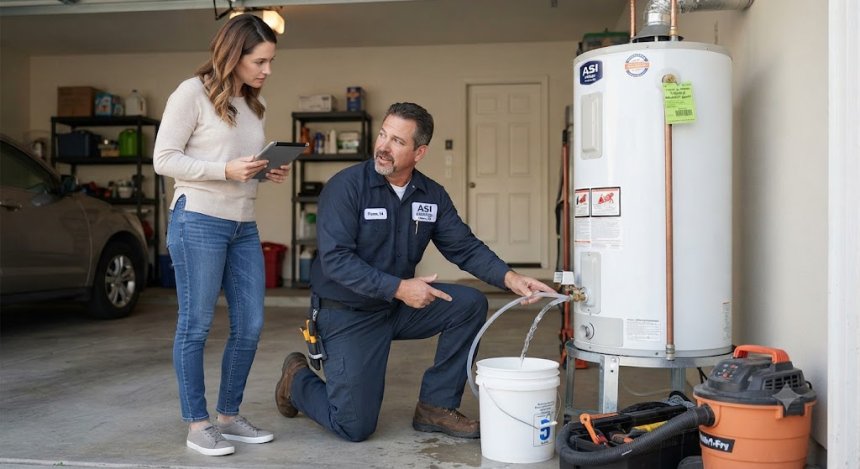
A water heater flush is a systematic procedure designed to clear out accumulated mineral deposits, sand, lime, and sediment from the bottom of a storage tank water heater.
-
How It Should Work: Cold water enters the bottom of the tank, where a gas burner or electric element heats it, causing hot water to rise and exit through the top supply pipe.
-
The Failure Point: Over time, dissolved minerals precipitate out of the water, settling at the bottom. This sediment acts as a thermal barrier between the heating element and the water, forcing the system to work harder, overheat the tank walls, and degrade structural integrity.
-
Local Scenario: In Houston, municipal water supplies and well systems carry heavy mineral loads. A standard residential tank here collects inches of dense sediment in under two years if left unserviced.
Root Causes: Why This Problem Occurs in Houston Homes
Plumbing performance is deeply tied to environmental and structural factors unique to the region:
-
Hard Water Mineral Scaling: High concentrations of calcium and magnesium rapidly calcify inside heating vessels.
-
Thermal Expansion Pressure: Frequent cycling under high outdoor temperatures stresses older piping joints and tank welds.
-
Municipal Water Pressure Fluctuations: Sudden pressure spikes from city mains strain internal relief valves and aging glass-lined steel tanks.
-
Sediment Accumulation: Continuous particulate settling from municipal supply lines creates abrasive sludge inside plumbing components.
Professional Diagnostic & Repair Workflow
When a licensed technician steps in to handle a compromised water heater, they execute a precise, multi-step protocol:
-
Step 1: Non-Invasive Triage & Safety Isolation: Shutting off the electric power supply or gas valve to prevent dry-firing and thermal shock.
-
Step 2: Precision Diagnostic & Digital Video Inspection: Assessing anode rod wear, valve integrity, and internal corrosion using specialized borescopes.
-
Step 3: Transparent, Upfront Options & Written Estimating: Providing clear, flat-rate choices for flushing, anode replacement, or full unit upgrading.
-
Step 4: Code-Compliant Remediation & Part Replacement: Performing the flush, replacing worn pressure relief valves (TPV), and installing fresh sacrificial anode rods.
-
Step 5: Pressure Testing, Flow Verification, & Clean-Up: Restoring service, testing thermal output, and leaving the workspace spotless.
Comprehensive Home Plumbing Maintenance Framework
Maintaining a healthy plumbing system requires seasonal discipline and consistent habits:
-
Spring/Summer Checks: Test outdoor hose bibs, inspect sump pumps for seasonal storms, and check crawlspaces for humidity buildup.
-
Fall/Winter Preparation: Insulate exposed exterior pipes, test the pressure reducing valve (PRV), and schedule your annual water heater flush.
-
Year-Rounds Habits: Clean sink strainers monthly, avoid chemical drain cleaners entirely, and monitor your water meter for unexplained usage spikes.
Advanced Diagnostics: The Professional Tool Arsenal
Pros rely on heavy-duty equipment to eliminate guesswork and guarantee system safety:
-
Electronic Acoustic & Thermal Leak Detectors: Pinpoint hidden moisture behind walls or under concrete slabs.
-
Push-Rod High-Definition Cameras: Visually inspect internal dip tubes and connected drain lines.
-
High-Capacity Transfer Pumps: Speed up sediment extraction and safely drain heavy tanks without property damage.
-
Digital Manometers: Verify precise gas and water pressure lines to ensure compliance with local building codes.
DIY Reality Check: What You Can Safely Fix vs. When to Step Back
-
Safe Homeowner Actions: Inspecting the exterior for leaks, testing the temperature and pressure relief valve lever briefly, and clearing debris around the unit base.
-
The Danger Zone: Attempting to drain a severely scaled tank with a stuck drain valve, working with high-voltage electrical connections, or tampering with gas supply lines.
-
When to Call a Pro: If your tank is over 10 years old, leaking from the body seam, or producing scalding water due to a failed thermostat, drop the wrench immediately and hire a licensed technician.
Financial Breakdown: Cost Factors & Investment Realities
Plumbing investments vary based on specific job parameters. Flat-rate pricing depends on several variables:
-
Service Dispatch & Diagnostics: Initial travel and technical assessment fees.
-
Tank Accessibility: Difficulty of access in cramped closets, attics, or garage platforms.
-
Component Replacements: Upgrading standard anode rods to powered electronic rods or replacing seized brass ball valves.
-
Repair vs. Replacement Economics: Weighing the cost of a comprehensive service against installing a high-efficiency tankless unit.
Unique Expert Insights: Hard Truths Homeowners Learn Too Late
-
Temporary patch kits and tape on leaking tanks mask deeper system failures and immediately void home insurance payout clauses.
-
Liquid chemical drain cleaners generate extreme heat that corrodes pipe walls from the inside out, turning minor clogs into major pipe breaks.
-
Unlicensed handymen frequently create hidden code violations that fail municipal inspections during real estate transactions.
-
Routine preventive maintenance plans cost a fraction of a single emergency midnight flood extraction.
-
Ignoring annual water heater flushes cuts the expected 12-year lifespan of a tank down to less than 6 years.
Emergency Protocol: When Immediate Dispatch is Non-Negotiable
Some situations demand an immediate 24/7 emergency response from a qualified crew:
-
Active structural flooding originating from a ruptured water heater tank or burst supply line.
-
Complete main sewer line backups flooding living spaces with hazardous waste.
-
Total loss of potable water supply to the property.
-
Electrical short circuits or sparks near leaking water heating equipment.
Frequently Asked Questions (FAQs)
How often should I flush my water heater in Houston?
Due to local water conditions, you should flush your water heater at least once every 12 months to prevent mineral scaling and maintain optimal energy efficiency.
Can I flush my water heater myself?
While basic DIY guides exist, a stuck drain valve or improper power shut-off can lead to severe burns, electrical shock, or property flooding. Hiring a professional ensures it is done safely and thoroughly.
What are the signs of a failing water heater?
Common signs include rumbling or popping noises, lukewarm water, rusty or discolored output, and moisture pooling around the base of the tank.
Does a water heater flush lower electricity bills?
Yes! Removing the insulating layer of sediment allows the heating elements to transfer heat directly to the water, reducing run cycles and lowering monthly utility costs.
How long does a standard water heater service take?
A professional water heater flush and inspection typically takes between 45 to 90 minutes depending on the volume of sediment buildup.
What is a sacrificial anode rod and why does it matter?
The anode rod attracts corrosive elements in the water so they attack the rod instead of the steel tank walls. Once it degrades completely, your tank begins to rust from the inside out.
Are tankless water heaters immune to sediment buildup?
No. While they do not store water, tankless units have narrow internal heat exchangers that are even more susceptible to scale clogging, requiring annual descaling flushes.
What should I do if my water heater starts leaking from the top?
Turn off the cold water supply valve above the unit and shut off the power source immediately, then call an emergency plumber to inspect fitting connections or the pressure relief valve.
Why Houston Homeowners Trust Plumber in Houston Texas
Choosing the right partner for your home infrastructure makes all the difference when plumbing emergencies strike:
-
Fully licensed, insured, and background-checked technicians equipped for any residential challenge.
-
Transparent, upfront flat-rate pricing with zero hidden overtime surprises or gimmicks.
-
State-of-the-art diagnostic equipment designed to protect your floors, walls, and landscaping.
-
Deep local expertise serving Houston and surrounding neighborhoods with prompt, reliable scheduling.
-
Customer-first warranty and satisfaction commitments that stand behind every single repair.