Why Is My Water Pressure Suddenly Low?
Discover why your water pressure dropped suddenly in Fresno. Learn causes, diagnostics, and when to call Plumber in Fresno for professional help.
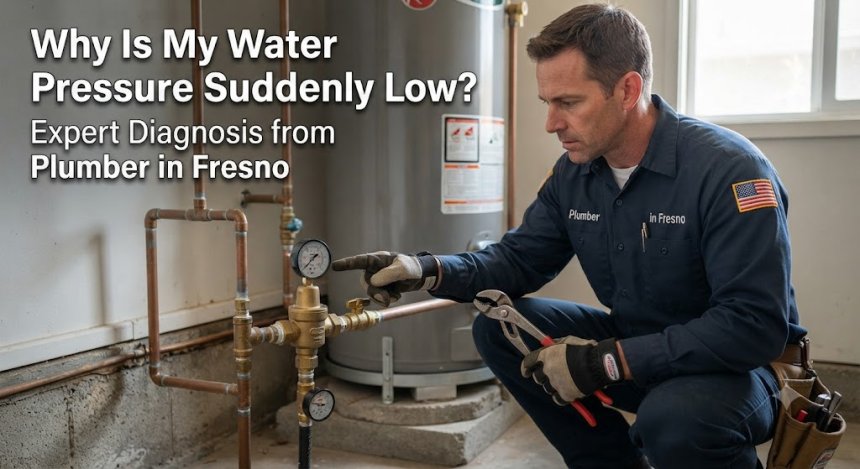
Turning on your kitchen faucet or stepping into the shower only to be greeted by a weak, sputtering trickle is an instant cause for alarm during a busy morning routine. Dealing with why is my water pressure suddenly low in Fresno is a stressful emergency for local property owners who rely on steady water flow for daily appliances and comfort. When pressure plunges overnight or mid-day without warning, it is rarely a minor coincidence; it usually signals a failing pressure regulator, an accidental partial closure of the main shut-off valve, or a catastrophic underground supply line rupture. Ignoring this drastic change can leave you without vital water access or mask an aggressive leak undermining your home's foundation. At Plumber in Fresno, our licensed professionals assist homeowners across Fresno and the Central Valley in diagnosing and resolving abrupt flow failures before they escalate into major property damage.
What Is a Sudden Water Pressure Loss? Decoding the Mechanism
A sudden pressure loss occurs when the baseline force driving municipal water through your property network drops drastically from the normal 40 to 60 pounds per square inch (PSI) down to a sluggish trickle.
-
The Ideal Mechanism: Water surges continuously from the municipal main, passes smoothly through your primary service valve and pressure reducing valve (PRV), and delivers balanced velocity to every fixture.
-
The Breakdown: When a main valve slips closed, a PRV internal spring shatters, or a service line cracks underground, the volume and velocity of water are choked off instantly across the entire house.
-
Real-World Fresno Scenario: Imagine waking up in a home near Woodward Park to find every bathroom and kitchen fixture reduced to a weak weep because a sudden municipal line surge or failing household PRV crippled your main water delivery.
Root Causes: Why This Problem Occurs in Fresno Homes
Plumbing systems in the Central Valley face unique environmental factors and infrastructure challenges that trigger unexpected pressure failures.
-
Failing Pressure Reducing Valves (PRVs): Constant exposure to high municipal feed pressures eventually causes the internal springs and rubber diaphragms inside home PRVs to snap or seize without warning.
-
Main Water Valve Malfunctions: A bumped gate valve, a slipping ball valve, or a deteriorating main shut-off mechanism can partially or fully close on its own, choking off supply.
-
Main Service Line Ruptures: Shifting expansive clay soils in the Central Valley can stress buried copper or HDPE service lines, causing sudden breaks or leaks that bleed off system pressure.
-
Hard Water Mineral Scaling Dislodgement: Chunks of calcium and magnesium scale from Central Valley groundwater can break loose and jam inside pipe elbows, fixture cartridges, or aerators.
-
Municipal Supply Disruptions: Local utility repairs, main breaks on your street, or scheduled city valve maintenance can cause sudden pressure drops across entire neighborhoods.
Critical Warning Signs: When Your Home is Sounding the Alarm
An abrupt drop in water pressure is often accompanied by distinct sensory clues that help pinpoint the origin of the failure.
-
Unexplained Water Meter Spikes: If your water meter dial spins aggressively while all indoor fixtures are completely shut off, a major pipe break is actively siphoning off your water supply.
-
Auditory Clues: Hearing a sudden, loud thud (water hammer), continuous hissing near the main water entry point, or a strange whistling sound behind walls points to a failing valve or restricted line.
-
Olfactory Indicators: Musty earth or damp mildew smells near your foundation or basement entry suggest that a hidden underground main line leak is flooding your soil.
-
Cascading Structural Risks: Delaying intervention allows uncontained water to erode foundation bedding, buckle concrete slabs, and foster rapid mold growth.
Professional Diagnostic & Repair Workflow
When a sudden pressure loss disrupts your home, licensed professionals execute a systematic, non-destructive diagnostic protocol.
-
Step 1: Non-Invasive Triage & Safety Isolation: We test outdoor hose bibs and indoor fixtures to determine if the pressure drop affects the entire property or a single branch, and check main valve positions.
-
Step 2: Precision Diagnostic & Digital Video Inspection: We attach calibrated manometers directly to main water lines to measure exact PSI and deploy micro-cameras to check pipe interiors.
-
Step 3: Transparent, Upfront Options & Written Estimating: We review our findings with you clearly, explaining whether a PRV replacement, main valve repair, or service line excavation is required.
-
Step 4: Code-Compliant Remediation & Part Replacement: We install heavy-duty, code-compliant replacement valves and repair damaged line sections using durable materials.
-
Step 5: Pressure Testing, Flow Verification, & Clean: We run rigorous pressure tests to ensure stable PSI restoration, clean our work zone, and verify peak performance across all household fixtures.
Advanced Diagnostics: The Professional Tool Arsenal
Professional plumbing relies on advanced engineering gear to diagnose hidden flow choke points accurately.
-
Electronic Acoustic and Thermal Leak Detectors: Pinpoint hidden underground service line breaks beneath concrete or landscaping without unnecessary digging.
-
Push-Rod High-Definition Drain and Sewer Cameras: Navigate internal piping networks to visualize scale blockages or structural deformations.
-
Hydro-Jetting High-Pressure Cleaning Units: Deliver controlled, high-pressure water streams to scour stubborn mineral scale and debris out of blocked lines.
-
Digital Manometers and Pressure Testing Kits: Measure exact pounds per square inch (PSI) at various home junctions to isolate faulty regulators and valves.
DIY Reality Check: What You Can Safely Fix vs. When to Step Back
-
Safe Homeowner Actions: Checking the main water shut-off valve to ensure it is turned fully counter-clockwise, or unscrewing and cleaning clogged faucet aerators.
-
The Danger Zone: Forcing stuck main gate valves, attempting to disassemble high-pressure PRVs without turning off municipal supply, or excavating near buried utility lines.
-
When to Call a Professional: If checking the main valve and aerators does not restore pressure, or if you suspect your main underground service line or PRV has failed entirely.
Financial Breakdown: Cost Factors & Investment Realities
Understanding the financial framework of emergency plumbing repairs helps homeowners budget effectively for unexpected system failures. Plumbing repair costs vary depending on the severity of the problem, accessibility, materials required, emergency service, property type, and local labor rates.
-
Diagnostic and Service Call Fees: Covering the technician's rapid dispatch and precise system troubleshooting to locate the pressure failure.
-
Specialty Equipment Deployment: Utilizing advanced acoustic locators or digital manometers for complex underground diagnostics.
-
Material Quality: Selecting commercial-grade PRVs, durable brass ball valves, or high-performance PEX replacement piping.
-
Permitting and Code Compliance: Required fees if major municipal service line replacements or street-connection adjustments are mandated.
-
Repair vs. Total System Replacement: Weighing the cost of replacing an individual valve component against upgrading an entire aging water supply entry assembly.
Unique Expert Insights: Hard Truths Homeowners Learn Too Late
-
Temporary patch kits mask deeper system failures and void home insurance clauses. Slapping a quick fix on a chronic pressure or leak issue often ignores structural decay, leaving you unprotected if a major pipe failure occurs.
-
Chemical drain cleaners corrode pipe walls from the inside out. Pouring harsh chemical solutions down household drains to clear sluggish flow generates intense heat that melts PVC and eats away at metal joints.
-
Unlicensed handymen often create hidden code violations that fail during real estate home inspections. Hiring unqualified help for plumbing modifications frequently leads to cross-connections or improper venting that surfaces painfully when you try to sell your home.
-
Preventive maintenance plans cost a fraction of a single emergency midnight extraction. Scheduling routine evaluations prevents catastrophic pipe blowouts that require expensive structural drying and remediation.
Comprehensive Home Plumbing Maintenance Framework
Proactive upkeep keeps your water system stable across every season of the year.
-
Spring/Summer Checks: Inspect outdoor spigots for winter frost damage, test your sump or drainage systems, and ensure ground grading slopes away from your foundation.
-
Fall/Winter Preparation: Disconnect and drain garden hoses, insulate exposed pipes near exterior walls, and flush sediment out of your water heater tank.
-
Year-Round Habits: Test your main shut-off valve semi-annually, monitor your monthly water bill for unusual spikes, and avoid chemical clog removers.
Emergency Protocol: When Immediate Dispatch is Non-Negotiable
Certain plumbing scenarios demand an immediate emergency call to prevent extensive property destruction.
-
Catastrophic Pipe Bursts: When an interior supply line splits open, flooding drywall and ceilings within minutes.
-
Total Loss of Potable Water Supply: Sudden, unexplained failure of water delivery to all home fixtures.
-
Overflowing Fixtures: Backed-up water threatening electrical outlets, baseboard heaters, or finished living spaces.
-
Severe Main Line Leaks: Major geysers or pooling water around your foundation or main water shut-off valve.
Frequently Asked Questions (FAQs)
-
Why did my water pressure drop suddenly overnight? An overnight drop usually indicates a failing pressure reducing valve (PRV), a broken main service line underground, or a municipal water main issue in your neighborhood.
-
How much does leak detection cost? Diagnostic costs depend on the property's size and whether specialized acoustic or thermal imaging equipment is required to locate the hidden issue.
-
Can a clogged drain damage pipes? Yes, repeated chemical cleaner use and untreated pressure build-ups can weaken pipe joints and cause structural cracking over time.
-
Is hydro jetting safe for old pipes? An experienced plumber must inspect pipe wall thickness first, as excessive pressure can damage fragile historic or corroded lines.
-
How do I know if my main water pressure is too high? Warning signs include banging pipes, leaking toilet valves, and premature failure of appliances like washing machines and water heaters.
-
How long do water heaters last? Traditional tank water heaters typically operate efficiently for 8 to 12 years before requiring replacement.
-
Why does my faucet whistle when turned on? Whistling usually indicates a partially restricted valve, a failing pressure-balancing unit, or loose washers vibrating in the stream.
-
What causes sudden water pressure drops? Sudden drops often stem from municipal water main repairs, a failing pressure-reducing valve, or a major hidden leak on your property.
-
Can plumbing leaks increase my water bill? Even a slow, hidden leak can waste hundreds of gallons daily, driving up utility expenses significantly.
-
When should I replace plumbing instead of repairing it? Frequent recurring leaks, extensive rust corrosion, and outdated pipe materials indicate that a full repiping is more cost-effective.