How Often to Flush a Water Heater in Fresno
Learn how often you should flush your water heater in Fresno. Get expert tips on hard water, sediment buildup, and care from local plumbers.

Stepping into a shower only to be greeted by lukewarm water or hearing strange rumbling noises echoing from the garage utility closet can instantly ruin your morning. Knowing how often should you flush a water heater in Fresno is critical to extending the lifespan of your appliance and maintaining reliable hot water throughout your property. Homeowners across Fresno frequently encounter rapid sediment accumulation due to the distinct mineral profile of Central Valley municipal and groundwater sources. Addressing this maintenance requirement proactively prevents premature tank corrosion, lowers energy bills, and protects you from experiencing a total system failure during peak household demand.
What Is Water Heater Flushing? Decoding the Mechanism
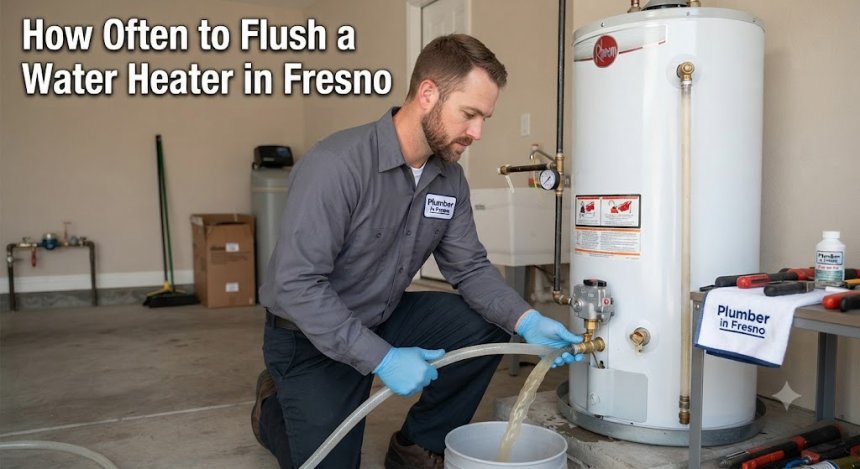
A traditional tank-type water heater is a heavy-gauge steel reservoir designed to store and continuously heat dozens of gallons of water. Cold water enters via a dip tube near the bottom of the tank, where a gas burner or electric heating element raises its temperature before hot water rises and exits through the top supply line.
Over time, minerals naturally dissolved in incoming water precipitate out under heat, settling as solid sediment at the bottom of the tank. When you flush a water heater, you open the drain valve to purge this accumulated sludge. Without routine flushing, sediment forms an insulating barrier between the heat source and the water, forcing the system to work harder, overheat the steel bottom, and burn out prematurely.
Root Causes: Why This Problem Occurs in Fresno Homes
-
High Mineral Concentration: Fresno’s local water supply carries substantial calcium and magnesium content, which rapidly bakes into a hard, rock-like layer of scale inside hot water tanks.
-
Intense Central Valley Operating Temperatures: High ambient garage temperatures during long Fresno summers cause water heaters to cycle frequently, accelerating mineral precipitation rates.
-
Thermal Stress and Expansion: Continuous heating and cooling cycles cause the steel tank walls and internal glass lining to expand and contract, making them vulnerable if sediment hotspots create uneven internal temperatures.
-
Neglected Anode Rod Degradation: The sacrificial anode rod, designed to attract corrosive elements away from the tank walls, depletes rapidly in Central Valley water conditions if left unchecked.
-
Municipal Supply Variations: Periodic shifts in water sources managed by local utility districts can introduce varying levels of suspended particulate matter into residential lines.
Critical Warning Signs: When Your Home is Sounding the Alarm
-
Auditory Clues: Rumbling, popping, or banging noises emanating from the tank during a heating cycle, caused by water trapped beneath boiling sediment layers.
-
Inconsistent Water Temperatures: Running out of hot water much faster than normal because sediment displacement reduces the tank's effective internal water capacity.
-
Discolored or Odorous Water: Rusty, brownish tint or a metallic smell coming from hot water taps, indicating internal tank corrosion or severe sediment breakdown.
Ignoring these warning signs leads to tank micro-cracks, efficiency loss that spikes your gas or electric utility bills, and catastrophic tank ruptures that can flood living spaces or garages.
Professional Diagnostic & Repair Workflow
A licensed, insured plumbing professional approaches water heater servicing through a meticulous, safety-first sequence:
-
Step 1: Non-Invasive Triage & Energy Isolation: Shutting off the gas supply or electrical breaker to the unit and closing the cold water inlet valve.
-
Step 2: Precision Diagnostic & Tank Integrity Inspection: Evaluating the condition of the pressure relief valve, venting system, anode rod, and outer tank shell for early signs of failure.
-
Step 3: Transparent, Upfront Options & Written Estimating: Explaining whether a standard flush and tune-up will suffice or if component replacements (like the anode rod or heating elements) are necessary.
-
Step 4: Code-Compliant Remediation & Flushing: Safely connecting a high-flow discharge hose, thoroughly backflushing sediment, and testing new replacement parts to manufacturer specifications.
-
Step 5: System Re-Pressurization, Testing, & Clean: Bleeding air lines, reigniting pilots or restoring power, verifying burner combustion, and sanitizing the work area.
Advanced Diagnostics: The Professional Tool Arsenal
-
Digital Clamp Meters: Used to measure electrical current draw and verify the proper resistance and operational efficiency of heating elements.
-
Combustion Analyzers: Precision instruments used on gas units to test exhaust draft, carbon monoxide levels, and burner efficiency.
-
Endoscopic Boroscopes: Miniature inspection cameras inserted through the drain valve opening to visually examine the interior floor of the tank for scale buildup and corrosion.
-
Manometers & Pressure Gauges: Tools to verify incoming water pressure and ensure thermal expansion tanks are properly charged.
DIY Reality Check: What You Can Safely Fix vs. When to Step Back
-
Safe homeowner actions: Visually inspecting the unit monthly for external leaks, monitoring water temperature settings, and clearing clutter from around the appliance venting clearance zone.
-
The danger zone: Attempting to force stuck or corroded plastic drain valves, which can shear off and unleash an uncontrolled torrent of scalding water across your home.
-
When to call a pro: If the tank is more than 8 to 10 years old, if the drain valve is completely clogged with hardened scale, or if you smell gas near the appliance control valve.
Financial Breakdown: Cost Factors & Investment Realities
Professional water heater maintenance and repair pricing utilizes transparent, flat-rate models based on labor complexity and part quality. Key cost inputs include:
-
Service Dispatch & Diagnostic Fees: Covering travel time and comprehensive safety checks of the entire heating system.
-
Anode Rod & Component Upgrades: Installing heavy-duty powered anode rods or commercial-grade brass drain valves to resist future Central Valley scale formation.
-
Unit Accessibility: Servicing units located in tight attic spaces or cramped closets requires specialized handling compared to open garage installations.
-
Repair vs. Replacement Economics: Evaluating whether investing in a minor repair is wise or if replacing an aging, rust-compromised unit is more cost-effective.
Unique Expert Insights: Hard Truths Homeowners Learn Too Late
-
Standard garden hoses attached to plastic DIY drain valves will inevitably clog with scale, turning a simple maintenance task into a flooded mess.
-
Skipping annual flushes voids most manufacturer warranties within the first few years of installation.
-
Unlicensed handymen often overlook thermal expansion code requirements, creating dangerous pressure spikes that shorten tank life.
-
Scheduling routine annual maintenance costs a fraction of an emergency midnight water heater replacement and cleanup.
Comprehensive Home Plumbing Maintenance Framework
-
Spring/Summer Checks: Inspect the temperature and pressure (T&P) relief valve test lever; check outdoor venting hoods for bird nests or debris blockages.
-
Fall/Winter Preparation: Flush your water heater before heavy winter heating demands begin; insulate exposed hot water lines running through unheated spaces.
-
Year-Round Habits: Test your main water shut-off valve quarterly; monitor monthly energy bills for unexpected increases; avoid storing chemical aerosols near gas burners.
Emergency Protocol: When Immediate Dispatch is Non-Negotiable
While sediment flushing is routine maintenance, certain water heater issues require an immediate 24/7 emergency plumber response:
-
The water heater tank ruptures, causing active, uncontrolled indoor flooding.
-
You smell a strong sulfur or gas odor near the appliance that does not dissipate.
-
Electrical sparks, smoking control boards, or scorching occur around the unit junction box.
Frequently Asked Questions (FAQs)
How often should I flush my water heater in Fresno?
Because of Fresno's hard water mineral content, you should flush your water heater at least once every six months to prevent damaging scale accumulation.
Can I flush my water heater myself?
Yes, homeowners can perform a basic flush if they have a clear drain path and a durable hose, but older units with stuck valves should be left to a licensed professional.
What happens if I never flush my water heater?
Unflushed sediment creates an insulating layer that overheats the tank bottom, causing rumbling noises, premature tank leaks, and significantly higher energy bills.
How long does a professional water heater flush take?
A thorough professional flush and inspection typically takes between 45 minutes to an hour and a half, depending on the severity of the sediment buildup.
Why is my hot water cloudy or discolored?
Cloudy hot water is usually caused by dissolved minerals or micro-bubbles, while a brownish tint indicates rust and advanced corrosion inside an aging tank.
What is an anode rod and why does it matter?
The anode rod is a metal rod suspended inside the tank that attracts corrosive minerals so they attack the rod instead of eating through the steel tank walls.
How many years does a water heater last in Fresno?
Due to heavy hard water scaling, standard tank water heaters in Fresno typically last between 8 to 12 years with proper annual maintenance.
Is it normal for a water heater to make rumbling noises?
No. Rumbling or popping noises indicate that water is trapped beneath a thick layer of mineral sediment and is boiling against the tank floor.