Major Water Leak in Fresno
Got a major water leak in Fresno? Learn how to shut off your water, prevent structural damage, and get professional leak repair fast. Call 844-833-2093.

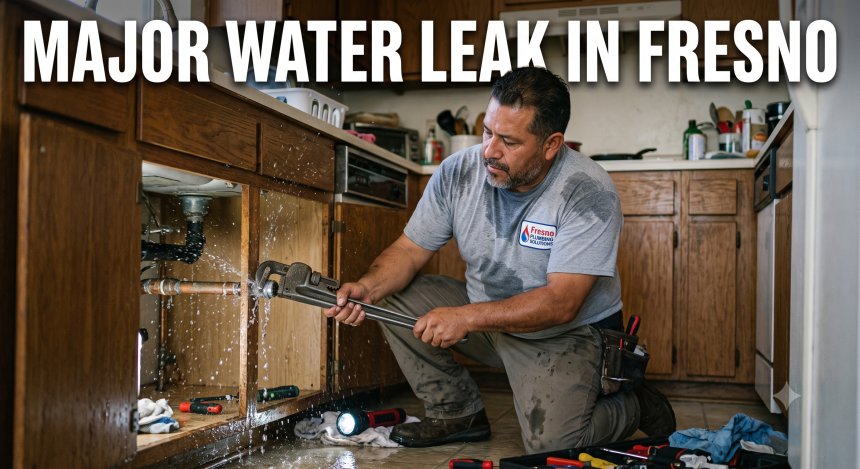
Major Water Leak in Fresno: How to Stop Further Water Damage
A sudden pipe burst, an active slab leak, or an overflowing supply line can dump hundreds of gallons of water into your property within minutes. When dealing with a Major Water Leak in Fresno: How to Stop Further Water Damage becomes the single most critical question for protecting your home’s foundation, walls, and flooring.
In the Central Valley, hot summers, mineral-heavy tap water, and shifting valley soils place significant stress on residential and commercial plumbing systems. Whether you own a historic bungalow in the Tower District, a family home in Woodward Park, or a commercial space in Downtown Fresno, acting swiftly during an active leak makes the difference between a simple pipe repair and thousands of dollars in structural restoration.
What Is a Major Water Leak?
A major water leak is an uncontrolled discharge of pressurized water within your plumbing infrastructure that cannot be contained by simple household fixtures or standard drain paths.
[ Pressurized Water Supply ]
             │
     (Structural Breach)
             │
             ├── Wall Cavities (Drywall Saturation)
             ├── Subflooring & Slab (Foundation Shifts)
             └── Living Areas (Flooring & Structural Ruin)
Unlike an occasional faucet drip, a major leak involves active, high-volume water flow resulting from:
-
A ruptured main service line between the city meter and your structure.
-
A fractured copper, PEX, or galvanized steel line within walls or ceilings.
-
A pressurized slab leak beneath a concrete foundation.
-
A catastrophic failure of a water heater tank or whole-home filtration unit.
Common Symptoms of an Active Breach
-
The sound of rushing or hissing water when all faucets are shut off.
-
Warm spots on tile, hardwood, or carpeted floors.
-
Sudden drops in municipal water pressure across all fixtures.
-
The city water meter dial or digital leak indicator spinning continuously.
-
Visible puddling along exterior foundation footings or baseboards.
Why Major Plumbing Leaks Happen in Fresno
Understanding the root cause of pipe failures helps property owners address systemic weaknesses before minor pinholes escalate into catastrophic breaks.
-
Hard Water Mineral Buildup: Fresno’s municipal water carries significant concentrations of dissolved calcium and magnesium. Over time, scale coats pipe walls, restricts flow, and accelerates galvanic or pitting corrosion in older copper and galvanized metal lines.
-
Expansive Clay Soils: Fresno County features expansive soils that swell when wet and shrink drastically during hot, dry summer months. This ground movement exerts immense shear stress on underground water lines, municipal connections, and under-slab plumbing.
-
Thermal Stress & Aging Infrastructure: Many established Fresno neighborhoods still rely on galvanized steel lines installed decades ago. These pipes rust from the inside out, thinning the metal until water pressure blows through the wall.
-
Excessive Municipal Water Pressure: Water pressure exceeding 80 PSI degrades appliance valves, stresses pipe joints, and causes premature line failures. Homes without operational pressure-reducing valves (PRVs) remain at high risk.
-
Invasive Tree Root Systems: Mature valley oaks, ash trees, and eucalyptus trees seek moisture, penetrating tiny vulnerabilities in supply and sewer lines, expanding fissures into major breaks.
Warning Signs You Should Never Ignore
+---------------------------+-----------------------------------+--------------------------------------------+
| Warning Sign              | Underlying Cause                  | Risk of Delay                              |
+---------------------------+-----------------------------------+--------------------------------------------+
| Water stains on ceilings  | Pinhole overhead supply leak      | Drywall collapse, structural joist rot     |
| Warm patches on floor     | Hot-water under-slab leak         | Foundation erosion, excessive energy bills |
| Musty indoor odors        | Hidden moisture inside drywall    | Toxic mold growth within 24-48 hours       |
| Sudden spike in utility   | Underground or sub-slab fracture  | Wasted water, thousands in damage costs    |
| Low whole-house pressure  | Primary supply line break         | Inadequate fire protection, air in lines   |
+---------------------------+-----------------------------------+--------------------------------------------+
Ignoring early symptoms allows pressurized water to saturate framing studs, deteriorate subflooring, and foster black mold colonies behind wall cavities.
Related Plumbing System Failures
A primary leak rarely occurs in complete isolation; high pressure or poor water quality impacts interconnected systems:
-
Slab Leaks: Water traveling beneath the concrete foundation washes away supporting soil, creating voids that lead to foundation settling and cracked slabs.
-
Water Heater Tank Ruptures: Sediment accumulation at the base of water heaters causes hot spots that weaken tank bottoms, leading to 40-to-80-gallon tank collapses.
-
Corroded Fixture Supply Lines: Braided stainless steel lines feeding toilets, dishwashers, and washing machines wear out, snapping under unmitigated line pressure.
-
Main Sewer Line Backups: Water backing up from damaged sewer lines compounds clean-water leaks with hazardous bio-waste contamination.
Step-by-Step Emergency Actions for Homeowners
When water is actively flooding your property, take these immediate containment steps before your technician arrives:
[ Step 1: Shut Main Valve ] ──► [ Step 2: Relieve Pressure ] ──► [ Step 3: Turn Off Power ]
                                                                           │
                                                                           ▼
[ Step 6: Call Plumber ]    ◄── [ Step 5: Document Damage ]  ◄── [ Step 4: Protect Valuables ]
-
Locate and Shut Off the Main Water Valve: Turn your primary water shutoff valve clockwise until fully seated. This valve is typically located near your front hose bib, inside the garage, or near the street meter box.
-
Relieve Residual System Pressure: Open the lowest exterior hose bib and interior cold-water faucets to drain remaining water out of the pipes away from indoor living areas.
-
Isolate Electrical Panels in Flooded Areas: If water threatens electrical outlets, baseboard heaters, or your main breaker panel, do not step into standing water. Shut off power at the exterior disconnect if safe to do so.
-
Elevate Belongings and Dry Accessible Areas: Move furniture, rugs, and electronics away from the moisture path. Use towels or wet/dry vacuums to remove surface puddles.
-
Document the Incident for Insurance: Take clear photos and videos of the source, affected walls, and damaged personal property before clean-up begins.
-
Call a Licensed Professional: Contact plumber in fresno at 844-833-2093 to mobilize emergency diagnostic and repair equipment to your property.
Step-by-Step Professional Repair Process
Handling a major plumbing failure demands systematic technical execution to locate, isolate, and repair the damaged piping without unnecessary destruction to your home.
┌────────────────────────────────────────────────────────┐
│  1. Non-Invasive Acoustic & Thermal Inspection        │
└──────────────────────────┬─────────────────────────────┘
                           ▼
┌────────────────────────────────────────────────────────┐
│  2. Isolation, Pressure Testing & Defect Diagnosis     │
└──────────────────────────┬─────────────────────────────┘
                           ▼
┌────────────────────────────────────────────────────────┐
│  3. Upfront Scope Review & Clear Written Estimate      │
└──────────────────────────┬─────────────────────────────┘
                           ▼
┌────────────────────────────────────────────────────────┐
│  4. Precision Pipe Access & Code-Compliant Repair      │
└──────────────────────────┬─────────────────────────────┘
                           ▼
┌────────────────────────────────────────────────────────┐
│  5. System Re-Pressurization & Hydrostatic Testing     │
└──────────────────────────┬─────────────────────────────┘
                           ▼
┌────────────────────────────────────────────────────────┐
│  6. Worksite Decontamination & Clean-Up                │
└──────────────────────────┬─────────────────────────────┘
                           ▼
┌────────────────────────────────────────────────────────┐
│  7. Long-Term Preventative Maintenance Guidance        │
└────────────────────────────────────────────────────────┘
-
Step 1: Inspection: Using acoustic listening devices, electromagnetic line locators, and thermal imaging cameras, the technician isolates the precise point of failure behind walls or under concrete.
-
Step 2: Diagnosis: The technician determines if the failure is an isolated joint break, systemic scale corrosion, ground-shift shear, or excessive pressure damage.
-
Step 3: Estimate: You receive an itemized, clear breakdown of repair requirements, access needs, parts, and labor before any work commences.
-
Step 4: Repair: Depending on the failure type, the plumber performs an open-trench repair, direct under-slab bypass, pipe relining, or localized section replacement using high-grade copper or PEX.
-
Step 5: Testing: The plumbing system is re-pressurized and monitored under static test gauges to verify that no secondary micro-leaks exist.
-
Step 6: Cleanup: The work area is cleaned, debris removed, and the site prepared for any necessary drywall or flooring restoration.
-
Step 7: Maintenance Advice: The technician reviews system-wide water pressure, water hardness readings, and valve health to prevent future issues.
Safe DIY vs. Required Professional Plumbing
Homeowners can safely handle minor tasks, but high-volume line breaks require specialized tools and licensing.
-
What You Can Safely Do:
-
Shut off fixture stop valves (under sinks and behind toilets).
-
Apply emergency silicone repair tape or compression clamps as a temporary measure while waiting for a plumber.
-
Clear furniture and run dehumidifiers/fans to circulate air.
-
-
When DIY Becomes Dangerous:
-
Cutting into drywall near live electrical runs.
-
Attempting to solder pressurized or water-filled copper pipes.
-
Jackhammering structural foundation slabs without pipe locating scans.
-
Using chemical leak-sealants in domestic supply lines (which contaminates drinking water and clogs valves).
-
Professional Diagnostic Equipment
Modern plumbing diagnostics eliminate guesswork and prevent unnecessary demolition of your walls or flooring:
-
Thermal Imaging Cameras: Detect temperature differentials caused by hot or cold water pooling behind plaster, sheetrock, and subfloors.
-
Acoustic Ground Microphones: Amplify the distinct frequency of pressurized water escaping pipes embedded deep in concrete slabs or earth.
-
Digital Video Inspection Cameras: Provide high-definition visuals inside drainage, sewer, and primary supply lines to assess structural integrity.
-
Hydrostatic Pressure Gauges: Test whether supply manifolds can maintain closed pressure levels over set diagnostic periods.
Repair Timelines and Cost Factors
Estimated Timelines
+------------------------------------+--------------------------+
| Repair Complexity                  | Typical Completion Time  |
+------------------------------------+--------------------------+
| Exposed Supply Line Replacement    | 1 – 2 Hours              |
| In-Wall Pinhole Copper Splicing    | 2 – 4 Hours              |
| Under-Slab Water Line Bypass       | 1 – 2 Days               |
| Whole-Home Re-Piping (PEX/Copper)  | 2 – 4 Days               |
+------------------------------------+--------------------------+
Understanding Repair Cost Variables
Plumbing repair costs vary depending on the severity of the problem, accessibility, materials required, emergency service, property type, and local labor rates.
Key cost components include:
-
Diagnostic Complexity: Simple visual leaks require minimal diagnostic time, whereas multi-point under-slab leaks require acoustic mapping.
-
Accessibility: Lines located in crawl spaces or open attics cost significantly less to repair than lines encased in post-tension concrete foundations.
-
Material Selection: High-grade commercial Type L copper, specialized PEX-A expansions, and heavy-duty brass valves carry distinct material costs.
-
Permitting & City Codes: Major structural line replacements or main service upgrades in the City of Fresno require municipal permits and code-compliance sign-offs.
Practical Truths Property Owners Should Know
-
Small Pinhole Leaks Rarely Stay Small: A leak releasing one drop per second wastes over 3,000 gallons per year; under 60 PSI of pressure, that pinhole will steadily erode the surrounding metal until it bursts.
-
Quick-Fix Clamps Are Temporary: Slip couplings and rubber sleeves are designed solely to buy you time until a licensed professional can perform a permanent, brazed, or crimped repair.
-
Homeowners Insurance Excludes Chronic Neglect: Most standard property insurance policies cover sudden, accidental pipe bursts, but will deny claims if evidence shows the leak was actively dripping for months unaddressed.
-
Hard Water Degrades Pipes Faster: Without scale mitigation or filtration, Fresno's mineral-rich water cuts the expected service life of copper plumbing from 50 years down to fewer than 20 years.
15 Common Mistakes Homeowners Make
-
Failing to Locate the Main Water Shutoff Valve: Waiting for an emergency to search for the street key or house valve results in thousands of dollars in avoidable flooding.
-
Pouring Caustic Chemical Cleaners Down Drains: Acidic cleaners generate exothermic reactions that warp PVC joints and corrode aging metal lines.
-
Flushing "Flushable" Wipes: Wipes do not break down like toilet paper; they snag on pipe burrs and cause complete sewer line backups.
-
Ignoring Fluctuating Water Pressure: Spikes above 80 PSI place extreme strain on appliance supply tubes and internal pipe walls.
-
Over-Tightening Supply Fittings: Cranking brass nuts too tightly onto plastic fixture threads strips threading and fractures fittings overnight.
-
Hiring Unlicensed or Uninsured Handymen: Uncertified work violates local building codes and leaves you liable for subsequent water damage.
-
Using the Wrong Metal Couplings: Connecting copper directly to galvanized steel without a dielectric union triggers rapid galvanic corrosion.
-
Neglecting Annual Water Heater Flushes: Unflushed sediment hardens into scale, baking the lower tank surface until the metal breaches.
-
Leaving Garden Hoses Connected in Cold Snaps: Trapped water freezes near the sillcock, splitting the copper line inside the exterior wall.
-
Planting Deep-Rooted Trees Over Utility Corridors: Tree roots easily crush and penetrate primary supply and sewer pipes.
-
Hanging Items from Exposed Basement or Garage Pipes: Using plumbing lines as storage supports weakens joint solder and causes structural fatigue.
-
Ignoring Water Meter Creep: Not checking the meter periodically hides under-slab leaks until flooring buckles.
-
Allowing Mild Rust to Go Uninspected: Rust spots on water heaters and valves indicate active micro-weeping that will eventually fail.
-
Bypassing Water Filtration: Skipping whole-home filtration in hard-water zones accelerates mineral scaling across every plumbing fixture.
-
Delaying Professional Repairs: Putting off a small damp patch until payday often leads to emergency service fees and mold remediation.
Preventative Maintenance Checklist
+-------------------+----------------------------------------------------------------------------------------+
| Frequency         | Action Item                                                                            |
+-------------------+----------------------------------------------------------------------------------------+
| Monthly           | Inspect under-sink supply lines and P-traps for moisture or mineral crusting.          |
| Quarterly         | Cycle all fixture shutoff valves and the main house shutoff to prevent seizure.        |
| Semi-Annually     | Check domestic water pressure at an exterior hose bib using an analog pressure gauge.  |
| Annually          | Flush the water heater tank to remove sediment; test the temperature-pressure valve.  |
| Seasonal (Winter) | Insulate exposed exterior pipes, hose bibs, and unconditioned attic supply lines.      |
+-------------------+----------------------------------------------------------------------------------------+
When to Call an Emergency Plumber
Contact an emergency plumber immediately if you encounter any of the following scenarios:
-
Pressurized water pooling through ceilings, drywall, or floorboards.
-
Inability to stop the flow of water using the main shutoff valve.
-
Raw sewage backing up into bathtubs, showers, or floor drains.
-
Complete loss of water pressure accompanied by the sound of running water under your foundation.
-
Water encroaching on electrical panels, water heaters, or furnace units.
Frequently Asked Questions
Why is my water pressure suddenly low throughout the house?
A sudden whole-house pressure drop typically indicates a ruptured main supply line, a failed pressure-reducing valve (PRV), or a major hidden leak diverted under your foundation or yard.
How do I know if I have a slab leak under my foundation?
Common signs include localized warm spots on your floor, the continuous sound of running water when all taps are off, unexplainable jumps in your water utility bill, and cracked baseboards or damp carpeting.
Can high water pressure cause pipes to burst?
Yes. Residential plumbing systems are engineered for 50 to 70 PSI. Pressure exceeding 80 PSI stresses joints, wears down appliance valves, and causes pinhole ruptures along pipe walls.
How long does a standard residential water heater last in Fresno?
Due to regional water hardness, standard tank water heaters typically last between 8 and 12 years. Regular annual tank flushing and anode rod replacements can extend their operational lifespan.
Will home insurance cover major water leak repairs?
Homeowners insurance generally covers sudden and accidental water damage (such as a burst pipe), but rarely pays for the plumbing repair itself, nor will it cover damage resulting from long-term, unaddressed leaks.
How does hard water damage residential plumbing?
Hard water deposits scale along pipe interiors, restricting flow and creating localized corrosion cells that eat through copper and galvanized metal over time.
Is hydro jetting safe for older plumbing lines?
Hydro jetting is highly effective, but older clay or cast-iron lines must first be inspected with a digital camera to ensure they can withstand high-pressure water streams without collapsing.
What should I do if my main shutoff valve is stuck open?
Do not force a corroded gate valve with excessive leverage, as it may snap. Use a meter wrench to turn off the water at the city meter box near the curb, then call a licensed plumber to replace the house valve with a quarter-turn ball valve.
How quickly does mold grow after a major plumbing leak?
Mold spores germinate and establish colonies within 24 to 48 hours of moisture exposure on drywall, carpet padding, and wood framing. Rapid extraction and drying are critical.
What is the advantage of PEX piping over copper for repairs?
PEX is flexible, requires fewer joints, resists scale buildup and acidic water corrosion, and expands slightly under freezing conditions, reducing the likelihood of catastrophic winter bursts.
Why Choose Plumber in Fresno
When handling an emergency line break or complex structural leak, you need a team that understands local building codes, soil dynamics, and regional water conditions.
-
Licensed & Certified Professionals: Technicians trained in the latest safety standards and diagnostic methods.
-
Transparent, Upfront Estimates: Detailed pricing provided before work begins, with no hidden diagnostic surprises.
-
Advanced Non-Invasive Technology: Thermal imaging, acoustic listening tools, and high-definition video inspection systems protect your property from unnecessary demolition.
-
Rapid Central Valley Dispatch: Fast response times across Fresno and surrounding communities.
-
Quality Materials & Workmanship: Long-lasting repairs using durable, code-approved PEX and copper materials.