Fresno Groundwater Calcium & Heating Element Damage
Learn how mineral-rich Fresno groundwater impacts water heater elements, what calcium ppm levels cause damage, and how to protect your system.

Understanding Fresno Groundwater and Water Hardness
Water drawn from municipal wells and underground aquifers throughout the Fresno and Central Valley region carries naturally occurring mineral content, predominantly calcium and magnesium. When this hard water is heated inside residential and commercial water heaters, dissolved minerals undergo a chemical phase change. As temperature increases, calcium bicarbonate breaks down into solid calcium carbonate, precipitating out of the water and forming a hard, chalky scale over internal surfaces.
While Fresno's water quality complies with all state and federal drinking standards, its mineral profile is firmly classified as hard to very hard. Understanding how these mineral concentrations interact with water heating equipment helps property owners anticipate equipment lifespans, recognize early signs of scale accumulation, and implement effective maintenance schedules.
How Calcium Scale Damages Heating Elements
Water heaters—whether standard tank-style gas units, electric resistance storage tanks, or tankless systems—rely on direct heat transfer to raise water temperatures. Scale accumulation directly undermines this process through several distinct physical and thermal mechanisms:
- Thermal Insulation: Calcium scale is a poor thermal conductor. A layer of scale just an eighth of an inch thick acts as an insulator, trapping heat against electric resistance elements or forcing gas burners to fire longer to penetrate the mineral barrier.
- Overheating and Element Burnout: In electric water heaters, trapped heat causes the internal sheath of the heating element to run at dangerously high temperatures. This thermal stress causes the metal casing to warp, fracture, or experience catastrophic element burnout.
- Tank Bottom Accumulation: In gas-fired water heaters, calcium sediment settles at the bottom of the tank directly over the burner. As the sediment layer thickens, it creates hot spots that can stress the steel tank bottom, often producing audible popping or rumbling noises as water trapped beneath the scale boils.
- Reduced Efficiency and Capacity: As mineral deposits displace usable volume inside the tank and slow down heat transfer, the recovery rate drops, leading to shorter hot water availability during heavy use.
Examining PPM Levels and Mineral Thresholds
Water hardness is typically measured in grains per gallon (gpg) or parts per million (ppm) of total dissolved calcium and magnesium carbonate. Water testing categorizes hardness into general ranges: soft (0-60 ppm), moderately hard (61-120 ppm), hard (121-180 ppm), and very hard (181 ppm and above). Groundwater supplies across Fresno County commonly register in the hard to very hard range, frequently exceeding 150 to 250 ppm depending on the specific municipal well field or private agricultural well source.
There is no single "magic number" or exact ppm threshold where a heating element instantly fails. Instead, the rate of damage is cumulative. Water containing higher ppm levels accelerates scale precipitation exponentially as water temperatures rise above 140°F. When thermostats are set higher, calcium drops out of solution at a much faster rate, compounding maintenance requirements for local water heating systems.
Symptoms of Mineral-Induced Heating Element Failure
Property owners rarely test their water chemistry daily, but water heater performance provides clear diagnostic indicators when scale buildup reaches a critical threshold:
- Declining Hot Water Duration: Showers turn lukewarm faster than they used to because sediment displacement reduces the tank's effective hot water capacity.
- Strange Noises: Rumbling, banging, or popping sounds coming from a gas water heater indicate water boiling inside thick sediment layers at the bottom of the tank.
- Discolored or Metallic Water: Advanced scaling combined with internal tank corrosion can alter water appearance or taste, though rust usually points to sacrificial anode rod depletion.
- Frequent Element Tripping: Electric water heater elements that repeatedly trip high-limit reset switches or short out entirely often suffer from scale-induced overheating.
It is important to note that these symptoms do not automatically confirm mineral scale alone; failing thermostats, bad electrical wiring, or corroded anode rods can produce similar performance drops. A proper diagnostic inspection involves draining a sample, inspecting the tank interior, and checking electrical resistance or burner combustion.
Practical Prevention and Mitigation Strategies
Managing the effects of hard water on heating equipment requires proactive maintenance rather than reactive repairs:
- Routine Flushing: Annual tank flushing helps remove loose sediment before it bakes onto heating elements or the tank floor. However, flushing alone cannot dissolve hardened scale that has already bonded to electric elements.
- Anode Rod Inspection: Sacrificial anode rods protect the steel tank from corrosion. In hard water areas, aluminum or magnesium rods can deplete faster. Switching to powered titanium anode rods can extend tank life in aggressive mineral environments.
- Temperature Regulation: Setting water heater thermostats to 120°F provides adequate sanitation while significantly slowing the chemical rate at which calcium precipitates out of hard water.
- Water Softening Systems: Installing a whole-home ion-exchange water softener removes calcium and magnesium ions upstream, protecting water heaters, dishwashers, washing machines, and plumbing fixtures from scale accumulation.
Frequently Asked Questions
Does boiling hard Fresno tap water remove the calcium that damages water heaters?
Boiling water causes temporary hardness minerals to precipitate out, which is why scale forms inside kettles and water heaters. However, boiling your household water supply is impractical and will not protect a water heater, as fresh water constantly enters the tank to replace what is used.
Can I clean a scaled electric water heater element, or must I replace it?
If an electric heating element is heavily crusted with calcium scale, it can sometimes be removed and soaked in a mild acid solution to dissolve the minerals. However, because the intense heat cycles often cause micro-fractures in the element sheath, replacement is usually faster, safer, and more reliable than attempting to clean an old, fatigued element.
How often should water heaters be flushed in Fresno?
Due to the mineral content in local groundwater, residential water heaters should be flushed at least once a year. Properties with very high mineral concentrations or heavy daily hot water usage may benefit from semi-annual flushing to prevent heavy sediment buildup.
Do tankless water heaters suffer more from Fresno's hard water?
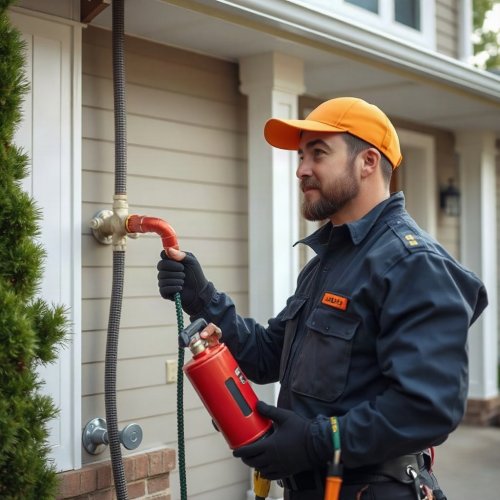
Tankless water heaters use compact heat exchangers with narrow channels. Because they heat water rapidly on demand, calcium scale builds up quickly on the heat exchanger surfaces if untreated. Tankless units in hard water regions require periodic descaling with a vinegar flush every 12 to 24 months to maintain efficiency.
Does a water softener eliminate the need to flush my water heater?
A properly functioning water softener removes incoming calcium and magnesium, drastically reducing new scale formation. However, any existing sediment or scale present before the softener was installed should still be flushed out, and annual inspections remain a good practice for overall plumbing health.