Unclog a Kitchen Sink With Standing Water
Dealing with a backed-up sink? Learn how to unclog a kitchen sink with standing water safely using expert guidance from Fresno plumbers.

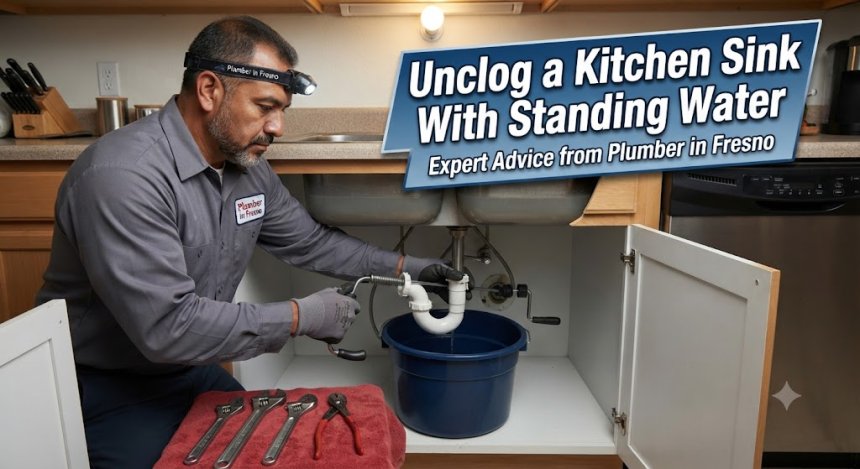
Walking into the kitchen to find a basin full of murky, gray water that refuses to drain is enough to ruin anyone's evening. Knowing how to unclog a kitchen sink with standing water safely and effectively keeps your kitchen running and prevents messy, unhygienic spills across your countertops and floors. Homeowners throughout Fresno frequently battle stubborn kitchen clogs caused by grease buildup, food waste disposal overload, and hard water scale. Tackling this issue methodically lets you clear the obstruction before it escalates into a major household disruption.
Financial Breakdown: Cost Factors & Investment Realities
| Cost Factor | Impact on Final Price |
| Clog Location & Severity | A localized blockage in the P-trap is fast and inexpensive to clear, whereas a main sewer lateral blockage requires intensive mechanical intervention. |
| Equipment Deployed | Standard manual snaking carries baseline labor rates, whereas heavy-duty hydro-jetting equipment involves specialized setup and operation. |
| Fixture Accessibility | Tightly packed under-sink storage, custom cabinetry, or old galvanized waste arms can add labor time to clear or replace components. |
| Emergency Dispatch Timing | Standard daytime appointments carry flat-rate pricing, while weekend or late-night emergency dispatches involve premium after-hours routing. |
What Is a Kitchen Sink Backup? Decoding the Mechanism
A residential kitchen drainage system relies on gravity and proper venting to whisk wastewater away from your basin through a curved pipe known as the P-trap, down into the branch drain, and out to the main sewer line.
Normally, when you open the faucet, water flows swiftly down the drain, and the water trapped inside the U-bend of the P-trap acts as a barrier to block sewer gases from entering your kitchen. When a clog forms—typically composed of congealed cooking fats, soap scum, and stray food particles—it creates a complete seal. Because water cannot bypass the mass, it backs up into the sink basin. For example, a homeowner in a Fresno ranch-style home might run the garbage disposal while washing plates, only to watch finely ground food particles combine with grease to form an impenetrable plug right at the wall entry bend.
Root Causes: Why Kitchen Sinks Clog in Fresno Homes
-
Fats, Oils, and Grease (FOG): Pouring warm cooking oils or bacon grease down the drain seems harmless, but as the liquid cools inside the pipe, it solidifies into a wax-like blockade that catches passing food debris.
-
Garbage Disposal Overload: Forcing fibrous vegetables (like celery or potato peels), coffee grounds, or large animal bones down a disposal creates dense, pulpy wedges that block the drain outlet.
-
Hard Water Mineral Restorations: Fresno's mineral-rich water reacts with soap residues over time, forming a hard, crusty soapstone scale that narrows the internal diameter of older metal pipes.
-
Improper Venting: If the kitchen sink's roof vent is obstructed by leaves or nests, it creates a vacuum effect that severely slows down drainage velocity and encourages sludge buildup.
-
Aging Pipe Sag (Belling): Older homes with cast-iron or PVC drain lines can settle unevenly over decades, creating a slight downward sag where standing water and sludge permanently pool.
DIY Reality Check: What You Call Safely Fix vs. When to Step Back
| Intervention Level | Acceptable DIY Actions | The Danger Zone (Call a Pro) |
| Diagnostics | Scooping out excess standing water with a cup or bucket, inspecting under-sink connections for visible leaks. | Dismantling corroded steel pipes that may crumble or snap under wrench pressure. |
| Immediate Mitigation | Using a cup plunger over the drain opening (ensuring double sinks are tightly plugged with a wet rag first). | Pouring harsh chemical lye or acid-based drain openers into a basin full of standing water. |
| Repairs | Removing, cleaning, and reinstalling a plastic P-trap assembly by hand. | Running a motorized drain snake through wall cleanouts without knowing the layout of the home's main lines. |
Critical Warning Signs: When Your Kitchen Drain is Sounding the Alarm
| Sensory Indicator | Specific Warning Signs | Structural Risk of Delay |
| Auditory | Bubbling, burping, or loud gurgling noises when the dishwasher pumps out or adjacent sinks drain. | Trapped air pockets and imminent total system blockage. |
| Visual / Operational | Water backing up into the dishwasher air gap or pooling in secondary basins when the main faucet runs. | Cross-fixture contamination and unsanitary wastewater pooling on kitchen floors. |
| Olfactory | A foul, sulfurous rotting food or sewer gas odor wafting from the drain opening or under-sink cabinet. | Dangerous microbial proliferation and compromised indoor kitchen air quality. |
Advanced Diagnostics: The Professional Tool Arsenal
-
High-Definition Drain Cameras: Waterproof push-rod cameras fed directly into kitchen branch lines to visually identify grease walls, root intrusions, or structural pipe damage.
-
High-Pressure Hydro-Jetting Units: Commercial-grade water jetters operating at up to 4,000 PSI that scour pipe walls completely clean, removing 100% of grease and scale.
-
Motorized Sectional Drain Augers: Heavy-duty rotating cable machines equipped with specialized cutting heads to slice through stubborn tree roots or hardened sludge.
-
Electronic Pipe Locators: Surface scanners used to pinpoint the exact underground or in-wall location of a damaged or blocked kitchen drain pipe.
Professional Diagnostic & Repair Workflow
-
Non-Invasive Triage & Safety Isolation: Evaluating the volume of standing water, ensuring electrical appliances (like garbage disposals and dishwashers) are isolated, and protecting cabinetry.
-
Precision Diagnostic: Deploying mini video cameras or inspecting cleanouts to pinpoint whether the restriction is localized in the P-trap or buried deep within the main kitchen branch line.
-
Transparent Estimating: Presenting a clear, upfront flat-rate repair proposal outlining mechanical snaking, hydro-jetting, or component replacement options.
-
Code-Compliant Remediation: Executing the selected cleaning method, clearing all grease and debris, and replacing worn slip-joint washers or degraded tailpieces.
-
Flow Verification & Cleanup: Running full hot water stress tests, checking for under-sink leaks, and thoroughly sanitizing the entire work area.
Comprehensive Home Plumbing Maintenance Framework
Spring & Summer
-
Flush your kitchen sink monthly by pouring a kettle of boiling water mixed with a tablespoon of dish soap down the drain to melt minor grease traces.
-
Inspect under-sink connections and garbage disposal housing for early signs of slow weeping or gasket degradation.
-
Test garbage disposal blades and ensure the reset button operates smoothly without tripping.
Fall & Winter
-
Prepare your kitchen lines for heavy holiday cooking by treating drains with enzyme-based bio-cleaners that naturally digest organic grease.
-
Ensure outdoor cleanout caps are securely fastened to prevent winter debris from entering lateral cleanout risers.
-
Insulate any exposed kitchen sink supply or drain lines running along unheated exterior garage walls.
Year-Round Habits
-
Never pour cooking oils, grease, bacon fat, or heavy sauces down the kitchen drain; collect them in a container and dispose of them in the trash.
-
Always run cold water for 15 seconds before and after operating your garbage disposal to help flush food waste completely through the trap.
-
Avoid chemical liquid drain cleaners, which corrode metal pipes and create hazardous splash risks for plumbers.
Emergency Protocol: When Immediate Dispatch is Non-Negotiable
-
Catastrophic Overflow: Standing water actively spilling over the kitchen sink rim and flooding hardwood or tile flooring.
-
Multi-Fixture Sewage Backup: Wastewater backing up simultaneously from the kitchen sink, laundry line, and bathroom toilets.
-
Electrical Proximity Hazards: Water pooling from a backed-up sink around under-sink electrical outlets, dishwasher plugs, or garbage disposal switches.
-
Total Loss of Kitchen Sanitation: Complete inability to use the kitchen sink for hygiene or food prep over an extended period in a commercial or busy household setting.
Unique Expert Insights: Hard Truths Homeowners Learn Too Late
-
Chemical Cleaners Eat Pipes: Pouring caustic chemical drain openers into standing water rarely clears tough grease clogs; instead, it sits on the blockage and corrodes metal pipe walls from the inside out.
-
Garbage Disposals Aren't Trash Cans: Treat your disposal like a food scrap finishing tool, not a wood chipper. Fibrous materials and bones guarantee a service call.
-
Plunging Standing Water Requires Caution: If you use a plunger on a kitchen sink with chemical cleaner standing in it, you risk severe chemical burns if it splashes back.
-
DIY Snakes Scratch PVC: Using rigid, unguided wire snakes on plastic P-traps can puncture the bends, turning a simple clog into a ruptured leak under your sink.
-
Preventive Cleaning Pays Off: Investing in an annual professional hydro-jetting cleaning costs a fraction of emergency water mitigation and kitchen floor replacement.
Frequently Asked Questions (FAQs)
Can I use a plunger if my kitchen sink has standing water?
Yes, you can use a cup plunger, but you must first scoop out most of the excess standing water into a bucket. If you have a double-sink vanity, seal the second drain tightly with a wet cloth so air and pressure force through the clog rather than escaping out the other side.
Why is water backing up into my other sink basin?
In a double-kitchen-sink setup, both basins connect to a shared T-fitting and P-trap below. When a clog forms further down the shared tailpiece or branch line, water forced down one side naturally takes the path of least resistance and bubbles up into the other basin.
Is it safe to use liquid drain cleaner on standing water?
No. Pouring liquid chemical drain cleaner into standing water dilutes its effectiveness and creates a major safety hazard. If the clog doesn't clear, you are left with a basin full of toxic, corrosive chemical water that is dangerous to bail out or plunge.
How do I safely clean a P-trap with standing water in the sink?
Place a deep bucket directly beneath the P-trap. Carefully loosen the slip-joint nuts by hand or with channel-lock pliers. Allow the trapped water and loose debris to drain into the bucket, clean out the sludge, and reinstall the trap with its rubber washers intact.
What foods should never go down a garbage disposal?
Never put coffee grounds, eggshells, banana peels, celery, pasta, rice, potato peels, grease, or bones down your disposal. These items expand, mat together, or wrap around the motor blades, causing immediate jams.
Why does my kitchen sink drain slowly before backing up completely?
A slow-draining sink is the classic indicator of "pipe narrowing." Over time, layers of grease, soap scum, and hard water scale build up along the inner circumference of the pipe, restricting water volume until a final piece of debris seals it completely.
Can a blocked roof vent cause a kitchen sink backup?
Yes. If animal nests or leaves block your roof plumbing vent stack, it disrupts the air balance in your drainage system, creating a vacuum that prevents water from flowing smoothly down the kitchen drain.
How long does a professional kitchen drain cleaning take?
An experienced licensed plumber can typically clear a standard kitchen sink clog using professional snaking or clearing equipment within 30 to 45 minutes.