How to Use a Drain Snake to Clear Clogs
Learn how to use a drain snake safely to clear stubborn household clogs. Expert plumbing tips, tool guides, and when to call a Fresno plumber.

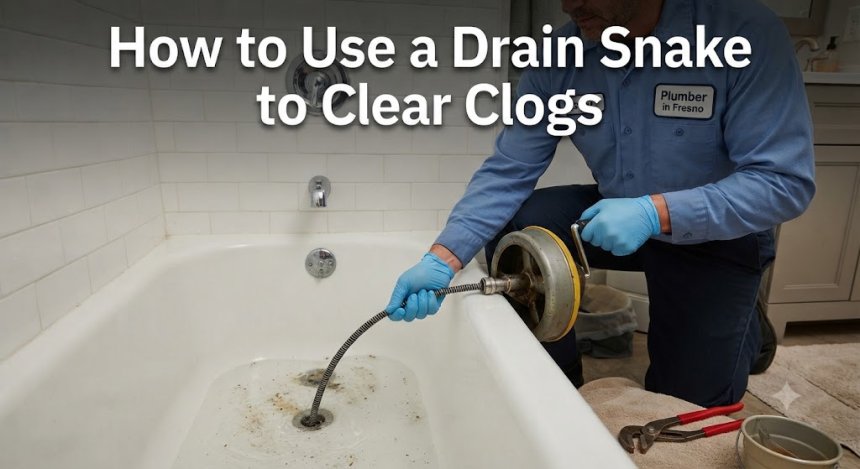
When a standard plunger fails to budge standing water in your bathtub or kitchen sink, frustration quickly sets in. Knowing how to use a drain snake effectively is the ultimate skill that separates a minor inconvenience from an expensive emergency call. Homeowners across Fresno frequently battle stubborn blockages caused by hair mats, soap buildup, and organic waste trapped deep inside waste lines. Ignoring a persistent slow drain allows organic mass to compact further, creating an absolute blockage that can cause raw sewage to back up into your living space. Mastering this mechanical tool empowers you to clear restrictions safely and restore proper drainage.
What Is a Drain Snake? Decoding the Mechanism
A drain snake, also known as a plumbing auger, consists of a flexible, high-tensile steel cable wound inside a protective drum or housing, attached to a hand crank or drill-drive mechanism, and tipped with a specialized corkscrew or coil head.
In a functioning plumbing system, waste water flows smoothly through gravity-fed drainpipes and sanitary tees. When hair, grease, or foreign objects accumulate, they form a dense mass that traditional plungers cannot reach. A drain snake is engineered to bypass P-traps and navigate tight pipe bends, allowing the auger head to either hook, break apart, or punch through the obstruction so it can be pulled back or flushed down the main line.
Root Causes: Why Tough Blockages Occur in Fresno Homes
Fresno’s distinct local environment and architectural history introduce specific challenges that aggravate interior drainage restrictions:
-
Hard water binding: Fresno’s mineral-rich groundwater combines with soap scum and hair in bathroom lines, forming a tough, cement-like compound that traps debris.
-
Expansive clay soil shifting: Minor ground movement across Central Valley neighborhoods can subtly stress subsurface sewer branches, creating offsets where hair and paper snag easily.
-
Aging home infrastructure: Older residential properties feature cast-iron pipes with heavily corroded, rough interior walls that effortlessly catch passing debris.
-
Improper waste disposal: Flushing inappropriate items or overloading garbage disposals sends fibrous waste into narrow branch pipes.
-
Root intrusion: Aggressive landscape trees seeking moisture in dry climates can infiltrate minor cracks in exterior sewer lateral lines.
Critical Warning Signs: When Your Drains are Sounding the Alarm
Recognizing early sensory indicators prevents property owners from missing the transition between a simple slow drain and a catastrophic structural failure.
-
Auditory warnings: Gurgling or bubbling sounds coming from toilet bowls or shower drains when you run the washing machine or kitchen sink.
-
Olfactory indicators: Foul, damp earth or sulfurous sewer gas odors wafting up from rarely used floor drains or sink basins.
-
Tactile clues: Multiple fixtures draining sluggishly at the same time, or water bubbling up into a shower pan when the nearby bathroom sink is emptied.
Professional Diagnostic & Repair Workflow
When a stubborn blockage resists standard DIY snaking, a licensed, insured plumber follows a strict, engineering-based diagnostic workflow.
-
Step 1: Non-Invasive Triage & Safety Isolation. The technician evaluates the affected fixture network and sets up protective drop cloths to keep your flooring clean.
-
Step 2: Precision Diagnostic & Digital Video Inspection. The plumber feeds a high-definition micro-camera down the pipe to look directly at the obstruction, confirming whether it is hair, scale, a broken pipe, or root intrusion.
-
Step 3: Transparent, Upfront Options & Written Estimating. The professional presents clear, flat-rate repair options explaining whether industrial cable machine work or hydro-jetting is required.
-
Step 4: Code-Compliant Remediation & Repair. The technician clears the line, repairs cracked fittings, or replaces damaged sections to meet local plumbing codes.
-
Step 5: Flow Verification & System Clean-Up. Rigorous flow testing under maximum capacity guarantees total clearance before sanitizing the workspace.
Advanced Diagnostics: The Professional Tool Arsenal
Professional technicians utilize heavy-duty industrial equipment to achieve precise results without guesswork.
-
High-definition push-rod cameras: Provide a live interior view of pipe walls to identify exact blockages and structural damages.
-
Motorized sectional and drum cable machines: Deliver torque over long distances to slice through dense tree roots and compacted grease.
-
High-pressure hydro-jetting units: Scour interior pipe walls completely clean with high-velocity water streams up to 4,000 PSI.
-
Electronic pipe locators: Pinpoint the exact surface depth and position of underground line problems without unnecessary excavation.
DIY Reality Check: What You Can Safely Fix vs. When to Step Back
Using a manual hand snake is a great DIY skill, but knowing your limits prevents severe injury or property damage.
-
Safe homeowner actions: Clearing hair clogs from shower drains using a small plastic zip-strip tool, snaking minor tub drain clogs through the overflow plate, or clearing simple sink blockages via the P-trap.
-
The danger zone: Forcing a stiff, heavy-duty commercial power auger into delicate PVC or old, brittle plumbing lines, which can puncture the pipe wall and flood your walls.
-
When to call a pro: If your main sewer line backs up into multiple household fixtures, or if your snake hits an immovable metal obstruction that refuses to budge.
Step-by-Step Guide: How to Use a Drain Snake Effectively
Clearing a stubborn household clog with a manual hand snake requires patience and a methodical technique.
-
Step 1: Prepare the work area. Spread towels or a plastic tarp beneath the fixture or access point. Put on rubber gloves and protective eyewear to guard against splashing wastewater.
-
Step 2: Gain access to the drain. For a bathtub, remove the overflow plate or the strainer grid. For a sink, disconnect the P-trap if necessary to insert the snake directly into the branch line, avoiding scratches to the visible chrome spout finish.
-
Step 3: Feed the cable into the pipe. Loosen the thumbscrew on the snake drum and pull out about a foot of cable. Guide the auger head smoothly into the drain opening by hand until you feel resistance against a bend or the clog.
-
Step 4: Crank and engage the blockage. Tighten the thumbscrew securely. Rotate the hand crank clockwise while applying gentle, steady forward pressure. Never force the cable aggressively; if it begins to loop or bind outside the pipe, stop immediately, pull back to remove slack, and try again.
-
Step 5: Break through or retrieve the debris. Once you feel the cable bite into the clog, continue rotating clockwise to hook hair and solid matter, or push firmly to break apart soft obstructions.
-
Step 6: Retract and clean the cable. Slowly pull the cable back out of the drain while wiping it down with a disposable rag. You will likely pull out a clump of hair or debris.
-
Step 7: Flush and test the system. Reassemble any removed components, run hot water down the drain for several minutes, and check that the water spirals away rapidly without standing.
Financial Breakdown: Cost Factors & Investment Realities
Understanding professional pricing models helps homeowners evaluate whether to tackle a stubborn clog themselves or call a licensed technician. Flat-rate pricing depends on several variables:
-
Dispatch and diagnostic fees: Cover travel time and technical troubleshooting to isolate the obstruction.
-
Equipment deployment: Standard manual snaking versus industrial motorized cable machines or video camera inspections.
-
Accessibility challenges: Main cleanout access locations versus removing toilets or cutting into finished drywall.
-
Repair vs. replacement economics: Clearing a routine branch blockage prevents long-term pipe corrosion and expensive emergency excavations.
Unique Expert Insights: Hard Truths Homeowners Learn Too Late
-
Chemical drain cleaners ruin cables: Pouring harsh acid cleaners down a clogged drain before snaking creates a dangerous splash hazard that can burn skin upon contact with the spinning cable.
-
Pushing too hard breaks pipes: Forcing a hand snake with a power drill without experience can twist the steel cable inside the pipe, snapping it or puncturing older plastic joints.
-
Hair snakes are maintenance tools: Inexpensive plastic barbed hair-removal strips are great for monthly maintenance, but useless against deep, compacted main line clogs.
-
Unlicensed shortcuts fail inspections: Improvised cleanout repairs often violate local building codes and fail during real estate home sales.
Comprehensive Home Plumbing Maintenance Framework
-
Spring Checks: Test all bathroom and kitchen drains for slow flow, inspect outdoor cleanout caps, and check sump pump functionality.
-
Fall Preparation: Flush water heater sediment and insulate exposed pipes in unconditioned spaces before winter temperature drops.
-
Year-Round Habits: Use mesh hair strainers in every shower and tub, never pour grease down kitchen sinks, and perform monthly baking soda and hot water flushes.
Emergency Protocol: When Immediate Dispatch is Non-Negotiable
While many clogs can be handled with a hand snake, certain situations demand immediate 24/7 professional intervention. Call an emergency plumber if sewage backs up into multiple household fixtures simultaneously, if wastewater floods your floors, or if your home loses all drainage capabilities.
Frequently Asked Questions (FAQs)
Can I use a power drill with a manual hand snake?
Using a power drill on a standard hand snake housing is dangerous because the thin cable can easily kink, twist, or snap inside the pipe under high torque.
Why does my drain clog again shortly after snaking?
If a snake only punches a small hole through a grease or hair mass rather than removing it completely, the remaining residue will quickly catch new debris and re-clog.
How do I clean my drain snake after use?
Rinse the steel cable thoroughly with a garden hose or utility spray nozzle, wipe it down with an oily rag to prevent rust, and let it dry completely before retracting it into the drum.
Is it safe to snake a toilet with a standard sink snake?
No, standard sink snakes will permanently scratch and ruin the porcelain bowl finish. Always use a specialized Fresno toilet auger featuring a protective rubber guard sleeve.
How far down the pipe can a hand snake reach?
Standard handheld drum snakes typically feature 15 to 25 feet of cable, which is sufficient for clearing local branch sink and tub lines but not main sewer stacks.
What causes a drain snake to get stuck in the pipe?
A snake usually gets stuck when the cable catches on a sharp pipe offset, an interior root intrusion, or loops tightly inside a large-diameter sanitary tee fitting.
Should I run water while using a drain snake?
It is often best to feed the snake into a dry or slow-draining pipe to feel the obstruction clearly, then run a trickle of water to help wash loosened debris away as you retract.
When should I hire a professional plumber for a clog?
Call a licensed plumber if your manual snake cannot pass a bend, if multiple fixtures back up at once, or if you suspect a broken underground sewer line.