Why Do Fresno Homes Get Recurring Sewer Line Clogs?
Discover why Fresno homes suffer from recurring sewer line clogs. Expert insights on root causes, advanced diagnostics, and local plumbing solutions.

The Endless Cycle of Main Line Blockages
Dealing with a backed-up toilet or a slow-draining bathtub once is frustrating enough, but watching the exact same plumbing failure return weeks after clearing it points to a deeper, systemic issue. Homeowners across the Central Valley frequently find themselves asking why do Fresno homes get recurring sewer line clogs when temporary snaking fails to provide a permanent fix. Ignoring this repetitive cycle invites catastrophic sewage backups into living areas and endangers your property’s foundation. For residents living in Fresno, expansive clay soils, mature landscaping root systems, and aging municipal connections create an environment where sewer lines are constantly under siege. Understanding the structural roots of these recurring blockages is the first step toward permanent remediation.
What Is a Main Sewer Line? Decoding the Mechanism
The main sewer line is the heavy-duty underground conduit responsible for transporting all wastewater—from toilets, showers, and kitchen sinks—out of your home and into the municipal sewer main. Under normal operation, gravity pulls wastewater down sloped lateral pipes smoothly.
Consider a typical residential property in an established Fresno neighborhood. When structural shifts occur, or when invasive tree roots breach pipe joints, the internal hydraulic flow is interrupted. Solid waste and toilet paper catch on these interior obstructions, creating a recurring bottleneck that standard consumer snakes can only temporarily punch through rather than resolve.
Root Causes: Why This Problem Occurs in Fresno Homes
Sewer lines in the San Joaquin Valley face unique regional environmental and structural stresses that accelerate line failure.
-
Expansive Clay Soils and Ground Shifting: Fresno's native soils expand when wet and shrink severely during dry summer months, causing underground pipes to shift, sag, and pull apart at structural joints.
-
Aggressive Tree Root Infiltration: Mature ornamental trees like ash, elm, and eucalyptus seek out moisture sources, forcing fine roots through microscopic cracks or rubber gasket joints in sewer lines.
-
Aging Infrastructure & Legacy Pipe Materials: Many mid-century Fresno homes still feature original cast iron, Orangeburg, or clay tile lateral pipes that have corroded, collapsed, or delaminated over time.
-
Hard Water Scale Accumulation: Mineral-heavy water combined with organic grease discharge builds up thick interior encrustations inside lateral pipes, reducing overall interior diameter.
-
Improper Initial Grading: Settling foundations or substandard original installation grading can create "bellies"—depressed sections of pipe where standing water and solids accumulate permanently.
Critical Warning Signs: When Your Home is Sounding the Alarm
Failing sewer lines give distinct, unmistakable sensory alerts long before a total structural collapse occurs.
-
Auditory Clues: Listen for deep gurgling or bubbling sounds from your toilets and bathtub drains whenever washing machines discharge wastewater.
-
Olfactory Indicators: Unmistakable sewer gas odors lingering around floor drains, crawlspaces, or yard areas indicate broken vent or lateral seals.
-
Visual Evidence: Multiple plumbing fixtures backing up simultaneously, water pooling in the yard above the sewer lateral line, or lush, unnaturally green patches of grass over the pipe run.
-
Cascading Structural Risks: Unaddressed main line leaks saturate the soil directly beneath foundation footings, leading to differential settling, structural cracking, and costly framing damage.
Advanced Diagnostics: The Professional Tool Arsenal
When diagnosing recurring underground blockages, professional plumbers rely on high-tech diagnostic equipment rather than guesswork.
-
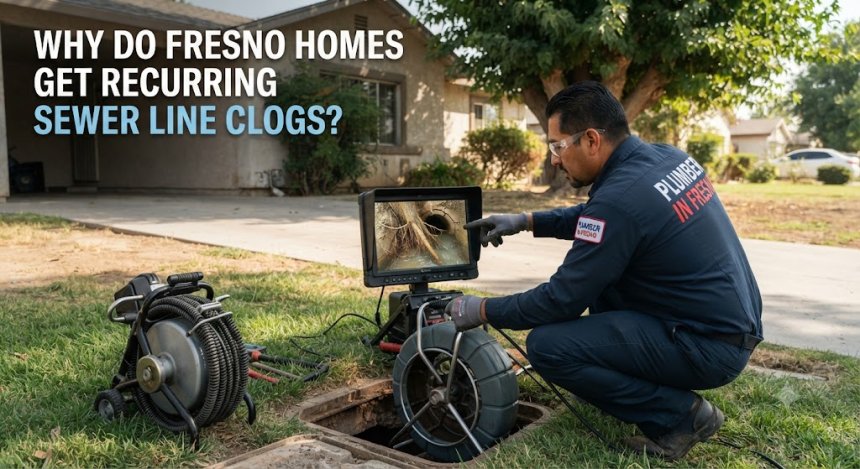
Push-Rod High-Definition Sewer Cameras: Self-leveling digital cameras travel the entire length of the lateral line, transmitting real-time footage to locate cracks, root masses, and pipe bellies precisely.
-
Hydro-Jetting High-Pressure Cleaning Units: Deliver water streams up to 4,000 PSI to scour interior pipe walls completely clean of scale, grease, and invasive root intrusions.
-
Electronic Pipe Locators: Transmit radio frequencies from inside the sewer line to pinpoint the exact surface depth and geographic location of underground damage.
-
Electronic Pressure Testing Equipment: Evaluate overall system integrity and verify whether lateral lines can hold required municipal hydrostatic pressure standards.
Professional Diagnostic & Repair Workflow
Licensed, insured plumbers execute a rigorous, standardized methodology to diagnose and resolve chronic sewer issues permanently.
-
Step 1: Non-Invasive Triage & Safety Isolation: Assess the scope of the backup and isolate affected indoor fixtures to prevent further interior contamination.
-
Step 2: Precision Diagnostic & Digital Video Inspection: Run a high-definition camera through the cleanout to identify the exact cause of recurring clogs.
-
Step 3: Transparent, Upfront Options & Written Estimating: Present clear, itemized solutions ranging from precision hydro-jetting to trenchless pipe lining or traditional excavation.
-
Step 4: Code-Compliant Remediation & Repair: Execute structural repairs or lining replacement adhering strictly to local Fresno municipal plumbing codes.
-
Step 5: Flow Verification & Final Inspection: Conduct a post-repair video scan and flow test to guarantee the line is completely clear and structurally sound.
DIY Reality Check: What You Can Safely Fix vs. When to Step Back
Homeowners can perform basic surface tasks, but main sewer lines require professional intervention.
-
Safe Homeowner Actions: Clearing minor localized branch sink clogs with a manual plunger or keeping outdoor cleanout caps securely closed.
-
The Danger Zone: Attempting to force heavy-duty motorized rental augers through root-choked main lines, which can twist cables, break pipes underground, or cause severe personal injury.
-
When to Call a Pro: If multiple fixtures back up at once, if sewage surfaces in yard cleanouts, or if clogs recur within weeks of clearing, drop the tools and call a licensed professional immediately.
Financial Breakdown: Cost Factors & Investment Realities
Plumbing investments for sewer line restoration depend on several key variable inputs.
-
Service Dispatch & Camera Diagnostic Fees: Initial dispatch covers travel, safety evaluation, and complete digital video camera scoping of the lateral line.
-
Clearing Technology Deployment: Routine mechanical snaking costs less than intensive hydro-jetting or specialized root-cutting equipment deployment.
-
Repair Method Selection: Trenchless pipe lining solutions often minimize landscaping destruction compared to traditional open-trench excavation.
-
Depth and Accessibility: Deeper municipal tie-ins or lines running beneath concrete driveways require specialized labor and permitting.
Unique Expert Insights: Hard Truths Homeowners Learn Too Late
-
Chemical main line root killers provide only a temporary band-aid and can leach toxic compounds into local groundwater tables.
-
Renting a big-box store drain snake often results in the cable getting snagged or knotted inside a broken sewer pipe, turning a minor clog into an expensive excavation emergency.
-
Unlicensed handymen frequently patch lateral lines without securing municipal permits, creating major legal and financial liabilities during home resale inspections.
-
Proactive annual sewer camera inspections cost a fraction of a sudden emergency midnight sewage extraction and yard excavation.
-
Ignoring slow drains allows continuous hydraulic pressure to widen existing pipe cracks until structural collapse occurs.
Comprehensive Home Plumbing Maintenance Framework
-
Spring Checks: Inspect outdoor accessible cleanouts to ensure caps are sealed tightly and no rainwater infiltration is occurring.
-
Summer Habits: Monitor mature trees planted near sewer lateral paths and consider installing physical root barriers if planting new foliage.
-
Fall Preparation: Avoid pouring cooking grease, oils, or fibrous food waste down kitchen drains to prevent internal line coating.
-
Winter Readiness: Ensure yard grading slopes away from foundation cleanouts to prevent heavy winter storm runoff from entering the sewer system.
-
Year-Round Habits: Never flush "flushable" wipes, paper towels, or hygiene products, as these materials do not break down and form dense blockages.
Emergency Protocol: When Immediate Dispatch is Non-Negotiable
-
Active Sewage Overflow: If raw sewage begins backing up out of floor drains or lower-level showers into living spaces, evacuate the area and call for emergency help immediately.
-
Complete System Stoppage: When every toilet and sink in the home refuses to drain, the main building sewer is completely occluded.
-
Structural Odors: Severe, overwhelming sewer gas odors permeating the living space demand immediate professional containment.
-
Sinkhole Formation: If a depression or sinkhole suddenly develops in your yard along the known path of your sewer lateral, call a professional instantly.
Frequently Asked Questions (FAQs)
Why does my sewer line keep clogging in the exact same spot?
Recurring clogs in the same location typically indicate a structural defect such as a pipe belly, a persistent tree root intrusion, or a crushed section of lateral piping.
Can tree roots really destroy a Fresno sewer line?
Yes. Fresno's arid climate drives tree roots deep underground in search of moisture, allowing them to penetrate tiny cracks and joints in older clay or cast iron pipes.
What is the difference between snaking and hydro-jetting a sewer line?
Snaking punches a small hole through a blockage to restore temporary flow, while hydro-jetting uses high-pressure water to scour the entire interior pipe wall clean of roots and scale.
How often should I have my sewer line inspected with a camera?
It is recommended to have your main sewer line inspected with a camera every two to three years, especially if your home is over 30 years old or surrounded by mature trees.
Are "flushable" wipes really safe for Fresno sewer lines?
No. Despite marketing claims, flushable wipes do not break down like toilet paper and frequently snag on pipe imperfections, causing major main line clogs.
How long does a trenchless sewer line repair take?
Most trenchless sewer pipe lining or bursting projects can be completed by professional plumbers within one to two days, preserving your yard and landscaping.
What are the signs of a collapsed sewer line?
Signs of a collapsed sewer line include recurring sewage backups, foul odors in the yard, wet or exceptionally green grass patches, and multiple slow drains.