How to Fix a Leaking Pipe Under the Kitchen Sink
Learn how to fix a leaking pipe under your kitchen sink, find hidden damage, and know when to call a professional plumber in Fresno.

The Hidden Cost of Ignoring a Cabinet Leak
There are few discoveries more unsettling than opening your kitchen cabinet to grab a cleaning supply only to touch a pool of stagnant, musty water. When you need to fix a leaking pipe under the kitchen sink, addressing the issue before it warps your cabinetry subfloor or breeds mold is critical. Homeowners throughout Fresno's diverse neighborhoods—from historic homes near the Tower District to newer builds in Woodward Park—frequently encounter this issue due to daily kitchen wear, garbage disposal vibrations, and local water conditions. Acting quickly protects your property and prevents a minor drip from compounding into a major structural headache.
Comprehensive Home Plumbing Maintenance Framework
Keeping your kitchen drainage and supply lines running smoothly year-round involves a structured seasonal maintenance approach:
-
Spring/Summer checks: Inspect under-sink supply lines for rubber degradation, test garbage disposal mounting bolts, and clear out debris from sink strainers.
-
Fall/Winter preparation: Check under-sink areas for draft points near exterior walls, insulate exposed supply lines if necessary, and run enzyme treatments to clear organic buildup.
-
Year-round habits: Avoid pouring grease down the drain, use physical mesh strainers to catch food particles, and routinely dry-wipe cabinet bases to catch early leaks.
What Is an Under-Sink Drainage System? Decoding the Mechanism
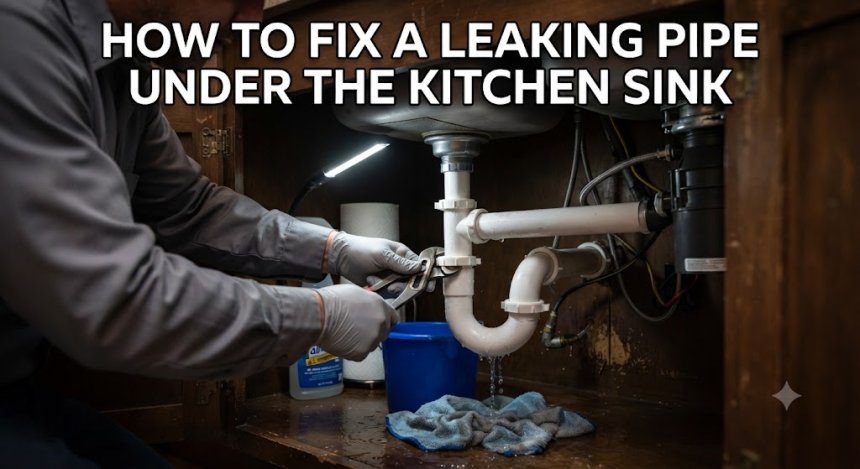
An under-sink plumbing system relies on gravity and a series of slip-joint pipes, washers, and a P-trap to route waste water safely from your basin into the home's main sanitary stack.
-
The ideal operation: Water flows down the tailpiece, passes through the P-trap (which holds a small pool of water to block sewer gases from rising into your kitchen), and exits through the wall branch pipe.
-
Where failures happen: When slip nuts loosen from thermal expansion, rubber washers dry out, or corrosion eats through metallic junctions, water escapes the pathway and pools inside the cabinet base.
-
A Fresno scenario: Consider a bustling kitchen in a Fig Garden home where heavy holiday cooking and continuous garbage disposal vibrations slowly loosen the PVC slip-joint nuts under the double basin, leading to a steady, silent drip.
Root Causes: Why Under-Sink Leaks Happen in Fresno Homes
Leaks under the kitchen sink are rarely random; they stem from mechanical, chemical, and environmental stressors.
-
Aging infrastructure & pipe materials: Older Fresno homes may still feature threaded brass or galvanized steel tailpieces that corrode from the inside out over decades.
-
Hard water mineral scaling: The Central Valley's hard water leaves mineral deposits that degrade rubber seals and cause slip-joint washers to warp or crack.
-
Garbage disposal vibrations: Continuous motor torque from heavy-duty food waste disposers shakes connected slip joints loose over time.
-
Improper alignment: Misaligned drain extensions or uneven P-traps place constant lateral stress on plastic washers, leading to premature leaks.
-
Material wear & tear: Standard plastic slip-joint washers lose flexibility and compress permanently after years of temperature fluctuations from hot dishwater.
Advanced Diagnostics: The Professional Tool Arsenal
When complex leaks hide behind cabinetry walls or involve supply lines embedded in concrete slabs, professional plumbers deploy heavy-duty gear:
-
Electronic acoustic and thermal leak detectors: Pinpoint hidden hot or cold water supply line fissures behind drywall without unnecessary demolition.
-
Push-rod high-end drain cameras: Inspect the interior condition of branch lines beyond the wall to ensure the main line isn't also sluggish.
-
Digital manometers & pressure test kits: Measure home water pressure to ensure high municipal supply pressure isn't overstressing under-sink angle stops.
-
Electronic pipe locators: Map out exact sub-slab or in-wall pipe runs during major kitchen remodeling or rerouting projects.
Critical Warning Signs: When Your Kitchen is Sounding the Alarm
Long before water puddles across your cabinet floor, your kitchen plumbing gives off sensory distress signals.
-
Auditory clues: Listen for a rhythmic dripping sound inside the cabinet after running the faucet, or gurgling noises from the drain indicating venting issues.
-
Olfactory indicators: A persistent musty smell, damp earth odor, or mildew scent when you open cabinet doors points to slow, hidden leaks soaking the wood.
-
Structural red flags: Warping cabinet floor panels, peeling laminate, or a spongy texture near the baseboard directly beneath the sink.
-
Cascading risks: Ignoring these signs leads to structural rot, ruined base cabinets, and toxic mold colonies that require professional remediation.
Professional Diagnostic & Repair Workflow
A licensed, insured plumber evaluates and corrects kitchen sink leaks using a systematic, safety-first workflow:
-
Step 1: Non-Invasive Triage & Safety Isolation: Shut off the local water supply angle stops and clear all items out of the under-sink cabinet.
-
Step 2: Precision Diagnostic Inspection: Trace every connection from the faucet supply lines down to the tailpiece, P-trap, and wall stub using targeted pressure and moisture testing.
-
Step 3: Transparent, Upfront Options & Written Estimating: Present straightforward, flat-rate pricing options for repairs or full assembly replacements before starting work.
-
Step 4: Code-Compliant Remediation & Part Replacement: Replace worn washers, deteriorated PVC slip joints, or faulty shut-off valves using commercial-grade components that meet local codes.
-
Step 5: Pressure Testing, Flow Verification, & Clean-Up: Run high-volume water tests through both basins, check for dry connections under full flow, and sanitize the workspace.
Financial Breakdown: Cost Factors & Investment Realities
Plumber pricing for kitchen leak repairs involves variable inputs based on accessibility and component severity. Flat-rate professional models account for:
-
Diagnostic & dispatch fees: Covers the licensed technician's travel, truck stock, and initial system evaluation.
-
Accessibility and cabinet design: Tight, custom-built cabinetry or multi-tiered pull-out shelving can increase labor time compared to an open, wide cabinet base.
-
Material quality: Upgrading from old brass or thin plastic traps to heavy-duty schedule 40 PVC or integrated push-to-connect supply lines.
-
Associated fixture replacements: If the leak stems from a failing faucet body or a rusted basket strainer flange, replacement parts shift the overall scope.
-
Repair vs. full replacement: Weighing the cost of patching a single joint against replacing the entire under-sink grid if components are severely corroded.
Unique Expert Insights: Hard Truths Homeowners Learn Too Late
-
Temporary tape, silicone patches, and bucket-catching fixes mask deeper alignment failures and can void home insurance coverage if a catastrophic break occurs while you are away.
-
Pouring chemical drain openers down a slow sink to fix a backup often degrades thin brass slip joints and ruins rubber gaskets from the inside out.
-
Unlicensed handymen frequently assemble P-traps backward or omit vital washers, creating hidden code violations that fail during real estate home sales.
-
Investing in professional installation of quarter-turn ball valves costs a fraction of an emergency midnight flood extraction.
DIY Reality Check: What You Can Safely Fix vs. When to Step Back
Knowing your limits prevents a simple plumbing adjustment from turning into a kitchen flood.
-
Safe homeowner actions: Hand-tightening a loose slip-joint nut, replacing a standard rubber washer inside a P-trap, or clearing out the trap debris manually with a bucket underneath.
-
The danger zone: Never force overtightened metal nuts with massive pipe wrenches, as you can easily crack porcelain basins or crush PVC wall adapters.
-
When to call a pro: If the leak originates inside the wall behind the stub-out, if the threaded nipple is rusted through, or if you encounter corroded angle stops that refuse to close completely, call a licensed professional.
Emergency Protocol: When Immediate Dispatch is Non-Negotiable
Certain under-sink plumbing scenarios demand an immediate 24/7 emergency response:
-
Catastrophic supply line blowouts shooting pressurized hot or cold water directly into your kitchen cabinets.
-
Severe main sewer line backups forcing raw waste up through the kitchen sink basin and onto your flooring.
-
Active leaks coming into contact with electrical dishwasher connections or garbage disposal wiring, creating a shock hazard.
-
Sudden structural pipe collapses that cut off your home's entire kitchen water utility.
Frequently Asked Questions (FAQs)
-
How do I stop a leak under my kitchen sink right away? Locate the hot and cold water shut-off valves attached to the wall beneath the sink and turn them clockwise until fully closed. Place a bucket underneath to catch remaining water.
-
Why is water leaking from the large nut under my sink basket? That large nut secures the basket strainer to the sink basin. Over time, the plumber's putty degrades or the locknut loosens, requiring re-sealing or replacement.
-
Can I use duct tape to fix a leaking PVC pipe under the sink? No. Water pressure and condensation prevent tape from holding. It is only a temporary band-aid that masks a failing seal.
-
How often should under-sink plumbing washers be replaced? Rubber slip-joint washers typically last 5 to 7 years before hardening, cracking, and beginning to weep moisture.
-
Why does my sink leak only when I run the dishwasher? The dishwasher drains into a high-loop or directly into the disposal tailpiece. A leak during dishwasher operation usually points to a loose hose clamp or a cracked tailpiece branch connection.
-
Is it better to use PVC or ABS pipe under a kitchen sink? Both are durable plastic materials, but local building codes and existing infrastructure dictate which one your plumber will use for a code-compliant fix.
-
Why does my cabinet smell damp even when I don't see a puddle? Slow, microscopic weep leaks can soak into unsealed cabinet wood or particle board, causing mold growth before visible water accumulates.
-
When should I replace the entire under-sink plumbing assembly? If multiple joints are corroded, mismatched, or made of outdated materials, replacing the entire trap kit and tailpieces ensures a clean, reliable system.