DIY Plumbing Tests During Fresno Home Open Houses
Learn how to evaluate water pressure and drain speed during a Fresno home open house to spot hidden plumbing issues before buying.

Evaluating Plumbing Systems During a Fresno Open House
Attending a home open house in Fresno involves checking structural integrity, evaluating roofing, and inspecting cosmetic finishes. However, buyers frequently overlook the plumbing system, assuming that if water comes out of the faucet, the system is sound. Performing simple, non-invasive DIY water pressure and drain speed tests during a walk-through can help prospective homeowners identify underlying deficiencies before making an offer.
While these quick evaluations cannot replace a professional plumbing inspection, they reveal red flags that require further investigation or expert evaluation.
The Water Pressure Check: What to Look For
Water pressure dictates daily comfort, appliance performance, and fixture longevity. In Fresno neighborhoods featuring a mix of mid-century properties and newer developments, pressure can vary significantly depending on municipal supply lines, neighborhood elevation, and whether a pressure-reducing valve (PRV) is installed and functioning correctly.
How to Test Water Pressure Non-Invasively
- Turn on multiple fixtures: Turn on both bathroom sinks simultaneously, then walk to the kitchen and open that faucet to observe whether flow drops dramatically.
- Check the shower: If the homeowner permits, turn on the primary shower and listen for fluctuations in flow or strange whistling sounds.
- Observe appliance connections: Look at the laundry area or refrigerator water line connection box for signs of past leaks or dampness, which can indicate chronic high pressure stressing supply hoses.
Symptoms of excessively low pressure include sputtering faucets, slow-filling toilets, and weak showerheads, which are often caused by heavily calcified aerators, partially closed shut-off valves, or failing PRVs. Conversely, pressure exceeding 80 psi can damage water heaters, washing machine hoses, and fixture cartridges over time.
Evaluating Drain Speed Across the Property
Drain speed tests establish how efficiently wastewater leaves the home. Slow-moving drains during an open house can indicate anything from simple localized clogs to more severe issues in the main sewer lateral, such as root intrusion or pipe sagging.
Performing Practical Drain Checks
- The Sink Slug Test: Fill each bathroom and kitchen sink basin completely with water, then pull the stopper simultaneously. Watch the vortex and timing. Water should drain briskly without gurgling or backing up into secondary basins.
- The Tub and Shower Flood Test: Pour a bucket of water directly onto the shower floor or run the tub faucet at full volume. Water should clear the drain immediately rather than pooling around your ankles.
- Toilets and Flushing: Flush every toilet in the house. Observe whether the bowl clears completely and quickly, and listen closely to adjacent fixtures (like a nearby tub or sink) for bubbling or gurgling sounds, which suggest venting or main line obstruction issues.
A sluggish drain in a single bathroom sink may simply point to a hair clog in the P-trap, which is an easy maintenance item. However, if multiple fixtures on the same floor drain slowly or gurgle when another fixture is used, it points toward a localized venting failure or a restriction in the main drain line.
Overlooked Details During Open House Plumbing Checks
Homebuyers often focus exclusively on active fixtures while ignoring auxiliary components that reveal the history of the plumbing system. Keep these practical insights in mind:
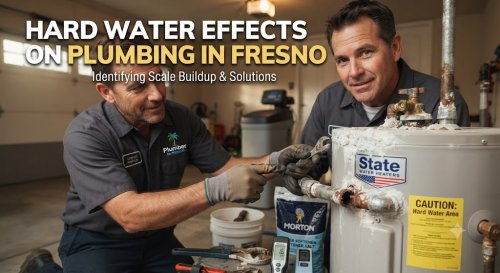
- Check the water heater area: Look around the base of the water heater for rust, mineral crust, or moisture pooling. Ask or check the manufacturing date label to understand its age.
- Inspect visible supply and drain lines: Open vanity cabinets under sinks. Look for corrosion on copper joints, warping on wooden cabinet bases indicating past leaks, or corrugated flexible drain lines that may not meet standard plumbing practices.
- Test outdoor hose bibs: If accessible, briefly open exterior hose faucets to check for steady flow and inspect the wall anti-siphon vacuum breakers for leaks.
- Evaluate property age context: Homes in older Fresno areas like Old Fig Garden or the Tower District may feature older piping materials such as galvanized steel, which narrows internally over time and severely restricts water volume, or aging clay sewer laterals vulnerable to local tree roots.
Frequently Asked Questions
Frequently Asked Questions
Can a DIY water pressure test replace a professional gauge test?
No. While turning on multiple faucets gives you a practical sense of everyday flow and volume, it does not measure exact pounds per square inch (psi). A professional plumber uses a threaded pressure gauge attached to an outdoor hose bib to record the exact static pressure of the property.
What does it mean if a drain gurgles when a toilet is flushed?
Gurgling typically indicates air trapped in the drainage system or a partial blockage in the main sewer line or roof vent stack. When a volume of water rushes down, it pulls air through nearby traps, creating a bubbling sound. This warrants a professional camera inspection of the sewer line.
Are slow drains a dealbreaker when buying a Fresno home?
Not necessarily. Many slow drains are caused by localized buildup in the P-trap or hair in the stopper mechanism, which can be cleared easily. However, if multiple fixtures drain slowly or back up, the issue could stem from the main sewer lateral, requiring a formal contingency negotiation.
Who is responsible for the sewer line during a home purchase?
In most residential real estate transactions, property owners are responsible for the entire sewer lateral running from the home all the way out to the municipal connection at the street or alley. Reviewing your purchase agreement and requesting a dedicated sewer video inspection is the best way to verify the condition of this underground line.