Why Is My Water Heater Leaking From the Bottom
Water pooling under your water heater? Discover the common causes, DIY checks, repair costs, and when to call Plumber in Fresno at 844-833-2093.

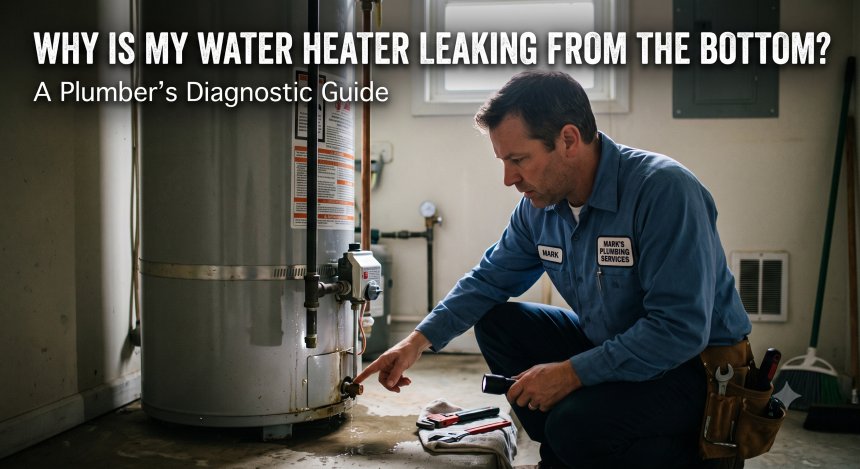
Why Is My Water Heater Leaking From the Bottom?
Discovering a puddle beneath your water heater is an unsettling moment for any homeowner. Whether you step into a damp garage or notice pooling water in a utility closet, the question is immediate: Why is my water heater leaking from the bottom?
A leaking water heater is one of the most common residential plumbing issues across Fresno County, the Central Valley, and neighborhoods from Clovis and Sunnyside to Woodward Park, Tower District, and Sanger. Left unchecked, a minor drip can quickly escalate into major property flooding, drywall deterioration, subfloor rot, and hazardous mold growth.
Understanding why this occurs, knowing what you can safely check, and recognizing when replacement is the only viable path will save you thousands of dollars in secondary structural damage.
What Does It Mean When a Water Heater Leaks From the Bottom?
When water pools at the base of a tank, it indicates that water is escaping either from an external fitting, a safety valve, or the internal steel reservoir itself.
+-------------------------------------------------------------+
|               COMMON WATER HEATER LEAK POINTS               |
|                                                             |
|   [ Cold Water Inlet ]             [ Hot Water Outlet ]     |
|             \                               /               |
|              +-----------------------------+                |
|              |      Outer Steel Jacket     |                |
|              |  +-----------------------+  |                |
|              |  |                       |  |                |
|   [ T&P      |  |     Internal Glass-   |  |                |
|   Relief     |  |     Lined Steel Tank  |  |                |
|   Valve ]----|  |                       |  |                |
|              |  |   * Internal Rust     |  |                |
|              |  |     & Sediment Basin  |  |                |
|              |  +-----------------------+  |                |
|              |                             |                |
|   [ Drain    |                             |                |
|   Valve ]----|                             |                |
|              +-----------------------------+                |
|                             |                               |
|                     [ Bottom Puddle ]                       |
+-------------------------------------------------------------+
Because water follows gravity, a leak starting at the top of the tank (such as a loose cold water inlet fitting) can run down beneath the insulating foam and exit along the bottom rim. In other cases, the leak originates directly at the base from the drain valve or a cracked internal tank lining.
Primary Causes: Why Is My Water Heater Leaking From the Bottom?
| Cause | Typical Location | Severity | Repair vs. Replace |
| Loose/Defective Drain Valve | Plastic/brass valve near bottom | Low to Moderate | Repair / Replace Valve |
| T&P Relief Valve Discharge | Side or top pipe draining down | Moderate to High | Replace Valve / Fix Pressure |
| Internal Tank Corrosion | Base seam or underneath tank | Critical | Complete Replacement |
| Excessive Sediment Buildup | Bottom internal base | High | Complete Replacement |
| High Incoming Water Pressure | T&P discharge pipe | Moderate | Install / Fix Pressure Regulator |
| Top Connection Runoff | Inlet/outlet pipes running down | Low to Moderate | Repair Fittings / Anode |
1. Internal Tank Corrosion and Age
Traditional storage tank water heaters feature a heavy-gauge steel cylinder lined with porcelain enamel glass. Over time, thermal expansion, contraction, and mineral exposure create microscopic fractures in this glass lining. Once water reaches the bare steel, oxidation begins. When rust eats entirely through the tank wall, water breaches the outer jacket and pools at the bottom. An internal tank fracture cannot be patched or welded; the entire unit must be replaced.
2. Failing Drain Valve
Located near the bottom base of the unit, the drain valve is used by technicians to flush sediment. Standard builder-grade water heaters often use plastic drain valves that degrade, become brittle, or fail to seal completely over time. If the valve threads strip or internal washers deteriorate, water will continuously drip from the spout or threads.
3. Temperature and Pressure Relief (T&P) Valve Discharge
The T&P valve is a critical safety device designed to open and release water if the internal temperature exceeds 210°F (99°C) or water pressure tops 150 PSI. The T&P valve connects to a dedicated discharge pipe running toward the floor. If this valve fails or your system suffers from thermal expansion, it will dump water that collects directly beneath the unit.
4. Heavy Sediment Accumulation
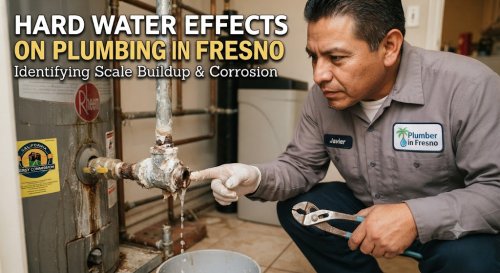
Fresno and surrounding Central Valley communities feature moderately hard municipal water loaded with dissolved calcium carbonate and magnesium. As water heats, these minerals precipitate and settle at the bottom of the tank. This layer forms an insulating barrier between the gas burner/electric element and the water, trapping excessive heat, overheating the tank bottom, and deteriorating the glass lining prematurely.
5. High Household Water Pressure
Municipal water supplies can fluctuate, occasionally surging above 80 PSI. Excessive household pressure strains the internal tank welds and forces plumbing fixtures to leak at their weakest points.
Critical Warning Signs You Should Never Ignore
-
Persistent Standing Water: Even a faint ring of moisture around the base indicates an active breach or failing valve.
-
Rust-Colored or Brown Hot Water: Indicates that the internal steel tank or sacrificial anode rod has deteriorated completely.
-
Popping or Rumbling Sounds: Hardened mineral sediment trapped at the bottom boils and pops when the burner ignites, signaling heavy thermal stress.
-
Reduced Hot Water Volume: Sediment displacement leaves less room for hot water, signaling severe tank buildup.
-
Damp Drywall or Warped Flooring: Structural dampness near the utility closet suggests water has been leaking beneath the surface for weeks.
-
Foul or Metallic Odors: Bacteria interacting with a degraded magnesium anode rod create sulfur-like smells alongside corrosion.
Related Plumbing Problems Triggered by Water Heater Leaks
A failing water heater rarely exists in complete isolation. It frequently triggers or points to broader plumbing system defects:
[ Unregulated Water Pressure (>80 PSI) ]
                  │
                  ▼
   [ Water Heater Bottom Leak ]
                  │
 ┌────────────────┴────────────────┐
 │                                 │
 ▼                                 ▼
[ Subfloor Dry Rot & Mold ]    [ Premature Fixture Failure ]
[ Slab Leak Complications ]    [ Main Shut-Off Valve Seizure ]
-
Slab Leaks and Subfloor Rot: Water pooling beneath a tank mounted on a subfloor or concrete foundation can seep through hairline cracks, eroding foundational soil.
-
Premature Fixture Failure: If high pressure caused your water heater leak, your washing machine hoses, toilet fill valves, and sink cartridges are experiencing identical stress.
-
Emergency Shut-Off Valve Seizure: When a water heater fails, homeowners frequently discover that their dedicated cold-water shut-off valve is frozen from mineral buildup.
Step-by-Step Professional Repair and Replacement Process
When a licensed, insured plumbing contractor investigates your water heater, they follow a standardized diagnostic and installation protocol:
+-----------------------------------------------------------------------------------+
|                        PROFESSIONAL SERVICE WORKFLOW                              |
|                                                                                   |
|  [1. Comprehensive Inspection]  ──► Visual check of fittings, T&P valve, jacket  |
|  [2. System Diagnostics]        ──► Water pressure test & electrical/gas safety   |
|  [3. Written Estimate]          ──► Transparent scope: repair vs. full replacement|
|  [4. Isolation & Draining]      ──► Controlled discharge of scalding tank water   |
|  [5. Precision Execution]       ──► Component rebuild or brand-new code install   |
|  [6. Code & Pressure Testing]   ──► Gas leak sweep, draft check, thermal expansion|
|  [7. Cleanup & Recycling]       ──► Complete site sanitization & old tank disposal|
+-----------------------------------------------------------------------------------+
-
Comprehensive Site Inspection: The technician inspects all top connections, the anode rod port, the T&P valve discharge line, and the burner chamber to isolate the true origin.
-
Pressure and Safety Diagnostics: The plumber measures incoming municipal water pressure and tests the expansion tank to identify underlying causes.
-
Transparent Written Scope: If the issue is a faulty drain valve or failed heating element gasket, a targeted repair is documented. If the tank is cracked, replacement options are presented.
-
Safe Isolation and Draining: The technician shuts off the fuel source (gas/electric), secures the cold-water line, connects commercial-grade transfer pumps, and empties the tank.
-
Precision Execution: The plumber installs high-grade brass fittings, tests thermal expansion tanks, and secures seismic straps according to California Plumbing Code (CPC).
-
System Commissioning: The system is filled, purged of air pockets, tested for leaks, and checked for proper draft ventilation and gas pressures.
-
Site Cleanup and Responsible Disposal: The old unit is hauled away for recycling, leaving the utility space clean and operational.
Can You Fix It Yourself? (Safe DIY vs. Professional Danger)
                       [ Is Water Pooling At The Bottom? ]
                                        │
                                        ▼
                  [ Inspect Top Fittings & Drain Valve Spout ]
                                        │
                 ┌──────────────────────┴──────────────────────┐
                 │                                             │
      [ Leak At Drain Spout ]                       [ Leak From Tank Base Shell ]
                 │                                             │
                 ▼                                             ▼
  [ Tighten Valve / Cap Threads ]                  [ DANGER: Internal Corrosion ]
                 │                                             │
      Did the dripping stop?                        * Shut off water & power
        ├── YES: Monitor regularly                  * Call Plumber in Fresno
        └── NO:  Call a licensed plumber              at 844-833-2093
Safe DIY Steps:
-
Tightening a Loose Drain Valve Cap: If water drips strictly from the garden hose threads on the drain valve, screwing on a brass hose cap with a rubber washer can temporarily arrest the drip.
-
Inspecting the T&P Discharge Line: Visually confirm if the water is emerging from the relief pipe rather than the tank body.
-
Shutting Down Power and Water: Turn the dedicated water heater gas dial to "PILOT" (or flip the double-pole electric breaker) and close the cold-water shut-off valve atop the unit.
When DIY Becomes Dangerous:
-
Never Attempt to Patch a Tank: Epoxy, hydraulic cement, or external clamps cannot hold 50 to 150 PSI of pressurized hot water. A patched tank can rupture violently.
-
Never Cap the T&P Safety Valve: If a T&P valve is leaking and you plug it with a threaded cap, pressure cannot escape. This turns your water heater into an explosive hazard.
-
Gas Line Risks: Disconnecting natural gas lines without a manometer and combustible gas detector risks dangerous gas leaks.
Diagnostic Tools Used by Licensed Plumbers
Professional plumbers avoid guesswork by deploying specialized diagnostic and installation gear:
-
Digital Hydrostatic Pressure Gauges: Accurately measure static and dynamic municipal water pressure.
-
Thermal Imaging Cameras: Trace hidden internal moisture leaks behind the steel outer jacket.
-
Electronic Combustible Gas Sniffers: Detect microscopic methane leaks at gas control valves and unions.
-
Commercial Submersible Transfer Pumps: Evacuate scalding, sediment-heavy water safely within minutes.
-
Draft Gauges & Combustion Analyzers: Confirm that harmful carbon monoxide completely vents outside your home.
Repair and Replacement Timelines
-
Simple Valve or Gasket Replacement: 1 to 2 hours.
-
Thermal Expansion Tank Installation: 1 to 3 hours.
-
Complete Tank Water Heater Replacement: 3 to 5 hours (including full draining, code upgrades, and seismic strapping).
-
Emergency Tank Rupture Response: Immediate same-day response to isolate water flow and prevent catastrophic property flooding.
Cost Factors in Water Heater Repair and Replacement
Plumbing repair costs vary depending on the severity of the problem, accessibility, materials required, emergency service, property type, and local labor rates.
Key variables affecting your total investment include:
-
Repair vs. Complete Replacement: Replacing an inexpensive drain valve or T&P valve requires significantly less labor and hardware than installing a new tank.
-
Accessibility and Location: Water heaters installed in tight attics, crawlspaces, or elevated platforms require additional labor compared to garage installations.
-
Code Upgrades: Modern installations require earthquake strapping, dedicated thermal expansion tanks, sediment traps, and code-compliant discharge lines.
-
Fuel Type and Capacity: Higher-capacity commercial systems, power-vented gas models, and ultra-high-efficiency heat pump units differ in hardware costs compared to standard 40- or 50-gallon atmospheric gas units.
10 Hidden Truths Homeowners Should Know
-
Small Leaks Guarantee Expensive Repairs: A slow trickle today often results in a catastrophic tank bottom blowout tomorrow.
-
Quick DIY Patches Fail: Pressurized steel tanks expand and contract continuously; surface adhesives cannot withstand cyclical thermal expansion.
-
Homeowners Insurance May Deny Claims: Many policies exclude water damage caused by "neglect" if a water heater was visibly leaking or heavily corroded over an extended period.
-
Hard Water Destroys Unmaintained Tanks: Without routine flushes, mineral scale accelerates tank floor burn-out by up to 50%.
-
Sacrificial Anode Rods Are Consumable: The anode rod actively attracts corrosion to protect the steel tank. Once depleted (usually within 3–5 years), the tank itself begins rusting.
-
High Water Pressure Voids Warranties: Operating a water heater above 80 PSI without a pressure regulator often voids manufacturer warranties.
-
Delaying Repairs Invites Toxic Mold: Damp drywall and hidden baseboard moisture foster black mold colonies within 24 to 48 hours.
-
Undetected Leaks Inflate Utility Bills: Constant hot water leaks waste thousands of gallons of water and continuously run up your gas or electric bills.
-
Builder-Grade Plastic Valves Degrade Quickly: Standard plastic drain valves turn brittle within a few years of installation.
-
Annual Maintenance Doubles Unit Lifespan: A simple annual sediment flush and anode inspection can extend a unit's operational life from 8 years to well over 12–15 years.
15 Common Mistakes Homeowners Make
-
Ignoring Minor Floor Puddles: Assuming a small puddle is just condensation while the tank continues to rust through.
-
Capping Leaking T&P Valves: Creating an explosion risk instead of replacing the defective valve.
-
Skipping Annual Sediment Flushes: Allowing hard mineral layers to bake into a solid, tank-destroying crust.
-
Never Replacing the Sacrificial Anode Rod: Letting the tank wall take the brunt of oxidation once the anode dissolves.
-
Setting the Temperature Above 120°F (49°C): Accelerating mineral scaling and increasing household scalding risks.
-
Hiring Unlicensed Handymen: Risking improper gas venting, dangerous gas connections, and unpermitted plumbing work.
-
Storing Flammable Items Near the Burner: Placing paint, rags, or fuel cans near the pilot light.
-
Over-Tightening Plumbing Unions: Stripping dielectric union threads, which causes hairline fitting cracks.
-
Using Incompatible Metals: Joining copper pipe directly to galvanized steel without a dielectric union, causing rapid galvanic corrosion.
-
Neglecting the Pressure Reducing Valve (PRV): Allowing municipal street surges to over-pressurize the water tank.
-
Operating Electric Heaters While Dry: Energizing an electric water heater before the tank is 100% full of water, which instantly burns out the electric elements.
-
Forgetting to Test the T&P Lever: Neglecting an annual manual trip of the safety relief valve to verify the spring mechanism works.
-
Omitting Seismic Straps: Failing to secure the water heater against seismic activity as required by California building codes.
-
Waiting Until Total Failure to Plan Replacement: Scrambling during an emergency flood rather than replacing an aging, 10-year-old unit proactively.
-
Overlooking Condensation Runoff: Misdiagnosing an uninsulated flue draft or AC condensate line leak as a tank rupture.
16 Practical Maintenance Tips to Prevent Water Heater Leaks
-
Flush the Tank Annually: Connect a standard garden hose to the bottom drain valve and drain the tank until the water runs clear.
-
Test the T&P Relief Valve: Lift the safety lever halfway once a year; water should briskly discharge into the pipe and snap shut cleanly.
-
Inspect the Anode Rod Every 3 Years: Unscrew the hex head atop the unit; replace the rod if more than 6 inches of core wire is exposed.
-
Install a Thermal Expansion Tank: Absorb excess pressure created when cold water expands inside your closed plumbing loop.
-
Maintain Pressure Between 50–65 PSI: Install a pressure regulator at your water main if city supply pressure tops 75 PSI.
-
Keep Temperature Set to 120°F (49°C): This is the ideal balance to avoid scalding, slow scale accumulation, and maintain energy efficiency.
-
Install a Dedicated Drain Pan: Place a durable aluminum or plastic pan connected to an external drain line beneath the tank.
-
Add an Automatic Water Shut-Off Valve: Modern electronic flood-stop sensors detect water under the tank and close the cold-water inlet instantly.
-
Insulate Exposed Hot Water Pipes: Minimize thermal dissipation and reduce internal expansion cycling.
-
Check the Pilot Assembly / Burner Chamber: Look for rust flakes or fallen scale obscuring the burner flame.
-
Maintain 12 Inches of Air Clearance: Keep boxes, storage bins, and clutter away from the base of the heater.
-
Upgrade to a Full-Port Brass Drain Valve: Replace factory plastic drain valves with durable solid brass components.
-
Check for Galvanic Corrosion: Inspect pipe connections atop the tank for greenish-white powdery buildup.
-
Winterize Vacation Homes: Drain water heaters in properties left vacant during freezing winter nights to prevent split tanks.
-
Perform a Visual Check Monthly: Take 30 seconds every month to check the base of your heater for early signs of moisture.
-
Schedule a Professional Multi-Point Inspection: Have a licensed technician evaluate combustion efficiency, gas valves, and tank safety every 2 years.
When Should You Call an Emergency Plumber?
+-------------------------------------------------------------------------+
|                  EMERGENCY ACTION CHECKLIST                             |
|                                                                         |
|  [!] Water spraying rapidly or pooling uncontrollably                   |
|  [!] Strong smell of natural gas / rotten eggs near the tank            |
|  [!] Scalding steam blowing constantly from the T&P pipe                |
|  [!] Electrical buzzing, popping, or smoking around wire junctions      |
|  [!] Water backing up through nearby floor drains                       |
|                                                                         |
|  IMMEDIATE ACTION:                                                      |
|  1. Shut off cold-water supply valve on top of unit                     |
|  2. Turn gas dial to "OFF" or switch electric breaker OFF               |
|  3. Call Plumber in Fresno at 844-833-2093 immediately                  |
+-------------------------------------------------------------------------+
Frequently Asked Questions
Why is my water heater leaking from the bottom?
A water heater leaking from the bottom is typically caused by internal tank corrosion, a loose or failing drain valve, a discharging T&P relief valve, or water running down from top plumbing connections. If the inner steel tank has rusted through, the entire unit must be replaced.
Can a leaking water heater be repaired, or does it always need replacement?
If the leak originates from an external fitting, heating element gasket, drain valve, or T&P safety valve, it can usually be repaired. However, if water is leaking due to a cracked or corroded inner steel tank, repair is impossible and the unit must be replaced.
How long do traditional tank water heaters last?
Most residential tank water heaters last between 8 and 12 years. In areas with hard water, units that receive regular maintenance can reach 12 to 15 years, while neglected tanks can fail in under 7 years.
Is it safe to leave a leaking water heater turned on?
No. A leaking water heater poses scalding risks, property flooding dangers, electrical fire hazards on electric models, and structural subfloor damage. Shut off the power/gas supply and cold-water inlet valve right away.
Why is my water pressure suddenly low along with the leak?
Sudden pressure loss alongside a leak often indicates an open fracture in the tank, a wide-open T&P valve discharging water, or heavy sediment restricting supply pipes.
Can a leaking water heater explode?
While catastrophic tank explosions are rare thanks to modern safety devices, an unmaintained water heater with a stuck or capped T&P relief valve can build extreme, explosive pressure. Never cap a leaking T&P valve.
How can I tell if the leak is just condensation?
Condensation is common when a brand-new water heater fills with cold water for the first time or during heavy winter usage. Condensation creates slight sweating on the metal exterior, whereas an active leak creates persistent puddles that return quickly after being wiped dry.
Will a leaking water heater increase my utility bills?
Yes. An active hot water leak causes your burner or electric elements to cycle continuously to heat incoming cold water, significantly increasing your gas or electric bills alongside higher water utility costs.
What should I do first when I see water leaking from the bottom?
First, turn off the electricity at the breaker panel (for electric models) or rotate the gas valve to "OFF" (for gas models). Second, shut off the cold-water supply valve located on the pipes above the heater. Third, contact a licensed plumber.
How much water can leak from a ruptured water heater tank?
A ruptured tank will continuously leak its full capacity (typically 40 to 75 gallons) plus the full, uninterrupted flow of your home's pressurized municipal water supply until the cold-water isolation valve is turned off.
Why Choose Plumber in Fresno
Navigating a leaking water heater requires honest diagnostics and experienced, code-compliant workmanship. Plumber in Fresno delivers dependable, full-service water heater repair, safety inspections, and replacement solutions throughout Fresno, CA, and surrounding communities including Clovis, Madera, Sanger, Selma, and Kerman.
-
Licensed & Insured Plumbing Professionals: Every project is completed in full compliance with local municipal codes and California Plumbing Code standards.
-
Honest, Upfront Quotes: We inspect the root cause first and explain all repair versus replacement options clearly before any work begins.
-
Rapid Response & Emergency Availability: Water heater breaches cannot wait for next week. We prioritize urgent leak calls to safeguard your property.
-
Equipped for Modern Water Heating Technology: From standard atmospheric gas and electric models to high-efficiency tankless units, our trucks carry professional diagnostic and replacement gear.
-
Central Valley Expertise: We understand the regional mineral conditions, local water pressure fluctuations, and specific plumbing requirements of Central Valley homes