How to Flush a Water Heater & Remove Sediment
Learn how to flush a water heater and remove sediment with expert advice from Fresno plumbers. Protect your tank and extend its lifespan.

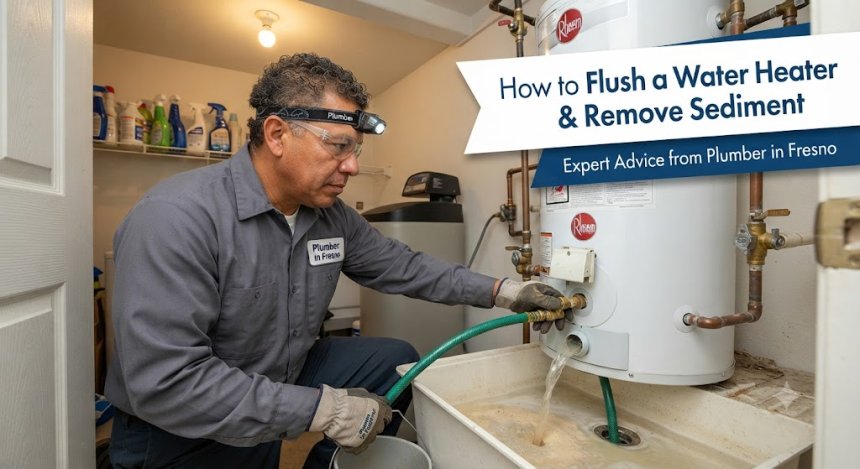
Hearing a strange rumbling or popping noise from your utility closet is often the first sign that your water heater is struggling under a blanket of trapped mineral buildup. Knowing how to flush a water heater and remove sediment is the single most important maintenance step a property owner can take to preserve appliance efficiency. In Fresno, where the local water supply carries a high concentration of dissolved minerals, skipping this routine care leads to premature tank failure, skyrocketing energy bills, and sudden midnight breakdowns.
What Is a Water Heater Sediment Accumulation? Decoding the Mechanism
A standard residential tank water heater operates by drawing cold water into the bottom of the tank, where a gas burner or electric element heats it up before it rises to supply your home's hot taps.
Water naturally contains dissolved minerals like calcium and magnesium. When these minerals are heated, they fall out of solution and settle as a dense, sandy layer at the very bottom of the tank. In a healthy system, heat transfers directly through the steel tank wall into the water. When sediment piles up, it acts as an insulating barrier between the heat source and the water. For example, a homeowner in a Fresno residential tract might notice their shower runs out of hot water much faster than it used to; the culprit is a three-inch layer of rock-hard sediment cooking over the burner, forcing the unit to overheat itself trying to reach the thermostat setting.
Root Causes: Why Sediment Accumulation Thrives in Fresno Water
-
Central Valley Hard Water: Fresno’s municipal and groundwater sources contain heavy mineral loads. Every gallon brought into the home leaves behind microscopic mineral grains that compound over time.
-
High Thermal Cycling: Daily heavy usage cycles—such as morning showers, laundry loads, and dishwasher runs—accelerate the precipitation of calcium solids out of the water.
-
Substandard Factory Drain Valves: Many older or builder-grade water heaters feature fragile plastic drain valves that clog easily with sediment, making regular flushing nearly impossible for homeowners to perform manually.
-
Infrequent Maintenance Schedules: Allowing a tank to sit untouched for three to five years lets loose sediment bake into a solid, concrete-like crust that standard draining cannot dislodge.
-
Anode Rod Depletion: When the sacrificial anode rod inside the tank completely dissolves, corrosive electrochemical reactions accelerate tank decay and sediment bonding.
Financial Breakdown: Cost Factors & Investment Realities
| Cost Factor | Impact on Final Price |
| Service Complexity | A routine flush and inspection takes minimal time; clearing a totally seized, calcified drain valve or replacing a rotted anode rod requires specialized labor. |
| Tank Accessibility | Units tucked tightly into cramped garage corners or attic platforms require extra handling time and creative extraction solutions. |
| Component Replacement | Swapping out a failed pressure relief valve (T&P valve) or electronic thermostat during maintenance adds minor material costs. |
| Repair vs. Replacement | If a tank has already suffered structural bottom-plate fatigue due to long-term sediment overheating, full replacement is required. |
Advanced Diagnostics: The Professional Tool Arsenal
-
Thermal Imaging Infrared Cameras: Used to scan the exterior tank wall, clearly revealing the precise line where internal sediment buildup is blocking heat transfer.
-
Commercial Tank Flush Pumps: High-flow external utility pumps used to rapidly cycle descaling solutions and aggressively scour heavy mineral deposits out of stubborn tanks.
-
Digital Manometers & Pressure Gauges: Attached to thermal expansion tanks and supply lines to ensure dynamic water pressure remains within safe operational parameters.
-
Borescope Inspection Probes: Miniature lighted cameras inserted through the drain valve opening to visually map out internal scale crust and evaluate glass-lining integrity.
Professional Diagnostic & Repair Workflow
-
Non-Invasive Triage & Safety Isolation: Shutting off the gas supply or electrical breaker to the water heater, and testing the temperature-pressure relief valve.
-
Precision Diagnostic: Evaluating water temperature differentials, inspecting the anode rod condition, and checking for external scale weeping.
-
Transparent Estimating: Providing a clear, upfront flat-rate price for flushing, descaling, or hardware replacement before starting work.
-
Code-Compliant Remediation: Safely draining the tank, flushing out loose debris, installing upgraded brass ball drain valves, and replacing depleted anode rods.
-
Pressure Testing & Verification: Re-filling the tank, bleeding air from the lines, testing burner/element performance, and cleaning the work area.
Critical Warning Signs: When Your Water Heater is Sounding the Alarm
| Sensory Indicator | Specific Warning Signs | Structural Risk of Delay |
| Auditory | Loud popping, rumbling, or kettling noises during heating cycles. | Micro-fracturing of the inner glass lining, sudden tank rupture, and catastrophic basement flooding. |
| Visual / Operational | Discolored or rust-tinted hot water, fluctuating water temperatures, leaking around the base of the tank. | Total heating element burnout, premature appliance failure, severe water damage to drywall and flooring. |
| Olfactory / Utility | Unexplained spikes in monthly gas or electric utility bills without increased household usage. | Extreme thermal inefficiency and permanent structural strain on the tank walls. |
DIY Reality Check: What You Can Safely Fix vs. When to Step Back
| Intervention Level | Acceptable DIY Actions | The Danger Zone (Call a Pro) |
| Diagnostics | Checking the exterior tank temperature, listening for popping sounds, monitoring hot water duration. | Probing inside the tank with metal rods that could puncture the glass lining. |
| Immediate Mitigation | Turning off the cold water supply valve in an active leak scenario, clearing clutter away from the unit's combustion chamber. | Attempting to work on high-voltage electrical elements or natural gas supply lines without training. |
| Repairs | Attaching a garden hose to a functioning brass drain valve to clear light, loose sediment. | Snapping off a stuck plastic drain valve, which unleashes an uncontrollable hot water flood. |
Unique Expert Insights: Hard Truths Homeowners Learn Too Late
-
Plastic Drain Valves Are Time Bombs: Builder-grade plastic valves routinely snap off when twisted after years of hard water exposure, turning a simple maintenance chore into an indoor geyser.
-
Ignoring Noises Destroys Tanks: That rumbling sound isn't "normal operation"—it's boiling water trapped beneath a layer of rock salt sediment violently warping the steel bottom.
-
Anode Rods Are Life Support: Most homeowners never check their anode rod. Once it dissolves completely, the water eats straight through the steel tank walls within months.
-
Annual Flushing Doubles Lifespan: A unit flushed yearly in hard water regions like Fresno can easily last 12 to 15 years, whereas neglected units fail in under 6.
-
DIY Mistakes Void Warranties: Improper flushing techniques or incorrect part replacements can instantly void manufacturer warranties, leaving you unprotected.
Comprehensive Home Plumbing Maintenance Framework
Spring & Summer
-
Inspect the discharge pipe on your temperature-pressure relief (T&P) valve to ensure it is clear and dry.
-
Check the area around the base of the water heater for any signs of condensation or slow seepage.
-
Test your home's main water shut-off valve to ensure it operates smoothly in case an emergency isolation is needed.
Fall & Winter
-
Perform your annual water heater flush and sediment extraction before peak winter heating demands begin.
-
Inspect insulation blankets and wrap exposed hot water pipes in unheated garages to optimize thermal retention.
-
Verify that gas combustion vents and flues remain clear of obstruction, dust, and spider webs.
Year-Round Habits
-
Monitor your hot water temperature setting; keeping it set to 120°F prevents scalding and slows mineral precipitation.
-
Avoid storing chemical solvents, paints, or aerosol cans near gas-fired water heaters to prevent combustion hazards.
-
Review your monthly energy bills for unexpected upward creeps that signal internal sediment insulation loss.
Emergency Protocol: When Immediate Dispatch is Non-Negotiable
-
Catastrophic Tank Rupture: The tank body splitting or springing a major seam leak, flooding living or utility spaces with hot water.
-
Gas Leaks or Pilot Failures: Smelling natural gas or propane near the base of the water heater, requiring immediate evacuation and shut-off.
-
T&P Valve Blowout: The pressure relief valve failing open, spraying high-pressure scalding water uncontrollably into the home.
-
Electrical Short Circuits: Water pooling around the base of an electric water heater and threatening nearby breaker panels or wiring.
Frequently Asked Questions (FAQs)
How often should I flush my water heater in Fresno?
Because of Fresno's hard water mineral content, you should flush your water heater at least once every 12 months to prevent hard scale buildup.
Can I flush a water heater myself?
Yes, if you have a functioning brass drain valve and feel comfortable managing garden hoses and shut-off valves. However, if your unit has an old plastic valve or hasn't been serviced in 5+ years, call a professional to avoid snapping the valve.
What causes the rumbling noise in a water heater?
The rumbling noise is caused by trapped water boiling underneath a layer of sediment at the bottom of the tank. As steam bubbles push up through the mineral layer, they collapse and create a popping sound.
How do I know if my water heater sediment is too thick?
If your water heater takes forever to heat up, runs out of hot water quickly, or makes loud banging noises during cycles, your sediment layer is likely thick enough to require professional descaling.
What is a water heater anode rod and why does it matter?
An anode rod is a sacrificial metal rod hanging inside the tank that attracts corrosive elements in the water. It rusts away instead of your steel tank walls, protecting the appliance from premature leaks.
Do tankless water heaters need to be flushed?
Yes. Tankless water heaters are even more sensitive to hard water scaling and require an annual chemical descaling flush using a vinegar solution and a circulation pump.
Will flushing my water heater fix discolored water?
If the discolored water is caused by loose sediment or rust flakes stirred up from the bottom of the tank, a thorough flush will clear it right up.
How long does a professional water heater flush take?
An experienced technician can typically complete a comprehensive water heater flush, safety check, and component inspection within 45 to 60 minutes.