What Plumbing Fixes Can Homeowners Safely Do?
Wondering what plumbing repairs you can safely DIY? Learn safe fixes, danger zones, and when to call a Fresno plumber to avoid costly damage.
The Fine Line Between Smart Saving and Disaster
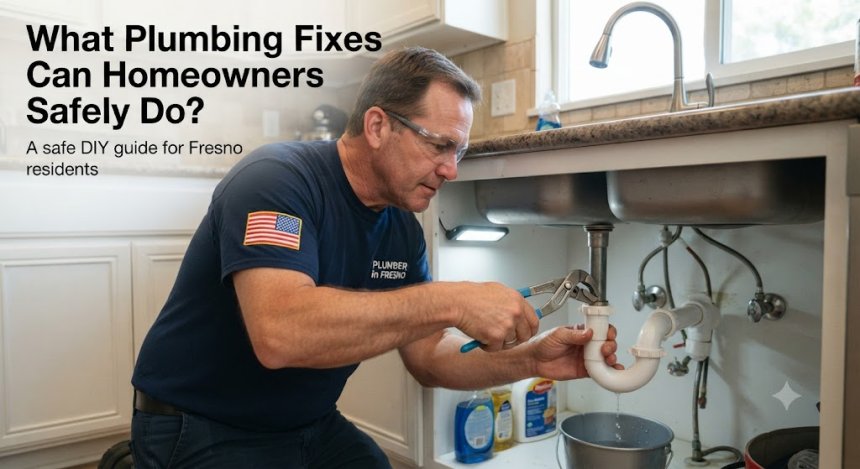
Standing in a puddle under the kitchen sink with a wrench in hand, every homeowner eventually wonders whether a stubborn leak is a simple weekend fix or the prelude to a costly indoor flood. Knowing what plumbing problems can homeowners safely fix protects your budget from unnecessary service calls while keeping your home safe from catastrophic water damage. Property owners across Fresno frequently face minor fixture hiccups and slow drains influenced by local mineral-rich water conditions. Understanding your limits before turning a wrench prevents minor annoyances from escalating into code violations or structural rot that demands immediate professional intervention.
What Is Residential Plumbing Scope? Decoding the Boundary
Residential plumbing systems operate under a precise balance of supply pressure, gravity drainage, and atmospheric venting. Understanding how these systems work helps clarify why swapping a showerhead is safe while modifying a main stack is not.
Imagine a typical afternoon in a home near the Tower District: a bathroom faucet handle drips continuously because a tiny rubber washer has compressed over years of use. Replacing that washer involves isolating the local angle stop valve, removing the handle stem, and swapping out a cheap part. The system is designed with localized control points specifically to allow minor component upkeep without shutting down the whole house. Contrast that with opening up a drywall cavity to solder a pressurized supply line; one mistake there turns a localized repair into a gushing indoor geyser.
Root Causes: Why Home Plumbing Failures Happen in Fresno
Plumbing wear and tear is heavily influenced by local environmental factors and material aging across Central Valley properties:
-
Mineral Calcification: Fresno's hard water deposits calcium and magnesium inside valve seats, aerators, and flapper valves, causing premature stiffness and leaks.
-
Thermal Expansion: Daily temperature swings and hot water heater cycling place continuous thermal stress on copper and PEX supply joints.
-
Material Fatigue: Rubber gaskets, wax rings, and plastic slip-joint washers dry out, crack, and lose elasticity over years of regular use.
-
Aging Infrastructure: Older homes feature galvanized steel or aging brass components that become brittle and prone to snapping when torqued.
-
Hydraulic Pressure Spikes: High municipal supply pressure places excessive strain on flexible supply lines and toilet fill valves.
Critical Warning Signs: When Your Home is Sounding the Alarm
Catching hidden system failures early prevents structural catastrophe. Pay close attention to these warning indicators:
-
Auditory Clues: Water hammering bangs inside walls when valves snap shut, or a soft, continuous hissing sound indicating a running toilet or active hidden leak.
-
Sensory Alerts: Musty earth odors or damp drywall smells near baseboards, pointing to slow, chronic water seeping behind finished surfaces.
-
Visual Anomalies: Unexplained spikes on your municipal water utility bill, warped baseboards, or peeling paint near wet walls.
Ignoring these warning signs allows moisture to fuel mold colonies, rot wooden framing members, and ruin subflooring.
DIY Reality Check: What You Can Safely Fix vs. When to Step Back
Homeowners can successfully handle basic maintenance tasks if approached with caution.
-
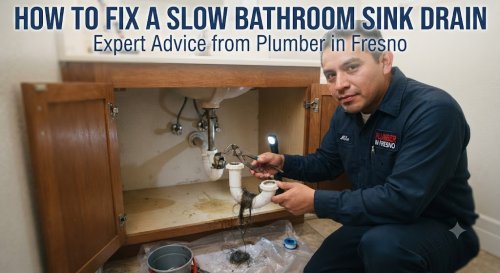
Safe homeowner actions: Replacing worn flapper valves inside toilet tanks, swapping out decorative showerheads, clearing shallow P-trap clogs with a hand wrench, and tightening loose supply connection nuts by hand or with gentle wrench support.
-
The danger zone: Never attempt to cut, solder, or re-glue pressurized supply lines, modify main waste stacks, repair gas-powered water heater lines, or tackle sewer main cleanouts without professional backing.
Drop the wrench and call a licensed pro immediately if a shut-off valve fails to close completely, if threads are stripped and corroded, or if water is actively spraying near electrical outlets.
Professional Diagnostic & Repair Workflow
When a plumbing issue exceeds safe DIY boundaries, a licensed Fresno plumber follows a rigorous, systematic methodology:
-
Step 1: Non-Invasive Triage & Safety Isolation: Technicians verify main water and power cut-offs to secure the work environment before touching compromised infrastructure.
-
Step 2: Precision Diagnostic & Video Inspection: Advanced digital tools are deployed to inspect hidden pipe interiors and pin down the exact failure point.
-
Step 3: Transparent, Upfront Options & Written Estimating: Homeowners receive clear, flat-rate pricing options outlining repair versus replacement alternatives before any labor begins.
-
Step 4: Code-Compliant Remediation: Repairs are executed using commercial-grade materials that strictly adhere to local California plumbing codes.
-
Step 5: Pressure Testing & Clean-Up: Systems undergo rigorous pressure and flow verification tests, followed by a thorough sanitization of the work zone.
Advanced Diagnostics: The Professional Tool Arsenal
Licensed professionals rely on heavy-duty equipment that guarantees diagnostic precision far beyond standard homeowner toolboxes:
-
Digital Manometers: Precision gauges used to test static and dynamic water pressure across household fixtures.
-
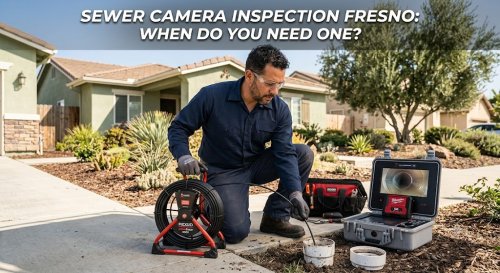
Push-Rod HD Drain Cameras: High-resolution fiber-optic scopes that navigate deep into waste lines to reveal root intrusions, breaks, and offsets.
-
Electronic Acoustic Leak Detectors: Sensitive listening devices that pinpoint pressurized pipe leaks buried beneath concrete slabs or behind walls.
-
Hydro-Jetting Units: High-pressure water scrubbing systems that scour grease, scale, and debris completely clean from pipe walls.
Financial Breakdown: Cost Factors & Investment Realities
Plumbing repair pricing varies depending on several key operational inputs:
-
Service Dispatch Fees: Standard dispatch charges covering technician travel and initial diagnostic triage.
-
Accessibility and Labor Hours: Tight cabinet spaces, crawlspaces, or concrete slab penetrations requiring specialized excavation or cutting.
-
Material Quality: Upgrading from cheap plastic components to heavy-duty brass valves, copper piping, or cross-linked polyethylene (PEX).
-
Permitting and Code Requirements: Local municipality fees for major line replacements or water heater installations.
Unique Expert Insights: Hard Truths Homeowners Learn Too Late
-
Pouring harsh chemical drain openers into a completely blocked sink eats away at pipe walls and creates severe splash hazards when manual plunging becomes necessary.
-
Forcing a stuck, corroded shut-off valve under a sink can snap the aging pipe stub inside the wall, turning a minor drip into an emergency flood.
-
Using mismatched metal fittings—like brass directly connected to galvanized steel without a dielectric union—triggers rapid galvanic corrosion and sudden pipe failure.
-
Temporary tape patches on pressurized supply lines do not hold under continuous municipal water pressure and will eventually rupture when you are away from home.
-
Unlicensed handywork often introduces subtle code violations that will instantly fail home inspection reports when you try to sell your property.
Comprehensive Home Plumbing Maintenance Framework
-
Spring & Summer Checks: Test outdoor hose bibs for winter cracking, inspect sump pump discharge flow, and check property grading around foundations.
-
Fall & Winter Preparation: Flush water heater tanks to remove bottom sediment, insulate exposed garage pipes, and disconnect outdoor hoses to prevent freezing pressure.
-
Year-Round Habits: Clean aerators every six months, monitor your water meter for unexplained usage spikes, and avoid flushing non-dispersible wipes down toilets.
Emergency Protocol: When Immediate Dispatch is Non-Negotiable
Certain plumbing scenarios demand immediate 24/7 professional intervention:
-
Catastrophic pipe bursts or active structural flooding threatening living areas.
-
Complete main sewer line backups forcing raw waste up through lower-level floor drains.
-
Total loss of potable water supply across the entire residential property.
-
Major leaks spraying directly onto electrical panels, outlets, or appliance wiring.
Frequently Asked Questions (FAQs)
Is it safe to plunge a toilet that won't flush?
Yes, using a flange plunger carefully is a safe DIY method for clearing minor soft clogs in a toilet bowl, provided you avoid aggressive force that could crack the porcelain.
Can I replace a kitchen faucet myself?
If the under-sink shut-off valves work properly and you have basic hand tools, swapping a standard kitchen faucet is a manageable DIY task taking 1 to 2 hours.
What should I do if a water supply valve won't shut off completely?
Do not force the handle with pliers, as this can snap the stem. Instead, shut off the home's main water supply valve and call a licensed plumber to replace the faulty angle stop.
Are chemical drain openers safe for plastic pipes?
No. Chemical liquid drain cleaners generate high exothermic heat that can warp PVC pipes, melt plastic slip joints, and severely corrode metal trap assemblies.
How do I know if a plumbing leak is hidden behind a wall?
Unexplained high water utility bills, musty odors, warm spots on drywall, or peeling paint are primary indicators of a hidden behind-the-wall pipe leak.
Can I clear a main sewer line clog on my own?
No. Main sewer line clogs require professional drain cleaning equipment, motorized augers, or hydro-jetting to safely clear roots and debris from deep underground lines.
What causes a toilet to run continuously?
A continuous running toilet is usually caused by a warped flapper valve, a stuck fill float, or a chain that is too short, all of which are easy DIY replacements.