Fresno Pipe Failures: Overlooked Home Maintenance Steps
Discover overlooked maintenance steps to prevent major pipe failures in Fresno homes, from mineral scale management to slab leak indicators.

Understanding Fresno Pipe Failures and Why Routine Maintenance Falls Short
Major pipe failures rarely happen overnight. In most Fresno residential and commercial properties, catastrophic leaks, pinhole bursts, and sudden supply line ruptures are the culmination of unaddressed environmental stressors acting on the plumbing system over years. While homeowners generally know to fix a dripping faucet or clear a slow bathroom drain, routine property upkeep frequently overlooks subtle, cumulative factors that compromise pipe integrity from the inside out and the outside in.
Fresno properties face a distinct combination of environmental conditions—including high mineral content in the water supply, expansive clay or shifting soil conditions common in the Central Valley, and wide seasonal temperature swings between hot summers and chilly winters. When maintenance routines ignore these local realities, pipe walls thin, joints weaken, and pressure regulators fail silently until a catastrophic breach occurs.
The Hidden Impact of Mineral Accumulation on Pipe Walls
One of the most frequently overlooked maintenance steps in Fresno is managing internal mineral scale buildup. Fresno's municipal water and private well sources carry dissolved minerals, primarily calcium and magnesium. Over time, as water moves through copper, galvanized steel, or even cross-linked polyethylene (PEX) systems, these minerals precipitate out of solution, especially when water is heated.
- Water Heater Heat Exchangers: Scale coats the bottom of tank water heaters or the elements of tankless units, causing localized overheating, micro-fissures, and eventual tank or inlet pipe failure.
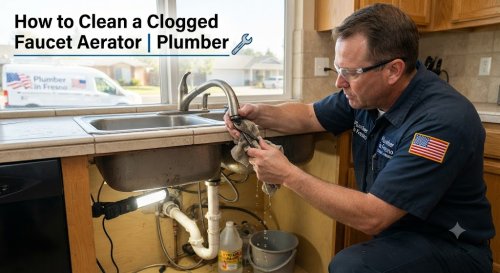
- Fixture Aerators and Cartridges: Restricted flow at fixtures increases back-pressure within supply lines, stressing older soldered joints and threaded connectors behind walls.
- Restricted Internal Diameter: In older galvanized steel pipes found in mid-century neighborhoods like Fig Garden or the Tower District, mineral buildup chokes the interior diameter, masking underlying corrosion until the pipe wall is paper-thin.
Mitigating this requires more than just installing a point-of-use filter. Annual water heater flushing, descaling commercial or residential tankless heat exchangers, and inspecting whole-home water softening equipment are critical steps that protect the entire piping network from accelerated internal decay.
Monitoring Water Pressure and Thermal Expansion
High water pressure is a silent pipe killer. Many property owners assume that stronger water pressure at the showerhead is a positive feature, but municipal supply pressures entering Fresno properties can frequently fluctuate above safe residential thresholds (typically 80 psi, as outlined by standard plumbing codes). When pressure exceeds this limit, every valve, joint, and appliance connection experiences chronic mechanical stress.
Furthermore, closed plumbing systems—which occur when a backflow preventer, dual-check valve, or pressure-reducing valve (PRV) is installed—prevent expanding water from pushing back into the municipal main when a water heater fires up. Without an active thermal expansion tank, water pressure spikes dramatically during heating cycles. Checking the condition of the PRV and verifying the air charge in the thermal expansion tank are vital maintenance tasks that prevent recurring pinhole leaks in copper supply lines.
Slab Foundation Stress and Under-Slab Pipe Isolation
Many homes throughout Fresno, Clovis, and surrounding Central Valley neighborhoods are built directly on concrete slab foundations. Under-slab plumbing consists of cold and hot water copper or PEX supply lines, as well as cast-iron or ABS drain lines, running through or beneath the concrete.
A major overlooked maintenance practice involves monitoring for early indicators of under-slab movement or pipe friction. Slab foundations are subject to minor settlement and seasonal soil expansion and contraction. When soil shifts, rigid copper pipes encased in concrete or aggregate can rub against abrasive materials or structural rebar, causing friction wear.
Homeowners should regularly monitor for subtle warning signs:
- Unexplained warm spots on tile or hardwood floors (indicating a hot water line leak beneath the slab).
- Faint, persistent sound of running water when all fixtures are completely shut off.
- Unusually high monthly water bills without a change in usage habits.
- Damp baseboards or inexplicable localized mold growth near floor level.
Performing routine water meter checks—where all fixtures are closed and the low-flow dial or digital leak indicator on the meter is observed—can catch underground leaks before they erode sub-base soil and cause structural slab cracking.
Outdoor Hose Bibs and Freeze Protection
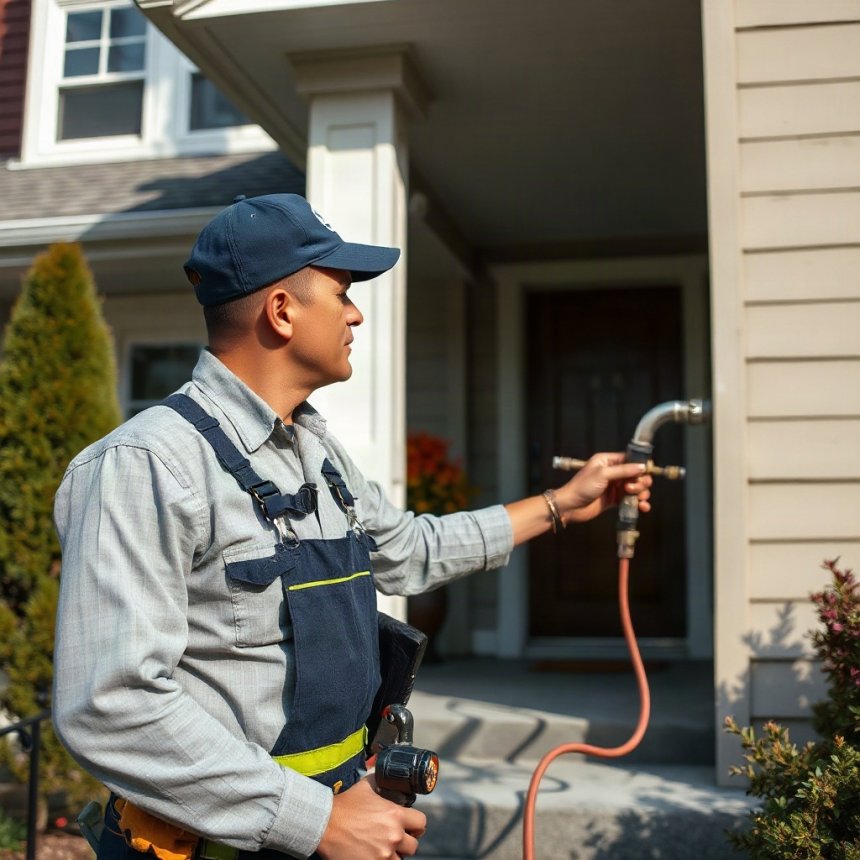
While Fresno rarely experiences prolonged hard freezes, winter overnight temperatures do drop below freezing, particularly in open suburban tracts and outlying agricultural areas. Exterior hose bibs (spigots) and exposed backflow preventers for irrigation systems are highly vulnerable if neglected.
Leaving a garden hose attached to an outdoor spigot during a freezing night traps water inside the anti-siphon vacuum breaker and the internal stem. As the trapped water freezes and expands, it creates ice-slug pressures that crack the brass housing or split the copper supply pipe inside the exterior wall. Once the weather warms, the ice melts, and water floods the interior wall cavity or crawlspace unnoticed. Detaching hoses, shutting off interior isolation valves where available, and insulating exposed outdoor lines every autumn are essential preventive measures.
Frequently Asked Questions
Frequently Asked Questions
How often should a Fresno water heater be flushed to prevent pipe and tank damage?
Water heaters in Fresno should be flushed at least once a year. Because of the mineral content in the local water supply, sediment and scale accumulate quickly at the bottom of the tank. Annual flushing removes this debris, maintains heating efficiency, and prevents scale from migrating into household supply pipes.
What is a pressure-reducing valve (PRV) and how does it prevent pipe failures?
A PRV controls and stabilizes the pressure of municipal water entering your property. If municipal pressure fluctuates too high, it places continuous stress on supply lines, fittings, and appliance hoses. Checking and replacing a failing PRV keeps water pressure within safe operating limits (typically between 50 and 70 psi).
Can I check for a hidden water leak myself without professional tools?
Yes. You can perform a basic water meter test. Ensure all indoor and outdoor faucets, showers, and appliances are completely turned off. Locate your property's water meter (typically near the front curb or property line in a concrete box) and check the leak indicator triangle or dial. If it is moving, water is actively escaping somewhere in your system.
Are galvanized steel pipes in older Fresno homes prone to sudden failure?
Yes. Older properties built with galvanized steel supply pipes experience severe internal rust and mineral occlusion over decades. As the steel corrodes from the inside out, the pipe walls thin significantly, making them highly susceptible to sudden ruptures under normal operating pressure. Replacement with modern PEX or copper is often recommended when interior corrosion becomes severe.
Why does thermal expansion damage plumbing systems?
When water is heated inside a water heater, it expands in volume. In a closed plumbing system—where water cannot push back out toward the municipal main due to a check valve or PRV—that expansion creates a spike in system pressure. Without a properly functioning thermal expansion tank to absorb the excess volume, the pressure surge strains pipe joints and water heater components.