How to Stop a Leaking Faucet | Plumber in Fresno
Learn how to stop a leaking faucet yourself with expert advice from Plumber in Fresno. Practical tips, root causes, and DIY vs pro guidance.

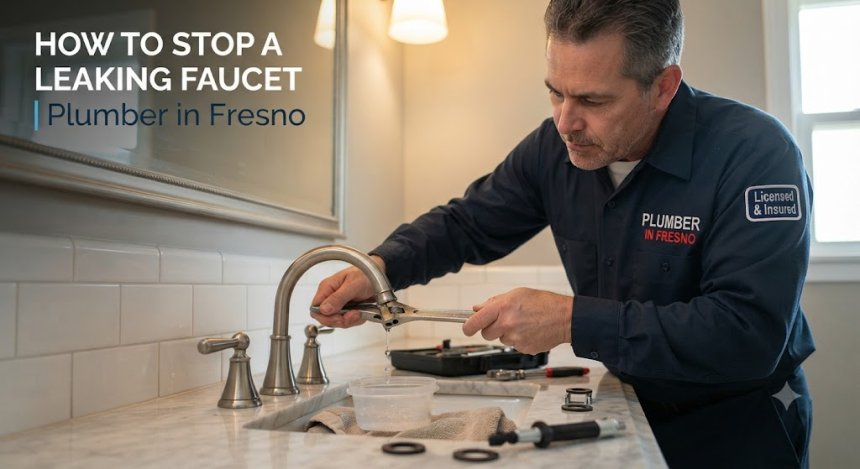
That relentless drip-drop echoing from your kitchen or bathroom sink is far more than an auditory annoyance—it is a silent drain on your monthly utility budget and a harbinger of structural degradation. Homeowners across the Central Valley frequently grapple with how to stop a leaking faucet as daily mechanical wear takes its toll on hardware. Ignoring this seemingly minor issue often leads to mineral staining, ruined vanity cabinets, and wasted gallons of water. For residents living in Fresno, intense summer heat cycles and distinct local water conditions create an environment where rubber seals and internal cartridges fail prematurely. Knowing how to safely diagnose and address a dripping fixture before it escalates into a plumbing emergency is essential for home preservation.
Critical Warning Signs: When Your Home is Sounding the Alarm
Failing plumbing fixtures rarely malfunction without giving subtle hints beforehand. Paying attention to these early indicators can save you from a major catastrophe.
-
Auditory Clues: Listen for faint hissing when valves are closed, water hammering inside the wall, or an irregular drip rhythm that worsens over time.
-
Olfactory Indicators: A musty, damp earth smell beneath the sink cabinet signals that chronic moisture is leaking onto wood, creating a breeding ground for mold and mildew.
-
Visual Evidence: White or chalky mineral crust accumulation around the base of the handles, rust rings in the basin, and sudden, unexplained spikes on your city water bill.
-
Cascading Structural Risks: Unchecked moisture rots subflooring, degrades drywall, and can compromise the structural integrity of surrounding cabinetry.
What Is a Leaking Faucet? Decoding the Mechanism
A household faucet is an intricate valve assembly engineered to regulate the volume and temperature of water mixing from hot and internal cold supply lines. Inside the body, components like rubber O-rings, neoprene washers, spring assemblies, or ceramic discs press tightly against a metal valve seat to shut off water completely. When you lift or turn a handle, these components shift to open the waterway.
Consider a standard dual-handle kitchen sink in a mid-century Fresno home. Over years of operation, friction and sediment wear down the rubber washer at the base of the valve stem. Even when you crank the handle shut, a microscopic gap remains, allowing water to push through continuously under line pressure.
Root Causes: Why This Problem Occurs in Fresno Homes
Plumbing hardware in California's Central Valley faces a unique combination of environmental and structural stressors that accelerate mechanical fatigue.
-
Hard Water Mineral Scaling: Local groundwater carries high concentrations of calcium and magnesium. As water evaporates around the spout, it leaves hard mineral crusts that pit metal and degrade rubber seals.
-
Extreme Thermal Expansion: Fresno's scorching summer temperatures cause metal pipes and internal plastic valve components to expand and contract aggressively, warping delicate seals.
-
Municipal Water Pressure Variations: High pressure from city distribution lines places continuous stress on older fixtures, weakening washers and O-rings prematurely.
-
Aging Infrastructure: Homes in older Fresno neighborhoods feature vintage supply lines and legacy fixtures that have long exceeded their design lifespans.
-
High Daily Friction: Frequently used household sinks experience thousands of handle rotations annually, wearing down internal springs and stems.
DIY Reality Check: What You Can Safely Fix vs. When to Step Back
While many minor faucet drips can be resolved with basic tools, understanding your limitations keeps you safe and prevents costly damage.
-
Safe Homeowner Actions: Cleaning mineral-clogged aerators, tightening a loose packing nut, replacing a standard O-ring, or swapping out drop-in supply line washers.
-
The Danger Zone: Forcing rusted compression fittings, stripping old angle stops, or overtightening delicate ceramic cartridges, which can crack porcelain or twist copper supply lines inside the wall.
-
When to Call a Pro: If your under-sink shutoff valves fail to close completely, if mounting hardware is entirely fused by corrosion, or if water is leaking inside the wall cavity, drop the wrench and call a licensed professional.
Professional Diagnostic & Repair Workflow
Licensed, insured plumbers follow a disciplined, step-by-step methodology to resolve faucet issues without causing collateral damage to your kitchen or bathroom.
-
Step 1: Non-Invasive Triage & Safety Isolation: Locate and close the dedicated hot and cold angle stops underneath the sink to isolate the fixture safely.
-
Step 2: Precision Diagnostic & Component Inspection: Disassemble the handle, escutcheon, and valve cartridge to identify exact wear patterns and failure points.
-
Step 3: Transparent, Upfront Options & Written Estimating: Present the property owner with clear choices between rebuilding the current assembly with OEM parts or upgrading to a new fixture.
-
Step 4: Code-Compliant Remediation & Part Replacement: Clean valve seats, apply food-grade silicone grease, and install code-compliant replacement cartridges or washers.
-
Step 5: Pressure Testing, Flow Verification, & Clean: Reopen water supplies, test under full pressure, check for hidden under-sink leaks, and thoroughly sanitize the workspace.
Advanced Diagnostics: The Professional Tool Arsenal
When a faucet drip points to broader plumbing system anomalies, professional technicians deploy specialized heavy-duty equipment.
-
Digital Manometers: Accurately measure dynamic water pressure to determine if a failing Pressure Reducing Valve (PRV) is destroying your household fixtures.
-
Electronic Acoustic Leak Detectors: Pinpoint hidden pipe fractures behind finished walls or concrete slabs without invasive demolition.
-
High-Definition Inspection Cameras: Threaded down waste arms to evaluate tailpiece integrity and ensure proper drainage flow.
-
Specialized Extraction Tools: Professional seat wrenches and pullers designed to remove calcified, stripped cartridges in cramped vanity spaces.
Financial Breakdown: Cost Factors & Investment Realities
Plumbing repair investments depend on several variable labor and material inputs determined during evaluation.
-
Service Dispatch & Diagnostics: Initial fees cover technician travel, professional assessment, and a guaranteed upfront estimate before work begins.
-
Repair vs. Replacement Parts: Simple washer replacements cost less than sourcing and installing high-end proprietary ceramic cartridges or custom designer faucets.
-
Accessibility Challenges: Tight working spaces in custom vanities or pedestal sinks require extra labor time to safely access connections.
-
Associated Upgrades: Replacing old, corroded multi-turn angle stops with modern quarter-turn ball valves ensures long-term system reliability.
Unique Expert Insights: Hard Truths Homeowners Learn Too Late
-
Temporary patch kits using epoxy or rubber tape only mask deeper system failures and can void home insurance coverage if they rupture unexpectedly.
-
Chemical liquid drain cleaners and harsh abrasive tablets corrode metal pipe walls from the inside out, damaging inner valve assemblies.
-
Unlicensed handymen often bypass municipal code requirements regarding backflow prevention, creating hidden liabilities during future property sales.
-
Preventative maintenance plans and annual whole-home plumbing inspections cost a fraction of a single emergency midnight flood cleanup.
-
Matching replacement parts matters; generic big-box store components rarely fit proprietary high-end designer fixtures securely, leading to repeat leaks.
Comprehensive Home Plumbing Maintenance Framework
-
Spring Checks: Test all under-sink shutoff valves to ensure they turn smoothly; inspect flexible supply lines for bulging or fraying.
-
Summer Habits: Soak removable faucet aerators in a vinegar solution every few months to dissolve hard water mineral buildup and maintain optimal flow.
-
Fall Preparation: Inspect cabinet interiors under sinks for any signs of early moisture accumulation or slow weeping connections.
-
Winter Readiness: Protect exposed outdoor or garage-adjacent plumbing lines from unexpected Central Valley frosts.
-
Year-Round Habits: Operate faucet handles gently and teach family members not to slam levers, preserving internal washers and springs.
Emergency Protocol: When Immediate Dispatch is Non-Negotiable
-
Catastrophic Supply Line Detachment: If an under-sink supply line completely ruptures, immediately shut off the main home water supply and call for emergency help.
-
Active Ceiling Leaks: If a second-floor bathroom leak begins pouring water through the ceiling below, shut off water mains instantly.
-
Electrical Hazards: If leaking water pools near electrical outlets, baseboard heaters, or power strips, cut power at the main breaker panel.
-
Complete Drainage Failure: When a leaking fixture coincides with a totally blocked waste line threatening living areas.
Frequently Asked Questions (FAQs)
Why is my bathroom faucet leaking from the base of the spout?
This typically indicates a worn-out O-ring or seal inside the swivel spout, or a loose mounting nut underneath the sink deck. Replacing the O-rings or tightening the hardware resolves the issue.
Can hard water in Fresno ruin a brand-new faucet?
Yes. High mineral content accelerates scaling on ceramic discs and rubber seals. Installing a water softener or cleaning aerators regularly extends your fixture's lifespan.
Should I repair an old faucet or replace it entirely?
If your faucet is over 10 to 15 years old, finding exact replacement parts can be difficult. Investing in a modern, water-efficient replacement is often more cost-effective.
Is it normal for a faucet to drip after turning it off?
A momentary drip as residual water drains from the spout is normal. A continuous, steady drip means the internal valve is failing to seal completely.
How do I find my main water shutoff valve in an emergency?
In most Fresno homes, the main water shutoff valve is located near the front perimeter wall, in the garage, or near the exterior water meter box.
Can a leaking faucet cause high water bills?
A slow, steady drip wastes hundreds of gallons of water per month, which directly increases your municipal utility charges.
What tools do I need to fix a single-handle faucet leak?
You typically need hex keys (Allen wrenches), an adjustable wrench, channel-lock pliers, plumber's grease, and a brand-specific replacement cartridge.
How long does a professional faucet replacement take?
A standard faucet replacement performed by a licensed plumber usually takes between one to two hours, depending on workspace accessibility.