How to Fix a Toilet That Won’t Flush Properly
Learn how to fix a toilet that won’t flush properly with expert advice from Fresno plumbers. Troubleshoot weak flushes, clogs, and tank parts.

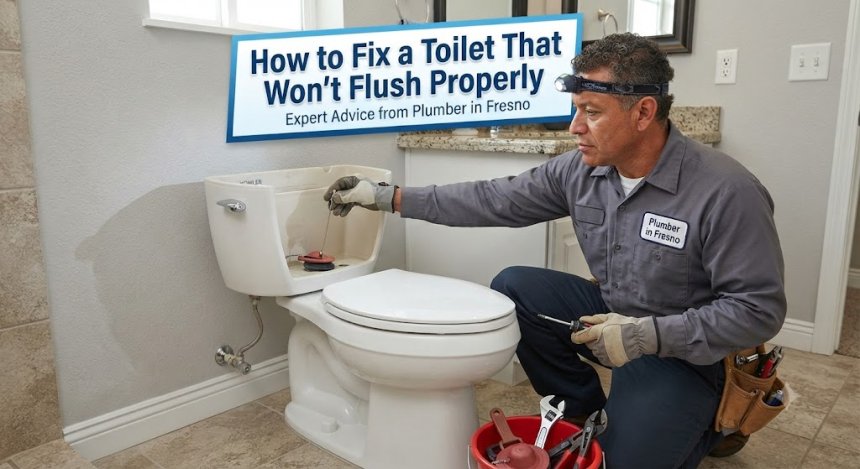
Introduction
Few household frustrations match the sinking feeling of pressing a toilet handle only to watch the water lazily swirl without clearing the bowl. Learning how to fix a toilet that won’t flush properly can save you from messy bathroom overflows and costly emergency service calls. Homeowners across the Central Valley frequently encounter this issue due to mineral buildup from local water conditions and heavy daily wear. Addressing a weak or failing flush right away prevents minor mechanical hitches from turning into complete sanitary emergencies.
What Is a Toilet Flush Mechanism? Decoding the Internal Components
A standard gravity-flush toilet is a surprisingly elegant piece of mechanical engineering designed to use precise fluid dynamics. When you push the handle, a connected lift chain pulls the flapper valve upward off its seat, allowing roughly 1.28 to 1.6 gallons of water to rush from the tank into the bowl in under three seconds. This sudden deluge creates a siphon effect in the trapway, pulling waste down into the main drain line.
When a toilet fails to flush properly, the breakdown usually stems from one of three areas: insufficient water volume entering the bowl, a restricted flapper opening time, or a partial obstruction in the porcelain trapway. For instance, a homeowner in a mid-century Fresno home might notice a lazy flush simply because calcium deposits have clogged the small rim jets underneath the bowl's edge, preventing water from creating the necessary rotational siphon.
Root Causes: Why Toilet Flush Problems Occur in Fresno Homes
-
Hard Water Mineral Scaling: Fresno's groundwater contains high levels of calcium and magnesium. Over time, these minerals crystallize inside the tank's flush valve seat, around the flapper, and clog the rim feed holes, choking water flow.
-
Stretched or Improperly Adjusted Lift Chains: If the chain connecting the trip lever to the flapper is too loose, the flapper closes too quickly, cutting off the water supply before the siphon can engage.
-
Warped or Degraded Rubber Flappers: Rubber components warp and degrade under prolonged exposure to water treatment chemicals, causing them to fail prematurely and let water bleed out slowly.
-
Improper Water Level in the Tank: If the float is set too low, the tank fills with insufficient water, robbing the flush of the kinetic energy needed to clear the bowl.
-
Partial Trapway Obstructions: Foreign objects, excessive paper use, or toy blockages lodged deep within the porcelain trap restrict water velocity.
DIY Reality Check: What You Can Safely Fix vs. When to Step Back
| Intervention Level | Acceptable DIY Actions | The Danger Zone (Call a Pro) |
| Diagnostics | Testing the tank water level, checking chain tension, performing the food-coloring leak test. | Probing deep lines with rigid metal wire, hammering at porcelain. |
| Immediate Mitigation | Shutting off the supply valve behind the toilet, using a standard flange plunger to clear soft clogs. | Dealing with sewage backing up from multiple household fixtures simultaneously. |
| Repairs | Replacing worn flappers, adjusting fill valve heights, swapping out broken plastic handles. | Replacing a cracked toilet bowl, fixing broken cast-iron closet flanges beneath the floor. |
Critical Warning Signs: When a Bad Flush Signals a Bigger Problem
| Sensory Indicator | Specific Warning Signs | Structural Risk of Delay |
| Visual / Structural | Water bubbling in the bathtub or shower when the toilet flushes, damp flooring around the base. | Main sewer line collapse, subfloor wood rot, structural foundational damage from leaks. |
| Auditory | Gurgling sounds coming from the sink or tub drains when the toilet cycles. | Severe venting blockages or trapped air pockets in the drainage network. |
| Olfactory | Persistent sewer gas odors wafting up from the base of the toilet or nearby floor drains. | Hazardous pathogen exposure and compromised indoor air quality. |
Advanced Diagnostics: The Professional Tool Arsenal
-
High-Definition Miniature Drain Cameras: Flexible snake-mounted cameras that thread directly through the toilet trapway to visually identify hidden toy obstructions, calcified root intrusion, or offset sewer pipes.
-
Electronic Manometers & Pressure Meters: Used to verify that supply lines are delivering adequate municipal water pressure to the fill valve assembly.
-
Professional Auger Systems (Toilet Augers): Commercial-grade snake tools equipped with bulbous heads designed to safely navigate porcelain curves without scratching the glaze while chewing through dense obstructions.
-
Smoke Testing Equipment: Forced non-toxic smoke used to trace hidden cracks in waste lines or venting system failures that contribute to poor fixture performance.
Professional Diagnostic & Repair Workflow
-
Non-Invasive Triage & Safety Isolation: Shutting down the dedicated water supply valve, inspecting the surrounding wax ring seal, and evaluating overflow risks.
-
Precision Diagnostic: Utilizing professional augers or camera scopes to isolate whether the restriction is localized inside the toilet fixture or buried within the main branch drain.
-
Transparent Estimating: Providing a clear, upfront flat-rate price for repair or replacement options before any physical work begins.
-
Code-Compliant Remediation: Clearing blockages, replacing faulty fill/flush valve assemblies, or resetting the toilet with a fresh wax ring and brass bolts.
-
Flow Verification & Cleanup: Performing multiple test flushes, checking for base leaks, and sanitizing the work area thoroughly.
Financial Breakdown: Cost Factors & Investment Realities
| Cost Factor | Impact on Final Price |
| Component Complexity | Simple flapper and chain replacements require minimal parts and labor, whereas replacing an entire flush valve and fill assembly takes more time. |
| Obstruction Severity | A standard paper clog is cleared quickly; an object lodged deep in the trapway or a main line backup requires advanced commercial extraction. |
| Fixture Condition | Older, non-standard toilets may require custom matching parts or total fixture replacement if the porcelain is cracked or severely degraded. |
| Emergency Dispatch Timing | Standard appointments carry predictable rates, whereas midnight emergency overflow calls involve premium after-hours routing. |
Comprehensive Home Plumbing Maintenance Framework
Spring & Summer
-
Inspect the rubber flapper inside every toilet tank for signs of cracking or sticky residue buildup.
-
Check the water supply shut-off valves behind each toilet to ensure they turn smoothly without seizing.
-
Test all bathroom sink and tub drains to ensure overall home drainage flow remains optimal during heavy seasonal usage.
Fall & Winter
-
Flush out mineral sediments from your water heater to protect the entire home's fixture health, including toilet fill valves.
-
Inspect exposed supply lines in cooler exterior walls for insulation adequacy.
-
Verify that your outdoor cleanouts are capped tightly to prevent seasonal debris from entering lateral lines.
Year-Round Habits
-
Avoid flushing "flushable" wipes, paper towels, cotton swabs, or hygiene products, which are the #1 cause of sudden toilet clogs.
-
Clean toilet tanks periodically without harsh chemical drop-in tablets that corrode plastic and rubber seals.
-
Monitor your monthly water bill for sudden, unexplained increases that suggest a silent flapper leak.
Emergency Protocol: When Immediate Dispatch is Non-Negotiable
-
Active Sewage Overflow: Raw sewage actively spilling over the rim of the toilet onto finished bathroom floors.
-
Multi-Fixture Backups: Toilets, tubs, and sinks all backing up simultaneously, indicating a total main sewer line obstruction.
-
Broken Supply Stop Valve: A supply valve that has snapped or stripped, spraying high-pressure water uncontrollably into the bathroom.
-
Electrical Proximity Hazards: Water pooling from a backing toilet toward nearby floor electrical outlets or heating vents.
Unique Expert Insights: Hard Truths Homeowners Learn Too Late
-
Chemical Tablets Destroy Internals: Drop-in bleach cleaning tablets contain harsh acids that eat away at plastic flush valves and rubber seals within months, causing hidden leaks.
-
"Flushable" Wipes Are a Myth: Municipal wastewater systems and residential lines cannot break down modern wipes, resulting in dense blockages that plunges cannot fix.
-
Ignoring a Weak Flush Worsens Damage: A lazy flush means waste isn't clearing the trap completely, slowly building up layers of residue until a sudden total blockage occurs.
-
Handyman Fixes Often Miss Code: Improper toilet installation—such as failing to shim a rocking bowl—leads to a broken wax ring seal and silent subfloor rot.
-
Preventive Care Saves Thousands: Addressing a worn-out $15 fill valve today prevents a $3,000 bathroom floor remediation project tomorrow.
Frequently Asked Questions (FAQs)
Why does my toilet flush weakly only sometimes?
Intermittent weak flushes are usually caused by a slack lift chain that occasionally slips under the flapper, or a warped flapper that fails to stay open long enough for a complete water release.
How do I adjust the water level in my toilet tank?
For modern float-cup fill valves, pinch the adjustment clip on the metal rod and slide the float upward to increase water volume. For older ball-cock valves, gently bend the brass arm upward or adjust the adjustment screw.
Can hard water stop a toilet from flushing?
Yes. Mineral scaling from hard water can plug the small rim jet holes underneath the toilet bowl rim, reducing the rotational water force needed to trigger the siphon.
Is it safe to use chemical drain openers on a clogged toilet?
No. Chemical liquid drain openers are designed for slow sinks, not toilets. They generate intense heat that can crack porcelain bowls and pose severe chemical splash hazards if you later need to plunge the toilet.
What should I do if plunging doesn't clear my toilet?
Stop plunging immediately to avoid splashing contaminated water. Use a dedicated toilet auger to reach past the trapway curve, or call a licensed professional if the obstruction resists manual clearing.
Why is my toilet running constantly after a flush?
A continuously running toilet usually means the chain is too tight (holding the flapper slightly open) or the rubber flapper has degraded and no longer forms a watertight seal against the flush valve seat.
How often should toilet internal parts be replaced?
Rubber components like flappers and washers typically wear out every 3 to 5 years due to normal friction and water treatment chemicals.
Can a blocked plumbing vent cause a bad toilet flush?
Yes. If your roof plumbing vent stack is blocked by leaves or debris, it creates a vacuum in the drainage system, robbing toilets of the air flow required for a powerful, rapid flush.