How to Find a Hidden Water Leak in Fresno Homes
Discover how to find a hidden water leak in your Fresno home. Learn expert detection methods, signs of leaks, and call Plumber in Fresno.

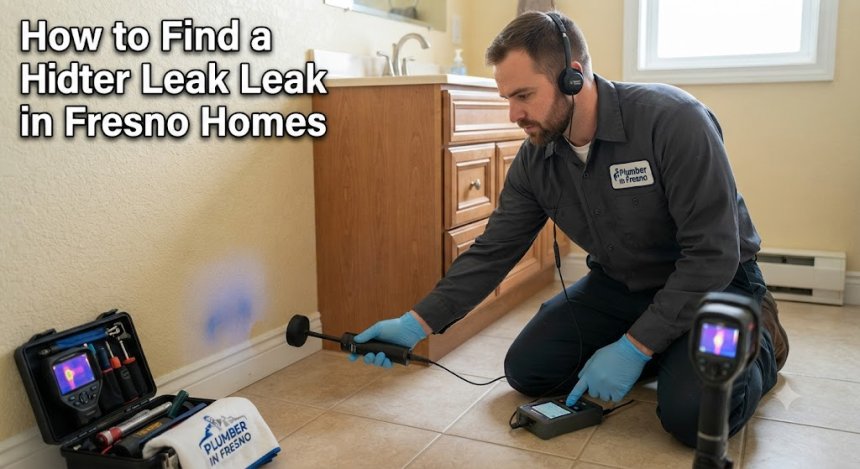
Introduction
Few household discoveries strike as much dread into a property owner as a sudden, unexplained spike in a utility bill or the musty smell of trapped moisture behind a wall. Learning how to find a hidden water leak in your Fresno home is essential for protecting your property against structural decay and exorbitant water bills. Homeowners across Fresno frequently experience hidden leaks due to the region's intense Central Valley heat, expansive clay soils, and aging residential plumbing infrastructure. Addressing these elusive vulnerabilities early prevents catastrophic structural damage, preserves foundation integrity, and saves you from costly emergency interventions down the line.
Critical Warning Signs: When Your Home is Sounding the Alarm
-
Auditory Clues: Faint hissing, trickling, or water hammering sounds inside walls or floors when all household taps and appliances are completely turned off.
-
Subtle Structural Shifts & Surface Anomalies: Warm spots on concrete slab floors, warping hardwood, peeling wallpaper, bubbling paint, or damp, discolored drywall patches.
-
Olfactory Indicators & Utility Spikes: Persistent musty odors, mildew smells, damp earth scents, or an unexpected, unexplained surge in your monthly municipal water bill.
Ignoring these early warning indicators allows moisture to silently compromise wooden framing, trigger toxic mold colonies, and destabilize concrete foundations under Fresno homes.
What Is a Hidden Water Leak? Decoding the Mechanism
A residential plumbing network is a closed, pressurized system designed to deliver potable water seamlessly to every fixture and carry waste away safely. Under normal conditions, water flows exclusively through copper, PEX, or cast-iron channels hidden behind drywall, beneath floorboards, or underground.
When a leak occurs behind a sealed surface, water escapes continuously or intermittently, saturating surrounding building materials instead of exiting through a designated drain or faucet. In Fresno properties, shifting clay soils driven by extreme seasonal temperature swings put immense mechanical stress on underground supply lines and under-slab copper pipes, causing pinhole fractures or joint separations that quietly siphon water into the surrounding earth or subfloor.
Advanced Diagnostics: The Professional Tool Arsenal
-
Electronic Acoustic Leak Detectors: High-sensitivity listening devices that amplify the distinct sound of water hissing or escaping under pressure through concrete or behind walls.
-
Thermal Imaging Infrared Cameras: Handheld optical scanners that detect temperature differentials caused by warm or cool water pooling behind finished drywall or beneath subfloors.
-
Push-Rod High-Definition Video Cameras: Specialized snake cameras fed into lines to visually inspect pipe interiors for cracks, root intrusions, or joint failures.
-
Digital Manometers & Isolation Gauges: Precision pressure-testing tools used to isolate specific zones of a plumbing system to measure pressure loss over time.
Root Causes: Why This Problem Occurs in Fresno Homes
-
Expansive Clay Soil Shifting: Fresno's local soil composition expands and contracts drastically between wet winters and arid summers, putting severe mechanical stress on underground water lines and slab foundations.
-
Aggressive Central Valley Mineral Content: Local water characteristics can accelerate internal pipe wear, corrosion, and pitting, particularly in older metallic lines.
-
Thermal Expansion Stress: Frequent temperature fluctuations cause metal pipes to expand and contract repeatedly, weakening soldered joints and fittings over decades of use.
-
Aging Installation Materials: Legacy homes in older Fresno neighborhoods featuring aging galvanized steel or early-generation polybutylene piping are inherently prone to sudden structural failure.
-
Corrosive Soil Chemistry: Soil conditions in certain parts of the Central Valley can react chemically with underground copper pipes, causing exterior pitting and pinhole leaks.
Professional Diagnostic & Repair Workflow
A licensed, insured professional approaches leak localization and remediation through a methodical, non-destructive sequence:
-
Step 1: Non-Invasive Triage & Meter Testing: Checking the main utility meter dial for movement while all fixtures are off to confirm active leakage.
-
Step 2: Precision Acoustic & Thermal Localization: Pinpointing the exact geographic coordinates of the leak using electronic listening equipment and thermal imaging to avoid tearing up unnecessary drywall or flooring.
-
Step 3: Transparent, Upfront Options & Written Estimating: Presenting clear, code-compliant repair strategies—such as spot repair, pipe rerouting, or trenchless rehabilitation—before any work begins.
-
Step 4: Precision Remediation & Replacement: Executing the repair using high-grade materials like cross-linked polyethylene (PEX) or continuous copper runs.
-
Step 5: System Pressure Testing & Site Cleanup: Re-pressurizing the plumbing network, verifying zero pressure drop, sanitizing the work zone, and restoring any opened surfaces.
DIY Reality Check: What You Can Safely Fix vs. When to Step Back
-
Safe homeowner actions: Performing the water meter dial test, checking visible sink traps, monitoring toilet flappers for silent running, and inspecting exposed basement or garage pipes.
-
The danger zone: Attempting to jackhammer concrete slabs, cutting into unknown drywall cavities without knowing where electrical lines run, or guessing leak locations blindly.
-
When to call a pro: The moment your meter test confirms a leak indoors or underground that cannot be visually identified on an exposed fixture.
Financial Breakdown: Cost Factors & Investment Realities
Professional plumbing repairs utilize straightforward, flat-rate pricing models tailored to the complexity of the job. Key cost variables include:
-
Diagnostic & Dispatch Fees: Covering specialized acoustic and thermal equipment deployment.
-
Location & Accessibility: Accessing a leak behind a standard closet wall is far less labor-intensive than breaking through a reinforced concrete slab or trenching beneath landscaping.
-
Material Selection: Upgrading compromised sections to modern PEX-a piping or durable copper infrastructure.
-
Surface Restoration: Factoring in drywall patching, texture matching, or flooring repairs required after sub-surface remediation.
Unique Expert Insights: Hard Truths Homeowners Learn Too Late
-
Temporary epoxy putgies and hardware store tape fixes on pressurized supply lines inevitably fail under sustained pressure and can void home insurance coverage.
-
Ignoring a minor damp patch behind a vanity can transform a simple $300 fitting repair into a multi-thousand-dollar mold remediation and structural rebuild project.
-
Unlicensed handymen frequently bypass building codes, creating hidden faults that fail mandatory local home inspections during property sales.
-
Routine annual plumbing inspections catch micro-leaks before they escalate into structural emergencies.
Comprehensive Home Plumbing Maintenance Framework
-
Spring/Summer Checks: Test main shut-off valves for smooth operation; inspect outdoor irrigation backflow preventers and visible hose bibs for stress cracks.
-
Fall/Winter Preparation: Insulate any exposed supply lines running through unconditioned garage spaces or crawlspaces against rare freezing night temperatures.
-
Year-Round Habits: Monitor monthly water bill trends for unexpected consumption spikes; avoid chemical drain cleaners that eat away at pipe joints; test your water pressure regulator annually.
Emergency Protocol: When Immediate Dispatch is Non-Negotiable
While many hidden leaks develop slowly, certain scenarios demand an immediate 24/7 emergency response:
-
A main supply line ruptures, causing active, uncontrolled indoor flooding.
-
Water pools near electrical panels, breaker boxes, or appliance outlets.
-
Complete loss of household water pressure accompanied by sudden pooling in the yard or foundation perimeter.
Frequently Asked Questions (FAQs)
How can I check for a hidden water leak using my water meter?
Turn off all indoor and outdoor faucets, appliances, and irrigation systems. Locate your water meter outside and observe the low-flow indicator triangle or sweep hand; if it is spinning, water is actively escaping somewhere in your system.
What is a slab leak and how do I know if I have one?
A slab leak occurs in water pipes running beneath your home's concrete foundation. Warning signs include warm spots on the floor, unexplained high water bills, the sound of running water when taps are closed, or damp baseboards.
Are hidden water leaks covered by homeowners insurance?
Coverage depends entirely on your specific policy and whether the leak was sudden and accidental or the result of long-term neglect or deferred maintenance. Review your policy details with your provider.
Can high water pressure cause hidden leaks?
Yes. Excessive municipal water pressure puts continuous strain on pipe walls, joints, and fittings, drastically accelerating wear and triggering premature ruptures.
How do plumbers find leaks without tearing up my walls?
Licensed professionals use advanced non-invasive technology, including electronic acoustic listening devices, thermal imaging infrared cameras, and precision line-isolation pressure tests.
What is the most common cause of leaks in Fresno homes?
Shifting expansive clay soils, high mineral content water, and thermal expansion cycles are the leading environmental culprits driving pipe stress in the Central Valley.
How long does a professional leak detection service take?
Most standard residential leak detection appointments take between one to three hours, depending on the size of the home and the complexity of the plumbing layout.