Why Does My Faucet Have Weak Water Flow?
Discover why your faucet has weak water flow. Learn causes like mineral scale, closed valves, and when to call a Fresno plumbing expert.

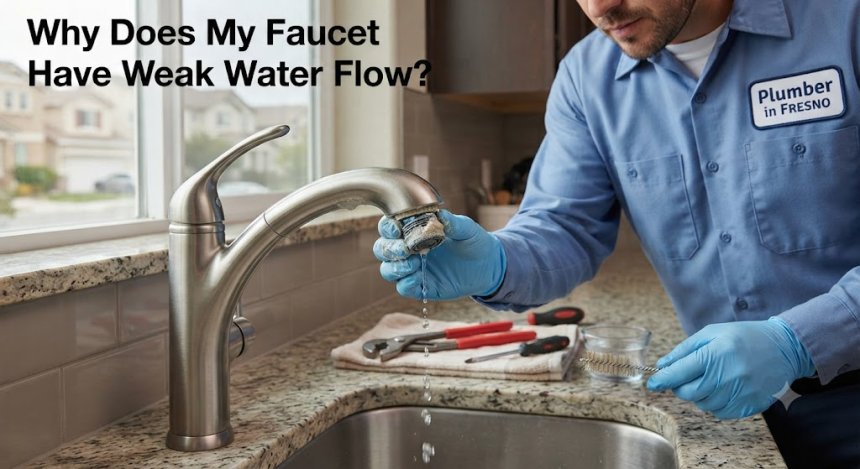
Turning on your bathroom or kitchen sink and watching the water lazily dribble out instead of delivering a crisp, steady stream is instantly exasperating. Experiencing weak water flow interrupts everyday tasks like washing dishes or brushing teeth, transforming simple routines into frustrating chores. Homeowners across Fresno frequently encounter this issue, often wondering if the city municipal supply is failing or if their private household plumbing is compromised. Ignoring a sudden or gradual drop in flow rate can lead to complete fixture blockage or mask deeper supply line restrictions. Knowing how to identify the underlying cause protects your plumbing fixtures and restores household efficiency.
What Is Residential Water Delivery? Decoding the Mechanism
Your home water delivery network relies on a pressurized system designed to transport potable water from the municipal main or a private well smoothly through service lines, water meters, pressure-reducing valves (PRVs), and individual branch pipes to your faucets.
In an optimal setup, water moves under balanced pressure, passing freely through control valves and mixing cartridges before exiting the spout mesh screen. When a restriction occurs anywhere along this path—such as a partially closed shut-off valve, a mineral-choked aerator, or a failing internal valve cartridge—the flow rate diminishes significantly. This creates an imbalance in fluid dynamics, forcing the remaining water to fight through narrow gaps, which causes sputtering or a weak trickle.
Root Causes: Why Low Flow Occurs in Fresno Homes
Fresno’s unique Central Valley environment and housing infrastructure present specific challenges that directly influence water pressure and flow consistency. While Fresno properties do not deal with freezing midwestern winters, local soil composition and water chemistry create distinct obstacles:
-
Hard water mineral scaling: Fresno groundwater contains high concentrations of dissolved minerals like calcium and magnesium. These minerals precipitate out inside hot water lines, fixture cartridges, and aerator screens, forming rigid scale blockages.
-
Galvanized pipe corrosion: Older homes throughout central Fresno districts often feature aging galvanized steel supply lines that corrode internally over decades, narrowing the interior channel and choking off volume.
-
Municipal pressure fluctuations: High demand during peak Central Valley summer heat can strain municipal distribution grids, causing noticeable localized pressure drops.
-
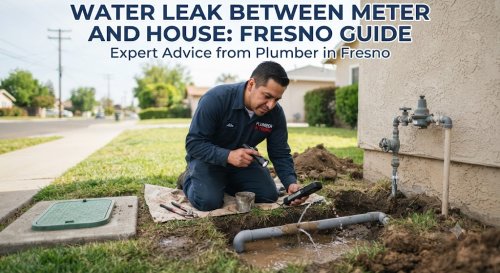
Expansive clay soil shifting: Seasonal moisture changes in local clay sub-grades can subtly stress underground water service lines, affecting main entry pressure.
-
Sediment accumulation: Water heaters can shed mineral sediment that travels through hot water pipes and lodges directly in fixture mixing valves.
Critical Warning Signs: When Your Plumbing System is Sounding the Alarm
Recognizing early sensory indicators helps property owners address flow restrictions before they escalate into complete supply failure or hidden leaks.
-
Auditory clues: High-pitched whistling or humming sounds originating from the wall or fixture handle when the tap is opened, indicating water forcing through a constricted valve or mineral blockage.
-
Visual shifts: Water sputtering irregularly, changing color slightly upon initial opening due to loose pipe scale, or exhibiting low flow exclusively on the hot water side while cold pressure remains normal.
-
Meters and dampness: Unexplained spikes on your water meter reading when no fixtures are running, or damp patches appearing on drywall near supply risers.
Professional Diagnostic & Repair Workflow
When weak water flow persists despite basic troubleshooting, a licensed, insured plumber applies a systematic, engineering-focused approach to isolate and resolve the issue.
-
Step 1: Non-Invasive Triage & Safety Isolation. The technician tests multiple fixtures across the home to determine if the pressure loss is isolated to a single tap or systemic to the whole house.
-
Step 2: Precision Diagnostic & Digital Pressure Testing. Using digital manometers attached to hose bibs, the plumber measures static and dynamic water pressure to evaluate the main service line and PRV performance.
-
Step 3: Transparent, Upfront Options & Written Estimating. The professional presents clear, flat-rate repair solutions detailing whether a simple cartridge replacement, valve adjustment, or line flushing is required.
-
Step 4: Code-Compliant Remediation & Part Replacement. The technician replaces failing components, clears mineral-clogged lines, or installs updated pressure-reducing valves matching local building codes.
-
Step 5: Flow Verification & Clean-Up. The system undergoes final flow testing and balancing to ensure peak volume is restored before the workspace is sanitized.
Advanced Diagnostics: The Professional Tool Arsenal
Professional technicians rely on specialized, heavy-duty equipment to pinpoint flow restrictions accurately without unnecessary property disruption.
-
Digital manometers and pressure gauges: Measure exact PSI levels at various points in the plumbing network to identify pressure drops across valves or filters.
-
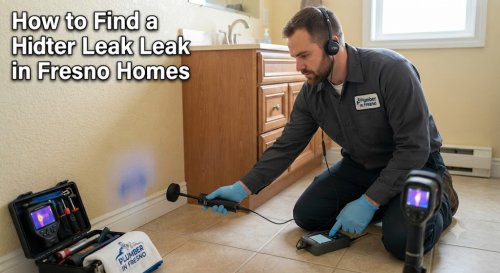
Electronic acoustic and thermal leak detectors: Locate hidden pinhole leaks or underground line restrictions causing localized pressure loss.
-
High-definition push-rod pipe cameras: Inspect the interior condition of water supply lines and main feeds for scale buildup or crushing.
-
Thermal imaging infrared cameras: Detect blocked hot water lines or internal valve failures by mapping temperature differentials along pipes.
DIY Reality Check: What You Can Safely Fix vs. When to Step Back
Many minor causes of low flow can be safely addressed by homeowners, but recognizing the threshold for professional help prevents accidental property damage.
-
Safe homeowner actions: Unscrewing and soaking faucet aerators in white vinegar, checking and fully opening under-sink supply stop valves, or flushing refrigerator and inline water filters.
-
The danger zone: Attempting to force stuck or corroded main water shut-off valves or tampering with high-pressure PRV settings without proper tools, which can rupture brittle pipe fittings.
-
When to call a pro: If low flow affects both hot and cold water across multiple rooms, or if adjusting under-sink valves yields no change, indicating a main line or water heater restriction.
Financial Breakdown: Cost Factors & Investment Realities
Understanding how professional pricing works helps homeowners budget effectively for plumbing repairs. Flat-rate pricing models reflect the specific nature of the problem.
-
Diagnostic and dispatch fees: Cover travel time and technical troubleshooting required to isolate complex pressure issues.
-
Specialty equipment deployment: Using digital pressure testing kits or electronic detectors versus standard hand tools.
-
Material selection: Upgrading old polybutylene or corroded iron pipes to modern, durable PEX or copper lines.
-
Repair vs. total fixture economics: Investing in cartridge rebuilding or valve replacement prevents premature whole-fixture degradation.
Unique Expert Insights: Hard Truths Homeowners Learn Too Late
-
Single-lever cartridges wear out silently: Modern single-handle faucets rely on ceramic mixing discs that wear down over time, restricting internal ports and cutting flow volume without leaking outwardly.
-
Stop valves get stuck open: Under-sink shut-off valves left untouched for years can fail internally, where the stem turns but the internal rubber washer stays stuck in a partially closed position.
-
Whole-house filters need scheduled service: Installing a whole-home sediment filter is great for Fresno water, but forgetting to change the cartridge monthly chokes flow to every fixture in the house.
-
Handyman shortcuts cause code failures: Unlicensed repairs on main supply lines often violate local plumbing codes and complicate future property sales.
Comprehensive Home Plumbing Maintenance Framework
-
Spring Checks: Inspect outdoor hose bibs, test main shut-off valve operability, and check under-sink connections for slow drips.
-
Fall Preparation: Flush mineral sediment from your water heater tank and insulate exposed supply lines in unconditioned spaces.
-
Year-Round Habits: Clean faucet aerators every six months, monitor your water meter periodically for unexpected usage spikes, and replace refrigerator and inline water filters on schedule.
Emergency Protocol: When Immediate Dispatch is Non-Negotiable
While weak water flow is usually a progressive maintenance issue, certain scenarios require immediate 24/7 professional response. Call an emergency plumber if you experience a sudden, total loss of water supply across the entire house, catastrophic main service line ruptures, or active indoor flooding caused by a snapped supply valve.
Frequently Asked Questions (FAQs)
Why is only one faucet experiencing weak water flow?
If only a single faucet has low flow, the issue is almost always localized to that specific fixture's aerator screen or under-sink shut-off valve.
Can a failing water heater reduce hot water pressure?
Yes, heavy mineral sediment accumulation inside an aging water heater tank can block the hot outlet port, reducing hot water flow and pressure across the home.
How do I know if my pressure-reducing valve (PRV) is broken?
If every fixture in your house suddenly experiences low water pressure simultaneously, your PRV may have failed internally and requires adjustment or replacement.
Is hard water in Fresno damaging my plumbing fixtures?
Yes, Fresno's mineral-rich water accelerates calcification inside faucet cartridges, showerheads, and valves, gradually restricting water volume over time.
Why does my water flow sputter when I first open the tap?
Sputtering usually indicates trapped air pockets or loose mineral debris bouncing around inside the faucet spout or mixing valve cartridge.
Can I clean a clogged aerator myself?
Yes, unscrewing the aerator tip and soaking it in white vinegar for 20 minutes easily dissolves calcium scale and restores normal flow.
What is the normal water pressure range for a home?
Standard residential water pressure should safely range between 50 and 70 PSI. Anything above 80 PSI risks pipe damage, while below 40 PSI feels weak.
When should I call a professional plumber for low pressure?
Call a licensed professional if whole-house pressure drops suddenly, if cleaning aerators does not help, or if you suspect damaged supply lines.