Water Leak Between Meter and House: Fresno Guide
Suspect a water leak between your Fresno water meter and house? Follow this expert guide to locate the main line leak and prevent high water bills.

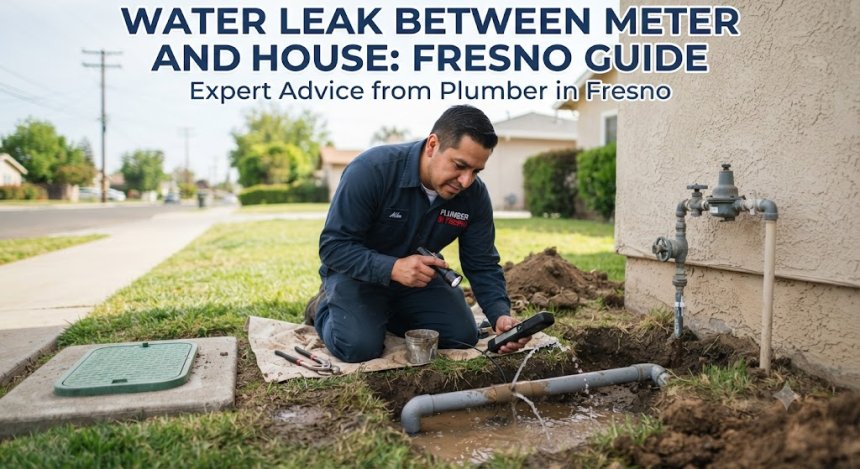
Imagine opening your monthly water utility bill from the City of Fresno and nearly fainting. Instead of your usual charge for irrigation and household use, the bill is astronomical, indicating hundreds of additional gallons consumed daily. You check toilets for running flappers, examine under sinks, and inspect outdoor hose bibs, yet everything appears bone dry. The terrifying reality sets in: you have a catastrophic water leak between your Fresno house and the water meter.
This scenario is far more common in the Central Valley than homeowners realize. When a pressurized underground pipe fails—whether it’s aging galvanized steel, brittle copper, or problematic polybutylene—the water doesn't bubble up visibly on your lawn immediately. Instead, it often seeps silently deep into the expansive clay soil prevalent in Fresno, undermining your landscaping and foundation while costing you a fortune in wasted utility costs. For residents in older neighborhoods like Tower District or Fig Garden, where infrastructure is decades old, detecting and repairing these hidden main service line failures quickly is essential to prevent structural damage and preserve property value. Knowing how to pinpoint the source of the leak, and understanding precisely where your responsibility as a homeowner begins, is the first critical step toward resolving the crisis.
What Is Your Main Water Service Line? Decoding the Mechanism
To understand a main line failure, you must first understand the layout of your property’s potable water system. The main water service line is the pressurized pipe that delivers fresh municipal water from the city’s distribution grid directly into your home. The system operates under high pressure, typically ranging from 60 to 80 PSI in Fresno.
The mechanism is straightforward: pressurized water travels from the street main, through a municipal shut-off valve, and into your property's water meter, usually located near the street curb or sidewalk within a concrete utility box. From the outlet side of that meter, the pipe travels underground across your yard, through the foundation wall, and connects to your home’s internal plumbing system, often near the main interior shut-off valve in a garage or utility closet.
Here is where most homeowners misunderstand their legal obligations: In Fresno, as in most U.S. municipalities, the City is responsible for maintaining the infrastructure up to and including the water meter itself. The homeowner is 100% responsible for the entire service line pipe running from the outlet side of the water meter all the way into the house. Therefore, if a leak occurs one foot past the meter box on your property, it is entirely your financial and logistical responsibility to locate and repair it.
Financial Breakdown: Cost Factors & Investment Realities
Repairing or replacing an underground main water service line is a significant EEAT (Experience, Expertise, Authoritativeness, Trustworthiness) investment in your property’s infrastructure. Transparent plumbing providers rely on upfront flat-rate pricing models rather than open-ended time-and-material estimates.
-
Diagnostic & Dispatch Fees: Covers the technician's travel time, specialized leak detection equipment setup, and initial system isolation triage.
-
Accessibility & Location: Locating a leak under a simple flowerbed is far more economical than breaking through a concrete driveway, tearing out mature landscaping, or tunneling beneath a sidewalk.
-
Pipe Material & Scope: Repairing a pinhole leak on a modern copper line is faster than replacing 50 linear feet of failed historical polybutylene pipe that has deteriorated along the entire run.
-
Permitting & Municipal Requirements: Main line replacements almost always require City of Fresno permits and mandatory inspections to ensure code compliance and proper backflow prevention.
-
Repair vs. Full Replacement Economics: If a video camera inspection reveals that the existing 50-year-old galvanized pipe is corroded throughout its entire length, performing continuous spot repairs is fiscally irresponsible; full line replacement is the only long-term solution.
Comprehensive Home Plumbing Maintenance Framework
An ounce of prevention is worth a ton of cure when it comes to subterranean plumbing. Adopting a regular maintenance mindset protects your main service line from premature failure.
-
Spring & Summer Checks: Inspect outdoor hose bibs for drips and ensure they are properly secured to prevent movement that stresses underground joints; test your main interior shut-off valve to ensure it operates smoothly.
-
Fall & Winter Preparation: While Fresno rarely freezes hard, disconnect all garden hoses to prevent trapped water from freezing and cracking bibs; ensure the area around your main meter box is clear of debris and accessible for emergency crews.
-
Year-Round Habits: Monitor your water bill monthly for unexplained spikes; install a whole-home water monitoring system (like Flume or Flo by Moen) that provides real-time flow data directly to your smartphone, instantly alerting you to continuous leaks anywhere on the property.
Root Causes: Why This Problem Occurs in Fresno Homes
Main service lines rarely fail without cause. Failures are typically driven by environmental pressures, material aging, and chemical interactions specific to the Central Valley.
-
Aging Infrastructure & Historical Piping: Thousands of homes built in Fresno during the mid-20th century utilized galvanized steel or copper piping for service lines. After 50-70 years, these pipes corrode from the inside out due to oxidation and hard water mineral scaling, leading to pinhole leaks and eventual structural collapse.
-
Aggressive Polybutylene Failure: If your home was built or re-plumbed between the late 1970s and mid-1990s, you likely have gray polybutylene (PB) piping. This material is notorious for reacting negatively with oxidants in municipal water supplies, causing it to become brittle, flake internally, and develop catastrophic longitudinal splits at fittings and along the pipe body.
-
Central Valley Soil Shifting & Expansion: Fresno is known for its expansive clay soil, which swells significantly when wet (during irrigation or winter rains) and shrinks drastically during dry Central Valley summers. This continuous ground movement exerts immense mechanical stress on rigid underground pipes, shearing joints, pulling connections apart, and causing pipe walls to fracture.
-
High Municipal Water Pressure: To ensure adequate service across the flat valley terrain, the City of Fresno often supplies water at pressures exceeding 80 PSI. This intense, constant pressure pushes older, weakened pipes and soldered joints past their structural limits, accelerating fatigue and causing sudden blowouts.
-
Tree Root Intrusion: While more common with sewer lines, large, thirsty tree roots seeking constant moisture sources (like a weeping water line) can exert extreme pressure on pipes, eventually cracking the wall or crushing the conduit entirely.
Professional Diagnostic & Repair Workflow
When DIY troubleshooting confirms a main line leak exists but cannot locate the exact spot in the yard, a licensed and insured plumber executes a systematic, minimally invasive diagnostic workflow.
-
Step 1: Non-Invasive Triage & Safety Isolation: The technician verifies the meter reading and confirms isolation by closing the main house valve, proving the leak is between the meter and the house.
-
Step 2: Precision Diagnostic & Acoustic Pinpointing: The plumber uses advanced electronic acoustic ground microphones to listen to the specific frequency of pressurized water escaping underground, narrowing the leak location down to a few feet.
-
Step 3: Transparent, Upfront Options & Written Estimating: Before any excavation begins, you receive a clear, flat-rate proposal outlining whether a targeted spot repair or full service line replacement is recommended based on pipe condition and code requirements.
-
Step 4: Code-Compliant Remediation & Part Replacement: The professional uses trenchless pipe bursting technology (pulling a new line through the old one) or performs targeted excavation to replace the failed section with durable, flexible PEX or Type K copper piping.
-
Step 5: Pressure Testing, Flow Verification, & Clean: The newly installed line undergoes a rigorous pressure test to ensure zero leakage, followed by a full flow verification at indoor fixtures, and a thorough cleanup of the job site.
Advanced Diagnostics: The Professional Tool Arsenal
Fresno’s underground leaks often travel laterally through porous soil before surfacing. Locating them accurately without destroying your landscaping requires specialized non-destructive technology.
-
Electronic Acoustic Leak Detectors: Highly sensitive ground microphones amplify the distinct hissing or roaring sound of water escaping under high pressure beneath concrete or earth, allowing technicians to "map" the loudest point of the leak.
-
Thermal Imaging Infrared Cameras: Infrared technology can sometimes detect subtle temperature differences on soil or concrete surfaces caused by underground water saturation, particularly if the leak involves the hot water line or significantly cools the surrounding ground.
-
Inert Tracer Gas Injection: In complex situations, plumbers inject an inert, non-toxic gas into the isolated water line. Surface sensors then detect gas escaping from the ground directly above the leak, providing irrefutable pinpoint accuracy.
-
High-Definition Sewer Inspection Cameras: While used primarily for drains, waterproof push-rod cameras can sometimes be fed into the main water line (after depressurization and clearing) to visually inspect interior corrosion and locate structural failures directly.
DIY Reality Check: What You Can Safely Fix vs. When to Step Back
While homeowners can take definitive steps to confirm a main line leak, complex underground repairs are strictly the domain of licensed professionals.
-
Safe Homeowner Actions: Performing the water meter "spin test" to confirm continuous flow; systematically shutting off interior valves to rule out internal leaks; visually inspecting the entire yard perimeter for wet spots, lush grass patches, or soil settling.
-
The Danger Zone: Never attempt to excavate your own main water line. You risk striking hidden underground utilities (gas, electric, fiber optic), causing severe injury, electrocution, or massive neighborhood outages. Furthermore, untrained digging often undermines existing foundation footings or damages adjacent sewer and irrigation lines.
-
When to Call a Professional: The moment your DIY water meter test confirms flow with all interior fixtures off, immediately locate and close your main interior emergency water valve. Then, drop the shovel and call a licensed professional to handle the high-stakes underground work safely and legally.
Emergency Protocol: When Immediate Dispatch is Non-Negotiable
Certain main line failures constitute immediate crises requiring priority professional response to protect health, safety, and property value.
-
Catastrophic Pipe Rupture & Flooding: If the main line has fully blown out, resulting in active, pressurized flooding of your crawlspace, basement, or surrounding property that threatens electrical systems or foundation stability, call for immediate 24/7 emergency dispatch.
-
Total Loss of Potable Water Supply: A sudden, complete loss of water pressure to the entire home often indicates a main line breach at the connection point near the meter or foundation, rendering the home uninhabitable.
-
Sinkhole Development: The sudden appearance of a significant depression or sinkhole in your yard directly over the projected path of the water service line indicates a massive washout of soil beneath the pipe, posing an immediate safety hazard to pedestrians and pets.
-
Contamination Intrusion: If the leak is severe enough to cause a sudden pressure drop, back-siphonage of contaminated groundwater or irrigation water into your potable system is possible. If water appears discolored or smells foul immediately following a pressure drop, cease usage and call for emergency water quality testing and line flushing.
Frequently Asked Questions
How much does it cost to repair a main water line leak in Fresno?
Costs vary widely based on accessibility and scope. Spot repairs on accessible lines often range from $1,500 to $3,500. Full service line replacements (typically 50-100 feet) can range from $5,000 to $12,000+, depending heavily on whether trenchless technology can be used or if extensive concrete removal/landscaping restoration is required. Upfront pricing ensures transparency.
Does homeowner's insurance cover the water service line?
Standard homeowner's insurance policies typically cover damage caused by the leak (e.g., water damage to flooring or drywall) but rarely cover the cost of repairing or replacing the underground pipe itself due to normal wear and tear or corrosion. However, many carriers now offer optional "Service Line Coverage" endorsements for a minimal annual fee, which are highly recommended for older homes.
How can I confirm I have a main line leak without a plumber?
Perform the "water meter spin test." Ensure all water-using appliances inside and outside are off (toilets, icemakers, irrigation). Locate your water meter box near the curb and remove the lid. If the small triangular leak indicator dial on the meter is spinning, water is actively flowing somewhere, confirming a leak between the meter and the main house valve.
Is it safe to leave a main line leak running until I can afford repairs?
Absolutely not. An underground leak continuously erodes soil beneath your foundation, leading to structural settling and cracking. Furthermore, constant high-pressure leakage wastes thousands of gallons monthly, creating exorbitant utility bills that will quickly exceed the cost of timely repair.
Why do galvanized and polybutylene pipes fail so often in Fresno?
Galvanized pipes corrode internally over decades, eventually developing pinhole leaks. Polybutylene (gray plastic pipe) becomes chemically brittle over time due to oxidants in municipal water and cracks at fittings and seams. Both materials are long past their lifespan and prone to failure under Fresno’s high water pressure and soil conditions.
How deep are main water lines buried in Fresno?
In Fresno, main water service lines are typically buried between 18 and 24 inches below grade. This depth helps protect them from mechanical damage during landscaping and minor ground surface temperature fluctuations.
What is trenchless water line replacement, and is it available in Fresno?
Yes, trenchless technology is widely available in Fresno and is often the preferred method for main line replacement. Instead of digging a continuous trench, technicians dig two small access holes. A specialized bursting head is pulled through the old line, simultaneously destroying it and pulling a new, seamless HDPE or PEX pipe into its place, preserving your landscaping and hardscapes.
Can I use a metal detector to find my underground water leak?
No. Metal detectors are designed to find metal objects (like buried pipes) but cannot detect the presence of water itself. Specialized acoustic leak detection equipment is required to pinpoint the exact origin of escaping pressurized water