How to Remove Hair From a Clogged Shower Drain
Learn how to remove hair from a clogged shower drain with expert tips from Plumber in Fresno. Clear slow drains and prevent backups safely.

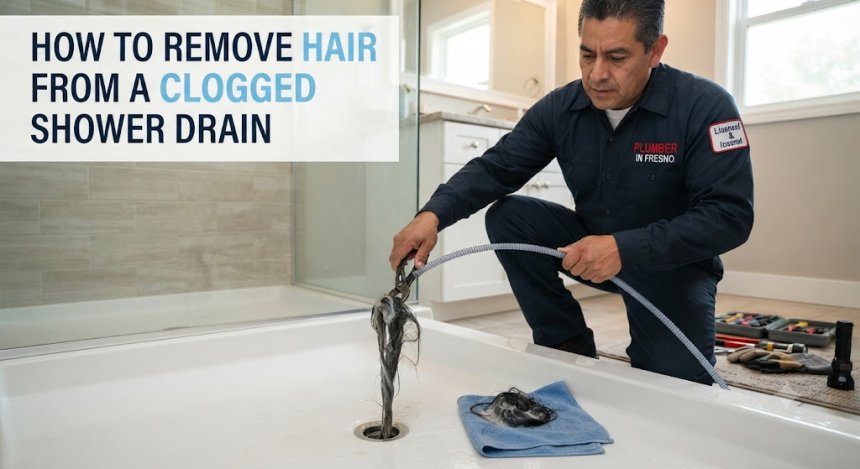
Stepping into your morning shower only to find your ankles submerged in soapy, stagnant water is an immediate damper on your routine. Homeowners across the Central Valley frequently struggle with how to remove hair from a clogged shower drain as strands bind with soap scum and body oils to form stubborn blockages. Ignoring this slow drainage often leads to complete pipe occlusion and unhygienic overflow. For residents living in Fresno, hard water minerals combine with organic debris to accelerate trap blockages, making routine clearing a necessity. Knowing how to safely extract hair build-up before it forces a major plumbing emergency keeps your bathroom sanitary and functional.
What Is a Shower Drain Clog? Decoding the Mechanism
A shower drainage system relies on gravity and a sloped waste arm to transport gray water from the pan down through a P-trap and into the main sewer line. The P-trap holds a standing pool of water to block sewer gases from entering your home.
Consider a typical family bathroom in a Fresno suburban residence. Every time someone showers, loose hair washes down the drain opening. While a strainer catches some, finer strands slip past into the crossbars and trap adapter. Over time, these hairs weave into a dense net that catches body fats, mineral scale, and soap scum, gradually choking off water flow until the fixture backs up completely.
Root Causes: Why This Problem Occurs in Fresno Homes
Drain clogs in the Central Valley are influenced by specific local environmental and structural factors.
-
Hard Water Mineral Binding: Fresno's mineral-rich water leaves calcium and magnesium deposits inside pipes, creating a rough interior surface where hair snags easily.
-
Aging Drain Infrastructure: Older homes in historic Fresno neighborhoods feature cast iron or older PVC waste lines that accumulate interior corrosion, trapping hair more aggressively.
-
High-Density Household Usage: Guest bathrooms or multi-occupant homes with long hair generate massive volumes of shedding that quickly overwhelm standard crossbar strainers.
-
Improper Soap Usage: Heavy use of moisturizing bar soaps and heavy body oils produces a sticky residue that glues hair masses tightly to pipe walls.
-
Thermal Contraction and Expansion: Temperature shifts in residential plumbing cause pipe joints to shift minutely, creating microscopic ledges where debris catches.
Critical Warning Signs: When Your Home is Sounding the Alarm
Failing to notice early drainage symptoms can quickly escalate a minor slowdown into an expensive flood.
-
Auditory Clues: Listen for a distinct gurgling or bubbling sound coming from the shower drain or nearby toilet as air escapes through trapped water.
-
Olfactory Indicators: A foul, decaying organic or mildew smell emanating from the drain indicates trapped hair and soap decomposing inside the P-trap.
-
Visual Evidence: Water pooling around your feet mid-shower, slow-draining basins after use, or dark residue lining the drain flange.
-
Cascading Structural Risks: Chronic overflow or weeping slip joints beneath the shower pan can saturate subflooring, causing wood rot and costly ceiling damage on lower levels.
Advanced Diagnostics: The Professional Tool Arsenal
When a hair clog extends deep past the trap and into the main branch line, professional plumbers deploy heavy-duty diagnostic gear.
-
High-Definition Drain Cameras: Flexible push-rod cameras travel down waste lines to visually inspect the exact composition and location of deep blockages.
-
Motorized Sectional Drain Augers: Professional-grade snake machines equipped with specialized cutting heads slice through dense hair and root masses instantly.
-
Hydro-Jetting Units: High-pressure water cleaning systems scour interior pipe walls completely clean of soap scum, scale, and hair buildup.
-
Electronic Pipe Locators: Pinpoint the precise underground or in-wall location of hidden pipe damage or stubborn obstructions.
DIY Reality Check: What You Can Safely Fix vs. When to Step Back
Homeowners can tackle superficial hair clogs safely, but recognizing your limits prevents severe fixture damage.
-
Safe Homeowner Actions: Removing the drain cover, pulling out surface hair with a plastic zip-strip tool, or using a manual hand-crank drum auger.
-
The Danger Zone: Forcing rigid metal coat hangers deep into complex trap bends, or dumping harsh chemical liquid drain cleaners that can boil and splash onto skin or ruin metal fixtures.
-
When to Call a Pro: If manual snaking fails to restore flow, if multiple bathroom fixtures back up simultaneously, or if you suspect a broken main line, drop the tools and call a licensed professional.
Professional Diagnostic & Repair Workflow
Licensed, insured plumbers execute a rigorous, standardized methodology to clear stubborn shower clogs completely.
-
Step 1: Non-Invasive Triage & Safety Isolation: Assess the fixture and protect surrounding bathroom surfaces with clean drop cloths.
-
Step 2: Precision Diagnostic Inspection: Remove the strainer plate and utilize specialized camera scoping if the clog resists basic clearing.
-
Step 3: Transparent, Upfront Options & Written Estimating: Present clear choices for mechanical snaking, hydro-jetting, or trap repair before commencing work.
-
Step 4: Code-Compliant Remediation: Deploy professional rotary augers or hydro-jetting equipment to clear the entire obstruction without harming pipe walls.
-
Step 5: Flow Verification & Sanitation: Flush the line with high-volume water to confirm complete drainage, test P-trap integrity, and sanitize the workspace.
Financial Breakdown: Cost Factors & Investment Realities
Plumbing investments for drain clearing depend on several key variable inputs.
-
Service Dispatch & Diagnostic Fees: Initial dispatch covers technician travel, safety inspection, and a guaranteed flat-rate quote.
-
Clog Severity and Depth: Removing surface hair at the drain opening costs significantly less than clearing a deep obstruction lodged in the main branch stack.
-
Equipment Deployment: Utilizing advanced hydro-jetting or digital video camera inspection equipment involves specialized service inputs.
-
Accessibility Challenges: Working on slab-embedded plumbing or cramped crawlspace waste lines requires extra labor time.
Unique Expert Insights: Hard Truths Homeowners Learn Too Late
-
Chemical drain openers do not dissolve hair effectively; instead, they eat through older metal pipe walls from the inside out and create severe chemical burn hazards.
-
Plastic zip-tool clearing only catches upper blockages, leaving compressed lower masses untouched where they harden over time.
-
Unlicensed handymen often damage delicate shower pan drains or cross-thread slip joints, creating hidden leaks behind finished walls.
-
Preventative hair catchers installed over drain openings cost a fraction of a single professional emergency service call.
-
Ignoring slow drains allows pressure to build at pipe joints, leading to unexpected joint separation beneath the floorboards.
Comprehensive Home Plumbing Maintenance Framework
-
Spring Checks: Inspect tub and shower stoppers to ensure linkage mechanisms move freely and do not trap hair prematurely.
-
Summer Habits: Clean out mesh shower strainers weekly to prevent hair from entering the primary waste pipe network.
-
Fall Preparation: Pour a bucket of hot water mixed with eco-friendly enzymatic cleaner down the drain to break down organic oils.
-
Winter Readiness: Monitor bathroom drainage performance during heavy indoor usage months to catch early flow restrictions.
-
Year-Round Habits: Never discard coffee grounds, oils, or heavy cosmetic products down bathroom sinks or showers.
Emergency Protocol: When Immediate Dispatch is Non-Negotiable
-
Total Wastewater Backup: If gray water begins overflowing the shower basin and flooding bathroom floors, stop water use immediately and call for emergency help.
-
Multiple Fixture Failure: When a shower clog coincides with toilets and sinks backing up, it indicates a main sewer line blockage requiring immediate professional intervention.
-
Ceiling Leaks Below: If a shower drain leak begins pouring water through the ceiling into rooms below, shut off water supplies instantly.
-
Structural Odors: Severe, persistent sewer gas odors emerging from dry or blocked P-traps demand immediate professional sealing.
Frequently Asked Questions (FAQs)
How can I remove hair from a shower drain without chemicals?
You can use a plastic hair-removal snake tool, a bent wire coat hanger, or remove the drain cover to pull out the mass manually without harsh liquid chemicals.
Why does my shower drain clog with hair so frequently?
Long hair naturally sheds during washing, combining with hard water minerals and soap residue to form dense blockages inside the trap and crossbars.
Are chemical drain cleaners safe for my shower pipes?
No. Chemical drain cleaners generate extreme heat that can warp PVC pipes and corrode metal components, often failing to completely dissolve hair clogs.
How often should I clean my shower drain?
Clearing surface hair from your shower drain every two to three weeks prevents deep accumulations and maintains optimal water flow.
What is the best tool for clearing a hair clog?
A flexible plastic barbed hair snake or a handheld drum auger is the safest and most effective tool for DIY hair clog removal.
Can hard water make hair clogs worse in Fresno?
Yes. Fresno's high mineral content leaves scale inside pipes, creating a textured surface that catches and holds loose hair more easily.
When should I call a professional plumber for a slow shower drain?
If DIY snaking and boiling water fail to clear the drain, or if multiple fixtures drain slowly at the same time, you should call a licensed plumber.
How long does a professional drain clearing take?
A standard professional shower drain clearing typically takes between thirty minutes to one hour, depending on the severity of the obstruction.