Water Heater Rumbling Noise Causes & Fixes
Hear popping or rumbling from your water heater? Discover why sediment builds up and how Fresno plumbers can protect your system from failure.

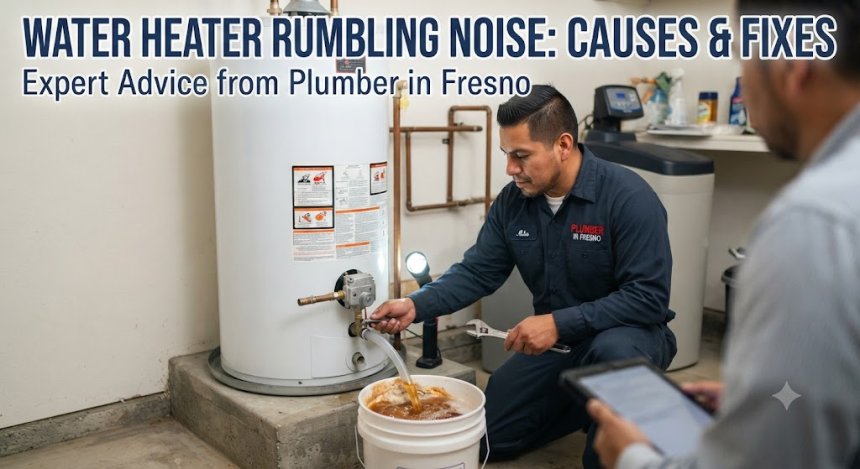
Walking past your utility closet and hearing strange banging, popping, or deep rumbling noises coming from your tank can instantly put any homeowner on edge. When your system begins to water heater rumbling loudly during a heating cycle, it is signaling a physical distress call that requires immediate attention.
For property owners throughout Fresno and the wider Central Valley, managing aggressive local water chemistry is an ongoing battle that directly impacts home appliances. When mineral deposits accumulate silently at the base of a storage tank, they alter heat transfer and create micro-explosions of trapped steam. Ignoring these acoustic warnings forces the burner or heating elements to work twice as hard, accelerating metal fatigue, fracturing the glass lining, and ultimately leading to premature tank rupture and costly flooding. Recognizing the mechanism behind these noises, performing routine maintenance, and knowing when to call a licensed professional safeguards your home.
Financial Breakdown: Cost Factors & Investment Realities
Addressing water heater noise issues involves various cost inputs depending on the physical condition of the appliance. Transparent plumbing providers use flat-rate pricing structures rather than open-ended hourly fees.
-
Diagnostic & Dispatch Fees: Covers the technician's travel time, initial system check, and safety evaluation.
-
Sediment Flush vs. Component Replacement: A standard chemical or pressure flush is economical, whereas replacing a corroded anode rod or failed lower heating element involves more labor and parts.
-
Tank Age & Condition Economics: If a rumbling tank is over 10 to 12 years old and showing signs of structural leaks, total water heater replacement is often more cost-effective than continuous Band-Aid repairs.
-
Permitting & Code Upgrades: Modern installations in Fresno require compliance with updated codes, including thermal expansion tanks and seismic gas shut-off valves.
What Is Water Heater Rumbling? Decoding the Mechanism
At its core, a standard residential tank water heater is designed to heat incoming cold water efficiently from the bottom up, sending hot water out through the top delivery pipe. In a clean, healthy tank, water flows freely across the bottom surface, absorbing heat uniformly from gas burners or electric elements.
The trouble begins when dissolved minerals—predominantly calcium and magnesium carried by local water supplies—separate under high temperatures and settle on the bottom of the tank as solid sediment.
Consider a typical Fresno home where hard water is a daily reality. Over several years, a thick layer of sediment accumulates over the bottom burner surface. When the thermostat calls for heat, the burner fires up underneath the steel tank bottom. Water trapped underneath and within the porous layers of this mineral sediment blanket boils rapidly, turning into trapped steam bubbles. As these steam bubbles force their way upward through the heavy sediment layer, they collapse violently against the water, creating the loud popping, rumbling, or hammering noises you hear echoing through your hallways.
Root Causes: Why This Problem Occurs in Fresno Homes
Appliance failures are rarely random; they are driven by local environmental factors, municipal water properties, and long-term material wear.
-
Heavy Mineral Scaling: Fresno's groundwater carries high concentrations of dissolved minerals that rapidly precipitate out of solution, baking onto tank bottoms as hardened rock-like layers.
-
Infrequent Flushing Habits: Failing to flush accumulated sediment out of the tank annually allows mineral layers to grow unchecked, worsening thermal stress.
-
Anode Rod Depletion: The sacrificial anode rod, designed to attract corrosive elements away from the steel tank walls, eventually dissolves completely, leaving the tank vulnerable to rust and accelerated scale bonding.
-
High Municipal Water Pressure: Excessive city water pressure places continuous stress on tank walls and temperature-pressure relief valves, exacerbating mechanical wear over time.
-
Extended Equipment Age: As traditional steel tanks age past their designed 10-year lifespan, internal metal fatigue amplifies the acoustic vibrations of boiling sediment.
Critical Warning Signs: When Your Water Heater is Sounding the Alarm
Before a water heater fails completely or springs a catastrophic leak, the appliance provides distinct auditory and performance warning indicators.
-
Auditory Clues: Loud popping, cracking, or deep rumbling sounds during heating cycles indicate trapped steam beneath thick mineral sediment.
-
Inconsistent Water Temperatures: If your hot water runs out halfway through a shower or fluctuates wildly, sediment insulation is preventing the burner from heating the water column uniformly.
-
Discolored or Odorous Water: Brown, rust-tinted water or a metallic smell points to internal tank corrosion and a depleted anode rod.
-
Moisture Pools Around the Base: Small puddles, damp flooring, or condensation leaks near the bottom burner assembly signal micro-fractures in the tank wall caused by thermal stress.
Professional Diagnostic & Repair Workflow
When home remedies fail to quiet a noisy water heater, a licensed and insured plumber executes a systematic, safety-first evaluation workflow.
-
Step 1: Non-Invasive Triage & Safety Isolation: The technician shuts off the gas supply or electrical breaker, isolates water lines, and checks the temperature-pressure relief valve for proper operation.
-
Step 2: Thermal & Pressure Diagnostic Assessment: The plumber evaluates internal tank pressure, burner combustion efficiency, and electrical draw to determine structural integrity.
-
Step 3: Transparent, Upfront Options & Pricing: You receive a clear, flat-rate estimate outlining whether a comprehensive flush, anode replacement, or full unit replacement is necessary.
-
Step 4: Remediation & Component Service: The professional flushes the tank using specialized descaling agents, replaces worn anode rods, or installs a modern replacement unit.
-
Step 5: Safety Testing & System Clean: The unit is fired up, tested for optimal thermal performance, and the work area is left spotless.
Advanced Diagnostics: The Professional Tool Arsenal
Professional plumbers utilize heavy-duty commercial equipment to diagnose and resolve water heater issues accurately without guessing.
-
Digital Combustion Analyzers: Measures gas burner efficiency, draft hood performance, and carbon monoxide output to ensure safe operation.
-
Electronic Manometers: Precisely tests incoming gas supply pressure to guarantee the burner receives the correct volume of fuel.
-
Thermal Imaging Infrared Cameras: Instantly visualizes heat distribution across the tank body to locate internal sediment build-up and insulation failure zones.
-
High-Capacity Flush Pumps: Specialized descaling pump units aggressively circulate safe cleaning solutions through the tank to dissolve hardened mineral scaling that standard gravity draining leaves behind.
DIY Reality Check: What You Can Safely Fix vs. When to Step Back
Homeowners often attempt quick plumbing fixes, but understanding your boundaries protects you from severe injury and property damage.
-
Safe Homeowner Actions: Visually inspecting the unit for external leaks, testing the temperature-pressure relief valve lever gently, and lowering the thermostat setting to 120°F to reduce thermal stress.
-
The Danger Zone: Never attempt to repair a leaking tank wall with epoxy or sealants, as pressurized steel will rupture. Avoid tampering with gas control valves or high-voltage 240V electrical wiring without proper training.
-
When to Call a Professional: The moment a water heater emits persistent rumbling accompanied by rust-colored water or bottom leaks, drop the tools and call a licensed plumber immediately.
Unique Expert Insights: Hard Truths Homeowners Learn Too Late
-
Attempting to seal an actively leaking water heater tank with chemical sealants or epoxy patches creates a false sense of security and almost always results in sudden, catastrophic night-time tank failure.
-
Ignoring a rumbling water heater dramatically increases your monthly gas or electric bill because thick sediment acts as a thermal barrier, wasting energy.
-
Unlicensed installations or DIY replacements often violate local building codes, invalidating manufacturer warranties and home insurance policies if flooding occurs.
-
Enrolling in a professional annual maintenance plan costs a fraction of a single emergency midnight water extraction and floor repair.
-
Once a steel tank begins rumbling violently due to severe calcification, standard flushing may only offer temporary relief if the metal bottom has already suffered micro-fractures.
Comprehensive Home Plumbing Maintenance Framework
Proactive seasonal upkeep extends the lifespan of your water heating system and prevents unexpected utility failures.
-
Spring & Summer Maintenance: Inspect the area around the water heater for signs of dampness; test the sump pump if located nearby; and check outdoor venting screens for obstructions.
-
Fall & Winter Preparation: Flush your water heater tank annually to remove sediment buildup before peak winter heating demand; insulate exposed hot water supply pipes.
-
Year-Around Habits: Check your home's water pressure regulator (PRV) monthly to ensure pressure stays below 80 PSI; avoid setting water heater thermostats above 120°F to minimize mineral scaling; schedule professional inspections every two years.
Emergency Protocol: When Immediate Dispatch is Non-Negotiable
Certain water heater failures require immediate emergency response to prevent severe property damage and safety hazards.
-
Catastrophic Tank Rupture: If the tank wall splits and water actively floods your utility room or garage, immediately shut off the cold water supply valve on top of the unit and flip the electrical breaker or gas valve off.
-
Gas Leaks & Pilot Outages: If you smell the distinct odor of rotten eggs near a gas water heater, evacuate the area immediately and call your utility provider and emergency plumber.
-
Electrical Short Circuits: If water leaks onto electrical wiring or control boards, shut off power at the main breaker panel before entering the room.
-
Relief Valve Blowouts: If the temperature-pressure relief valve is discharging scalding water continuously, shut down the system immediately to prevent explosion risks.
Frequently Asked Questions
Why does my water heater make a popping noise when it heats?
Popping noises are caused by water trapped beneath layers of hard water sediment at the bottom of the tank boiling into steam bubbles that force their way upward through the mineral scale.
Can a rumbling water heater explode?
While rare due to safety relief valves, a severely neglected and calcified water heater can experience extreme pressure and thermal stress, leading to tank failure, structural splits, and massive indoor flooding.
How often should I flush my water heater in Fresno?
Due to Fresno's high mineral hard water, you should flush your water heater tank at least once a year to prevent rock-hard sediment accumulation and eliminate rumbling noises.
Is it safe to keep using a rumbling water heater?
You can continue using it temporarily, but the rumbling indicates that your system is running inefficiently and suffering accelerated wear. It should be flushed or serviced soon to prevent failure.
How much does it cost to flush or repair a water heater?
Routine tank flushing typically falls under standard service call rates, whereas replacing an anode rod or repairing gas control assemblies involves variable parts costs. Upfront flat-rate pricing ensures no surprises.
What is the lifespan of a residential water heater?
A standard tank water heater typically lasts between 8 to 12 years, depending heavily on water quality, maintenance frequency, and whether the anode rod was replaced on schedule.
Should I switch from a tank to a tankless water heater?
Tankless water heaters eliminate traditional sediment-heavy storage tanks and provide endless hot water, making them popular in hard water regions, though they require periodic descaling maintenance.
What temperature should I set my water heater to?
The EPA and plumbing standards recommend setting your water heater thermostat to 120°F to provide comfortable hot water while minimizing mineral scale precipitation and scalding risks.